


Men's skin differs from women's in a few measurable ways: it is about 20–25 percent thicker, has more collagen to begin with and loses it more evenly over the years instead of in the steep drop around menopause, it produces more sebum (testosterone drives the sebaceous glands), which gives more shine, larger pores and more blackheads but also later dryness, and it is subjected to shaving, which is a daily micro-exfoliation that both keeps the skin smooth and makes it red, dry and sensitive if done wrong. Men's skin sweats more, has a slightly more acidic surface and tends to be dehydrated rather than dry: plenty of oil, too little water. All of this makes the advice simple: wash away sebum and sweat without drying out, moisturise with something light that you don't feel, protect against the sun every day because it is the sun that gives the wrinkles, spots and the coarse leather that otherwise arrive at 50, and shave in a way that doesn't damage the skin. More than that isn't needed for most men. If you want more, there are three additions that demonstrably make a difference, and a five-minute routine with the face cup that many men like because it feels like something, not just like a cream. Here is the routine, the shaving, the beard, the problems and the cupping.
The three-step routine, two minutes
| Step | Morning | Evening | Why |
|---|---|---|---|
| 1. Cleansing | Lukewarm water, or a mild face wash if your skin is oily or you sweated overnight | Mild face wash (gel if oily skin, milk or cream if dry), 30 seconds, rinse lukewarm, pat dry | Removes sebum, sweat, dirt and sunscreen that otherwise clog the pores; ordinary soap and water that is too hot dry out and give more sebum |
| 2. Moisturising | A light cream or gel cream, pea-sized amount, on the whole face and neck | The same, or a slightly richer one in winter; a couple of drops of face oil on top if the skin is dry | Men's skin is usually dehydrated despite sebum; moisture makes the skin smooth, reduces shine over time and makes shaving easier |
| 3. Sunscreen | SPF 30–50, half a teaspoon for the face, every day all year, even cloudy and indoors by windows; light, matte formulas for men exist | – | The sun accounts for 80 percent of visible ageing: wrinkles, spots, coarse skin, and skin cancer, which men get more often and detect later |
That is all. Do this every day for three months and the skin is clearly better than with any expensive product used occasionally.
The five-step routine, for those who want more
- Cleansing as above.
- Serum in the morning: vitamin C (glow, pigment spots, protection) or niacinamide (shine, pores, redness); a few drops, let it sink in.
- Retinoid in the evening, two to three evenings a week: retinol over the counter or adapalene (over-the-counter gel) which also tackles blackheads; the only over-the-counter ingredient that demonstrably builds collagen and evens out fine lines and pores. Start cautiously, always with sunscreen in the daytime.
- Moisturiser, and in the evening a few drops of face oil on top or mixed into the cream if the skin is dry or you have shaved; see face oil: how to use it right.
- Sunscreen in the morning, always last.
Plus face cupping twice a week, see below, and a light chemical exfoliation (salicylic acid) one to two evenings a week if you have blackheads and shine. Skip scrubs with grains: they tear and cause razor bumps.
Shaving without razor bumps, redness and ingrown hairs
- Shave after the shower, or lay a warm damp towel over the face for a minute: heat and moisture soften the hairs by 60 percent and the skin relaxes.
- Cleanse first so sebum and dead skin don't clog the blade.
- Shaving oil or a few drops of face oil under the foam, or instead of it: gives glide and protects the skin; especially with sensitive skin and redness.
- Shaving gel or cream without perfume and alcohol, let it sit for a minute before you start.
- Shave with the direction of the hair first (downwards on the cheeks, check the neck: there the hairs often grow in different directions), light pressure, short strokes, rinse the blade often. A second pass across if you want it smoother; against the hair only if the skin tolerates it, that is what causes ingrown hairs and razor bumps.
- The blade: sharp and clean; replace after five to seven shaves; a dull blade drags and tears. Fewer blades are often better for sensitive skin. A single-blade safety razor gives the least irritation for many.
- Rinse cold, pat dry, apply a soothing, alcohol-free balm or light cream, ideally with a few drops of oil. No alcohol-based aftershave: it burns, dries out and gives more redness.
- Razor bumps and ingrown hairs: shave with the hair, not too close, change the blade, exfoliate with salicylic acid two evenings a week, and don't pick. Recurrent ingrown hairs on the neck: leave 1–2 mm of stubble with a trimmer instead of shaving smooth. With many, inflamed ones: dermatologist.
Beard care: the skin underneath is the point
A beard hides the skin but doesn't remove the need: dandruff in the beard, itching and redness are dry skin underneath. Wash the beard two to three times a week with mild beard wash or face wash (shampoo dries out), not every day; dry it; massage two to three drops of oil (jojoba, argan, or the face oil) into the skin under the beard with the fingertips after showering, not just into the hairs; comb with a wide comb to distribute the oil and loosen dead skin cells; trim the edges and neck regularly so you avoid shaving where the skin is most sensitive. Beard balm for shape, beard oil for skin. Itching that doesn't let up, flaky red patches in the beard or around the nose: seborrhoeic dermatitis, treated with an over-the-counter antifungal or via your doctor.
The most common problems, and what helps
| Problem | Cause | What helps |
|---|---|---|
| Oily, shiny skin and large pores | Testosterone-driven sebum production, too harsh cleansing that gives even more sebum | Mild gel cleanser twice a day, light gel cream (don't skip moisture), niacinamide, salicylic acid two evenings a week, matte sunscreen; see large pores |
| Dry, tight skin, especially after shaving and in winter | Dehydration from soap, hot water, shaving, cold, indoor air | Mild cleansing, richer cream in the evening, face oil, shaving oil, humidifier, not too hot showers |
| Bags and dark circles under the eyes | Sleep deprivation, salt, alcohol, allergy, genes, thin skin | Sleep, less salt and alcohol in the evening, cold in the morning, face cupping with the mini cup along the bony edge, caffeine eye cream; see under-eye bags and dark circles |
| Redness and broken capillaries on nose and cheeks | Rosacea (common in men 30–60), sun, alcohol, spicy food, harsh shaving | Sunscreen, a mild routine without alcohol and perfume, avoid triggers; prescription treatment via your doctor for rosacea; don't cup over active redness |
| The first wrinkles, forehead, around the eyes | Sun, smoking, expression, sleep deprivation, age | Sunscreen (the most important), retinoid in the evening, moisturising, quitting smoking, face cupping for blood flow and a tense forehead; see wrinkles in the forehead and around the eyes |
| Acne and razor bumps on neck and jaw | Shaving against the hair, dull blade, sebum, hair products, sweat under helmet and collar | Shaving technique above, salicylic acid, benzoyl peroxide or adapalene in the evening, change pillowcases often, wash after training |
| Pigment spots and coarse skin after 40 | Accumulated sun | Sunscreen from now on, vitamin C in the morning, retinoid in the evening; new, growing or irregular spots: a doctor |
| Tense jaw, headache in the temples | Teeth grinding and clenching, stress | Lips together teeth apart, night guard, cupping of the jaw muscles; see jaw pain |
Face cupping for men: five minutes, twice a week
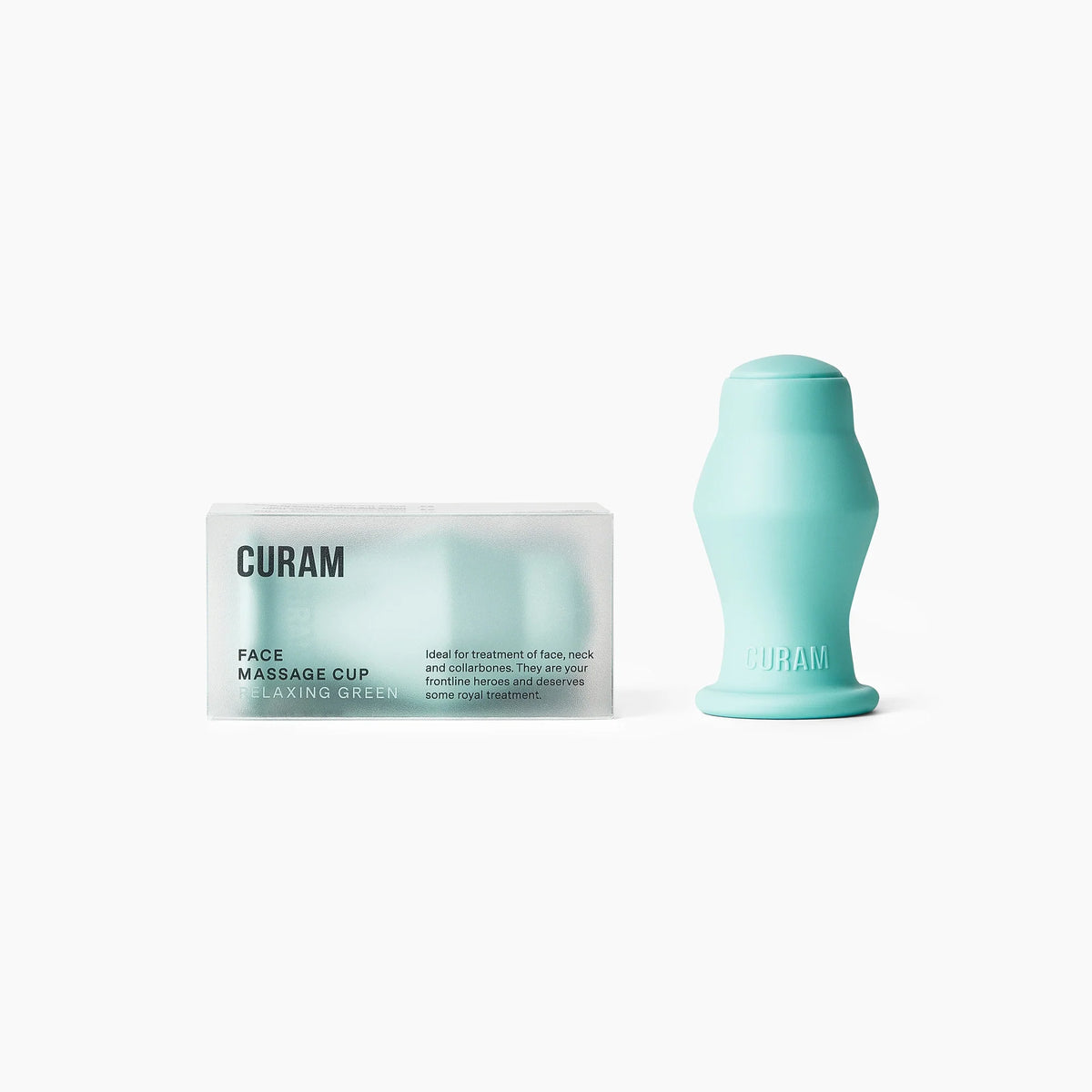
Face cupping is easy to fit into a man's routine because it doesn't require make-up or products you don't already have, it takes five minutes, and the result shows immediately without it looking like you have done anything: less puffiness in the morning, more even colour, glow, and a jaw and forehead that relax. The mechanics are that the cup's suction increases blood flow in the skin several-fold, moves lymph fluid towards the neck nodes so that puffiness decreases, and releases the jaw muscles and forehead muscles that many men hold tense all day. How to, in the evening after cleansing (or in the morning against puffiness): apply six to eight drops of face oil, also into the beard if you have one; glide the face cup with minimal suction in slow strokes from the chin along the jawline towards the ear, from the corner of the mouth towards the temple, from the side of the nose under the cheekbone towards the ear, and from the centre of the forehead outwards towards the temples and up towards the hairline, five strokes per line; then glide down the sides of the neck towards the collarbones, five strokes per side, to move the fluid away; and use the mini cup along the bony edges of the eyes (not on the eyelid), between the eyebrows and over the jaw muscle on the cheek, one minute. Keep the cup moving at all times, never still on the face, never with strong suction: that is what causes marks. Over a beard the cup works on the skin underneath if the beard is short and well oiled; with a long beard you cup forehead, temples, eyes and neck and massage the oil into the beard skin with your fingers. Afterwards: dry skin leaves the oil on, oily skin washes it off and applies a light cream. Don't cup over inflamed acne or razor bumps, rosacea in a flare, wounds or sunburn, and wait a day after a harsh shave if the skin is red; see when to avoid cupping. The technique in detail in face cupping, and programmes in de-puff eyes and smoother forehead. Cupping for the body, for a stiff neck, back and muscle soreness, is often what gets men started: see the complete guide to cupping.
Read more
Skincare routine morning and evening with face cupping, face oil, large pores, under-eye bags and double chin, face cupping and sleep deprivation.
Frequently asked questions
What skincare routine should a man have?
Three steps are enough for most: mild cleansing (water in the morning, face wash in the evening), a light moisturising cream morning and evening, and sunscreen SPF 30–50 every morning all year. Two minutes. If you want more: vitamin C or niacinamide in the morning, a retinoid two to three evenings a week, face oil in the evening, and face cupping twice a week.
Do men need sunscreen every day?
Yes, it is the single most important step: the sun accounts for most wrinkles, pigment spots and coarse skin, and men get skin cancer more often than women and detect it later. SPF 30–50, half a teaspoon for the face, every morning, even cloudy and in winter; light matte formulas exist that you neither feel nor see.
How do you shave without getting razor bumps?
Shave after the shower or a warm towel, cleanse first, shaving oil or a few drops of face oil under perfume-free shaving gel, shave with the direction of the hair with light pressure and short strokes, rinse the blade often and replace it after five to seven shaves, rinse cold and apply an alcohol-free balm. Not against the hair on the neck. Exfoliate with salicylic acid two evenings a week and never pick at ingrown hairs.
Does face cupping help for men?
Yes, and it suits men well: five minutes twice a week with oil and minimal suction reduces morning puffiness, gives more even colour and glow and releases a clenched jaw and forehead, without it showing that you have done anything. Works on the skin under a short, oiled beard; with a long beard you cup forehead, eyes and neck. Not over razor bumps, active redness or red skin right after shaving.
What helps oily and shiny skin in men?
Not harsher cleansing, which gives more sebum, but a mild gel cleanser twice a day, a light gel cream (moisture reduces shine over time), niacinamide serum, salicylic acid two evenings a week against blackheads, matte sunscreen, and face cupping that evens out the skin tone. Oily skin ages more slowly; it is the sun, not the sebum, that is the problem.
Related guides
Written by Curam. Last updated 17 October 2026. This is general self-care information and does not replace medical care. For sudden, severe or unusual symptoms, contact your doctor. Talk to your doctor before cupping if you are pregnant, take blood thinners or have a condition affecting skin, blood vessels or blood.


