


Wrinkles have three different causes, and they need different things. Dynamic wrinkles, such as the lines on the forehead, the "frown line" between the eyebrows and crow's feet, are created by facial muscles contracting the skin thousands of times a day; with the years the creases stay even when the muscle rests. Nasolabial folds, from the nostrils down towards the corners of the mouth, are primarily not wrinkles but a sign that the cheeks' fat and supporting tissue have sunk. Fine wrinkles across the whole face come from skin that has become thinner and lost collagen from sun, smoking and age. What has the best evidence is daily sunscreen, retinoids, relaxing the muscles that create the creases, and keeping the skin hydrated; face cupping and facial massage soften tight facial muscles, increase circulation and give a temporary lift that is maintained with routine. Deep static creases and clearly sunken cheeks need clinic treatment if you want a big difference. Here is what helps for each type, what is reasonable to expect and how to cup the face.
Three kinds of wrinkles, three different approaches
| Type | Where | Cause | What helps |
|---|---|---|---|
| Dynamic wrinkles | Horizontal lines on the forehead, vertical creases between the brows, crow's feet | The forehead muscle, brow depressors and the ring muscle around the eye contract the skin; tension from stress, concentration, screens and glare | Relax the muscle (awareness, massage, cupping), sunglasses, sunscreen, retinol; botox at a clinic for a clear effect |
| Nasolabial folds | From the nostrils down towards the corners of the mouth | The cheeks' fat pads and ligaments sink with the years, the skin follows; worsened by weight loss, side sleeping and smoking | Lift the cheeks: cupping upwards and outwards, facial exercises for the cheek muscles, sunscreen, retinol; fillers at a clinic for deep folds |
| Static and fine wrinkles | The whole face, especially cheeks, upper lip and around the eyes | Thinner skin with less collagen and elastin from sun, smoking, age, dry skin | Sunscreen, retinoids, vitamin C, hydration, not smoking; laser, peels and microneedling at a clinic |
What has the best evidence against wrinkles
- Sunscreen every day, all year. UV light accounts for the largest part of visible skin ageing. SPF 30 or more, even on cloudy days, and sunglasses against crow's feet. Nothing else has such a large effect.
- Retinoids. Retinol (over the counter) and tretinoin (prescription) are the best-documented ingredients for more collagen fibres and fewer fine wrinkles; the effect shows after three to six months. Start with a low strength two evenings a week.
- Vitamin C in the morning, hydration in the evening. Antioxidants protect, and hydrated skin shows fewer fine wrinkles immediately.
- Release the tension in the face. Notice how often you frown, squint or clench. Facial massage, cupping and consciously relaxing the forehead during the day reduce the dynamic load; see also teeth grinding if the jaw is tight.
- Sleep on your back if you can: side sleeping presses the cheek and forehead against the pillow for hours, which deepens nasolabial folds and sleep lines on the cheek. A silk pillowcase helps a little.
- Stop smoking, moderate alcohol, sleep. Smoking breaks down collagen faster than anything else you can influence; sleep is when the skin repairs itself.
- Clinic when needed. Botox for dynamic wrinkles, fillers for deep nasolabial folds, laser and microneedling for skin quality. The effects are clearer but temporary and cost money; the home routine makes them last longer.
Face cupping for wrinkles: forehead, nasolabial folds and eye area
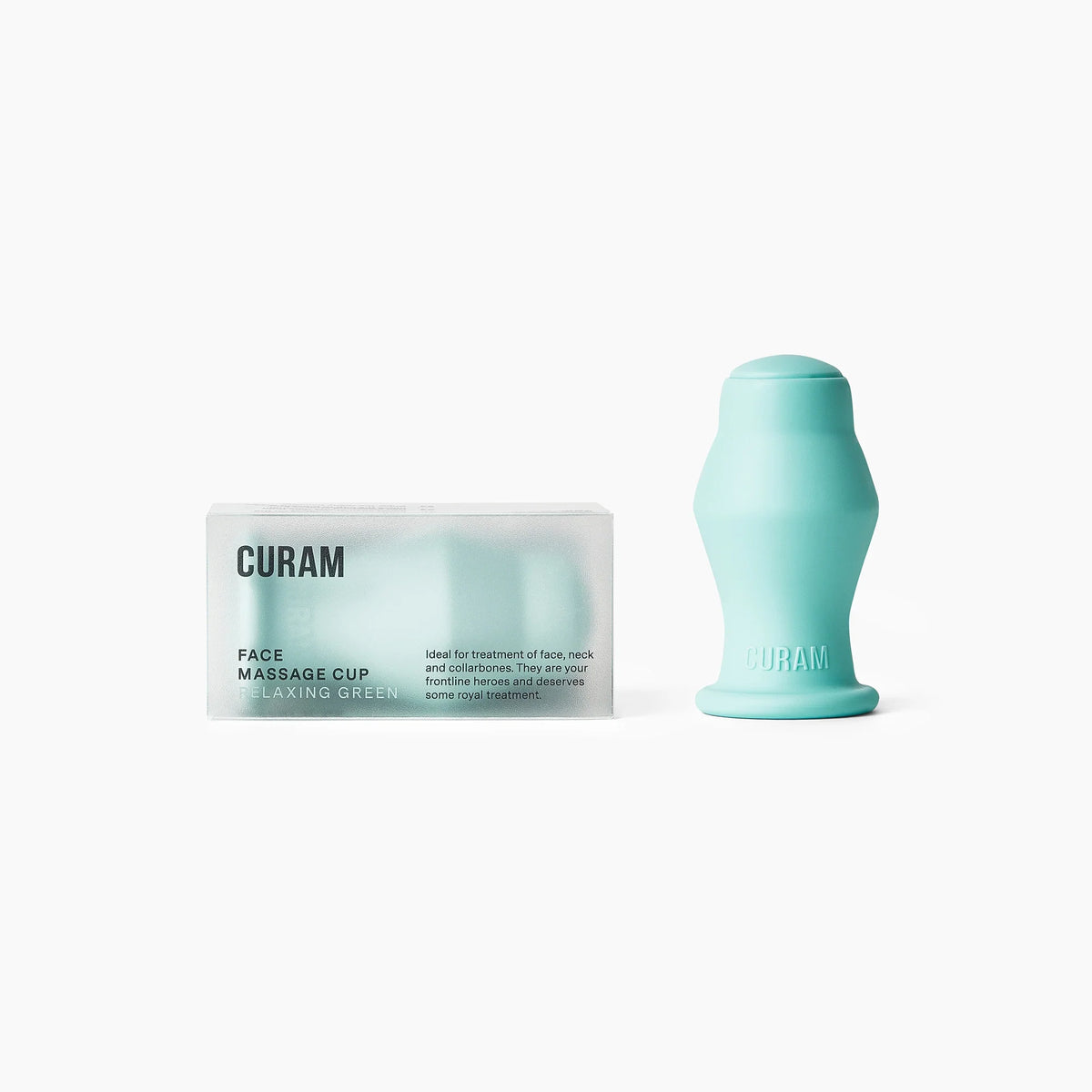
Face cupping does three things that matter for wrinkles: it softens the forehead muscle, brow depressors and jaw muscles so the dynamic creases get to rest; it increases circulation in the skin so it looks fresher and fuller; and it temporarily lifts the tissue that has sunk, above all on the cheeks. It is a natural face lift in the sense that it is your own tissue being lifted and smoothed, not one that replaces clinic treatment. Use the face cup for cheeks and forehead and the mini cup around the eyes and mouth, always with face oil and light suction. The skin should turn lightly pink, never red or marked.
Forehead and the crease between the brows
- Keep the skin taut with the fingers of the other hand. Glide the face cup from the eyebrow straight up to the hairline, five strokes, moving outwards in three lanes across the forehead.
- Glide horizontally from the centre of the forehead out to the temple, three strokes per side, so the forehead muscle is stroked along its length.
- The crease between the brows: the mini cup in small strokes from the root of the nose upwards and out along the eyebrow, five strokes per side. Never glide across the crease.
Nasolabial folds
- Puff out the cheek lightly or press the tongue against the inside so the skin has resistance.
- The face cup from the corner of the mouth up along the fold towards the nostril, and on upwards and outwards across the cheek towards the ear: that is the direction the tissue has sunk from. Five to eight strokes per side.
- The mini cup in small circles at the nostril and corner of the mouth, where the fold attaches, ten seconds per side.
Around the eyes
- Only the mini cup, the lightest possible suction, on the bony rim around the eye socket, never on the eyelid.
- From the nose outwards along the cheekbone under the eye, three strokes; from the outer corner of the eye up towards the temple (crow's feet), three strokes; from the eyebrow up towards the forehead, three strokes.
- Finish the whole face by stroking with your fingers from the temple down in front of the ear to the collarbone, so the fluid drains.
Five to ten minutes, three to four times a week; most people see fresher, fuller skin straight away and a slightly softer expression after a few weeks. Guided programs: smoother forehead, nasolabial folds and natural face lift. The basics and the comparison with gua sha are in the guide to face cupping and gua sha or face cup; what to expect in before and after.
Do not cup with active acne, rosacea in a flare, eczema, wounds, recent laser or peels, or within two weeks after botox and four weeks after fillers.
What is reasonable to expect?
Fine wrinkles and a tired, tense expression you can influence clearly with sunscreen, retinol, hydration and regular cupping. Dynamic wrinkles get softer when the muscle gets to rest, but the creases do not disappear completely without botox. Nasolabial folds become less marked when the cheeks are lifted and the skin becomes fuller, but deep folds from clearly sunken tissue need fillers or a lift if you want a big difference. The most important thing for how the skin looks in ten years is what you do every day: sunscreen, not smoking, sleep and a routine that keeps the muscles relaxed and the circulation going.
Frequently asked questions
Can you get rid of forehead wrinkles without botox?
Softer, yes: sunscreen, retinol, consciously relaxing the forehead and regular massage or cupping that strokes out the forehead muscle reduce how often and how hard the skin creases. Deep lines that remain when the forehead is relaxed cannot be exercised away; there botox is what has a large effect.
What helps against nasolabial folds?
Lifting the cheeks and keeping the skin full: cupping and massage upwards and outwards from the fold towards the ear, cheek exercises, sunscreen, retinol, sleeping on your back and not smoking. Deep folds from sunken tissue need fillers or a lift at a clinic for a big difference.
Does face cupping help wrinkles?
It softens the muscles that create dynamic wrinkles, increases circulation so the skin looks fuller and temporarily lifts sunken tissue. The effect on fine wrinkles and expression is clear but needs routine; deep static creases and clearly sunken cheeks need clinic treatment.
How often should you cup the face for wrinkles?
Three to four times a week, five to ten minutes, with light suction and oil. More often does not give more; too strong suction leaves marks and can stretch the skin instead. Combine with sunscreen in the morning and retinol in the evening.
What causes wrinkles around the eyes?
The ring muscle around the eye contracting the skin when you squint, smile and are dazzled, together with the skin there being the thinnest on the face and losing collagen early from sun. Sunglasses, sunscreen, an eye cream with retinol or peptides and light cupping on the bony rim around the eye help.
Sources
- 1177 Vårdguiden (Swedish national health guide), search for "hudens åldrande" and "solskydd" for medical information.
- Curam's FAQ and face cupping programs, developed with trained skin and massage therapists.
Written by Curam. Last updated 17 October 2026. This is general self-care information and does not replace medical care. For sudden, severe or unusual symptoms, contact your doctor. Talk to your doctor before cupping if you are pregnant, take blood thinners or have a condition affecting skin, blood vessels or blood.


