


IBS is a functional bowel disorder: the gut looks normal but doesn't work normally. The bowel movements are disturbed (too fast, too slow or irregular), the gut is hypersensitive so that normal amounts of gas and stretching hurt, and the communication between gut and brain is out of balance in both directions: stress gives gut symptoms and gut symptoms give stress. About one in ten adults has IBS, twice as many women as men, and most get it before 40. The diagnosis rests on the Rome IV criteria: recurrent abdominal pain at least one day a week in the last three months, linked to defecation (better or worse after a bowel movement), to a change in frequency or to a change in consistency, with symptoms present for at least six months. It is divided by stool pattern: IBS-D (diarrhoea), IBS-C (constipation), IBS-M (mixed) and unspecified. Bloating, gas, mucus and the feeling of incomplete emptying belong to it. What is not IBS, and should always be investigated: blood in the stool, night-time symptoms that wake you, unexplained weight loss, fever, anaemia, onset after 50, and bowel cancer or inflammatory bowel disease in the family. At the first work-up, coeliac tests are taken (gluten intolerance gives IBS-like symptoms and is often missed), faecal calprotectin (inflammation), blood count and thyroid. If they are normal and the warning signs are absent, it is IBS, and then what actually helps begins.
How IBS feels, and what is not IBS
| Typical of IBS | Should be investigated, is not IBS until other things are ruled out |
|---|---|
| Abdominal pain that comes and goes, often eased by a bowel movement | Blood in the stool (red or black) |
| Bloating that increases through the day and is worst in the evening | Symptoms that wake you at night |
| Alternating hard and loose stools, urgency in the morning, after meals or with stress | Unexplained weight loss, fever, night sweats |
| Mucus, a feeling of incomplete emptying, a lot of gas | Anaemia, iron deficiency |
| Worse with stress, lack of sleep, certain foods and periods | Onset after 50, bowel cancer or IBD in the family |
| Normal tests, normal weight, normal night's sleep | Difficulty swallowing, vomiting, constant pain that doesn't vary |
Diet: what actually helps
- Meal rhythm first. Three meals and at most two snacks at fixed times, eat sitting down and slowly, not over the counter, not in the car. Irregular and large meals trigger the gut more than any single food. Many improve considerably from this alone.
- Reduce the common aggravators for two weeks: coffee to at most two cups, alcohol, fizzy drinks, chewing gum and sweeteners (sorbitol, xylitol), fried and very fatty food, large amounts of raw vegetables and onion. Spicy food with IBS-D.
- Fibre: the right kind. Soluble fibre (oats, psyllium husk, linseed, carrot, potato) calms both constipation and diarrhoea. Insoluble (bran, wholegrain wheat, raw vegetables) often worsens pain and gas. Psyllium, one teaspoon in water, increased slowly to one tablespoon, is the best-supported dietary advice in IBS.
- Low FODMAP, done right. FODMAPs are carbohydrates that ferment in the colon (lactose, excess fructose, fructans in wheat and onion, galactans in beans, polyols in stone fruit and sweeteners). The diet has three steps: eliminate for four to six weeks, no longer; reintroduce one group at a time for three days to find yours; personalise so you only avoid what actually gives symptoms. Three in four get clear relief. The common mistake is getting stuck in step one for months or years, which depletes the gut flora and makes eating a burden. Preferably do it with a dietitian (ask for a referral) and never if you have or have had an eating disorder.
- Probiotics: try one product for four weeks; if it doesn't help, switch or stop. The effect is strain-specific and moderate.
- Gluten: once coeliac disease is ruled out, it is usually the fructans in wheat, not the gluten, that disturb. Low FODMAP covers that.
- Fluids: 1.5–2 litres, more with psyllium. Peppermint tea or peppermint oil capsules (enteric-coated) have support against pain and cramp.
Stress and the gut-brain axis
The gut has its own nervous system with more nerve cells than the spinal cord and is in constant contact with the brain via the vagus nerve and stress hormones. In IBS this communication is hypersensitive: stress and worry increase the gut's movements and pain sensitivity, and a restless gut in turn keeps the stress system running. That is why IBS-focused cognitive behavioural therapy and gut-directed hypnotherapy have as good an effect as dietary treatment in studies, and why everything that activates the parasympathetic nervous system helps: slow exhalation, walks, sleep, heat on the belly, massage. That doesn't mean IBS is "in your head": the pain is real and the gut reacts physically. It means you have two ways in, the gut and the nervous system, and the best treatment uses both. See stress and stress management and anxiety in the body.
Medicines, by symptom
- Pain and cramp: antispasmodics (hyoscine, peppermint oil), for more severe symptoms low-dose amitriptyline at night (acts on the gut's pain sensitivity, not as an antidepressant).
- Constipation (IBS-C): psyllium, macrogol, if needed linaclotide via a doctor.
- Diarrhoea (IBS-D): psyllium (yes, here too), loperamide as needed and before situations, bile acid binders if the diarrhoea is due to bile acid (common after gallbladder removal).
- Gas and bloating: diet and meal rhythm, simethicone has weak support; see bloated stomach.
A ten-minute daily routine for the gut
- Morning, 2 minutes: a glass of lukewarm water, then sit on the toilet without stress after breakfast: the gut's reflex is strongest then. A stool under the feet.
- Breathing, 3 minutes: lie or sit, hand on the belly, breathe in through the nose for four seconds so the belly rises, out through the mouth for six to eight seconds. Slow exhalation activates the vagus nerve and calms the gut. See the diaphragm.
- Abdominal massage, 3 minutes: lie on your back with bent knees, palm on the belly, stroke with moderate pressure in the direction of the colon: up the right side, across under the ribs, down the left side, in clockwise circles. Ten slow rounds. With constipation: press a little deeper and pause low on the left. With cramp: lighter, warmer hands.
- Movement, 20–30 minutes a day (not counted in the ten): walking, cycling, yoga; regular moderate exercise reduces IBS symptoms noticeably. Twists and forward folds in yoga massage the gut.
- Evening, 2 minutes: heat on the belly (heat pad or hot shower), no big meal late, bed at the same time. Sleep deprivation worsens IBS the next day. See sleep problems.
Cupping for IBS
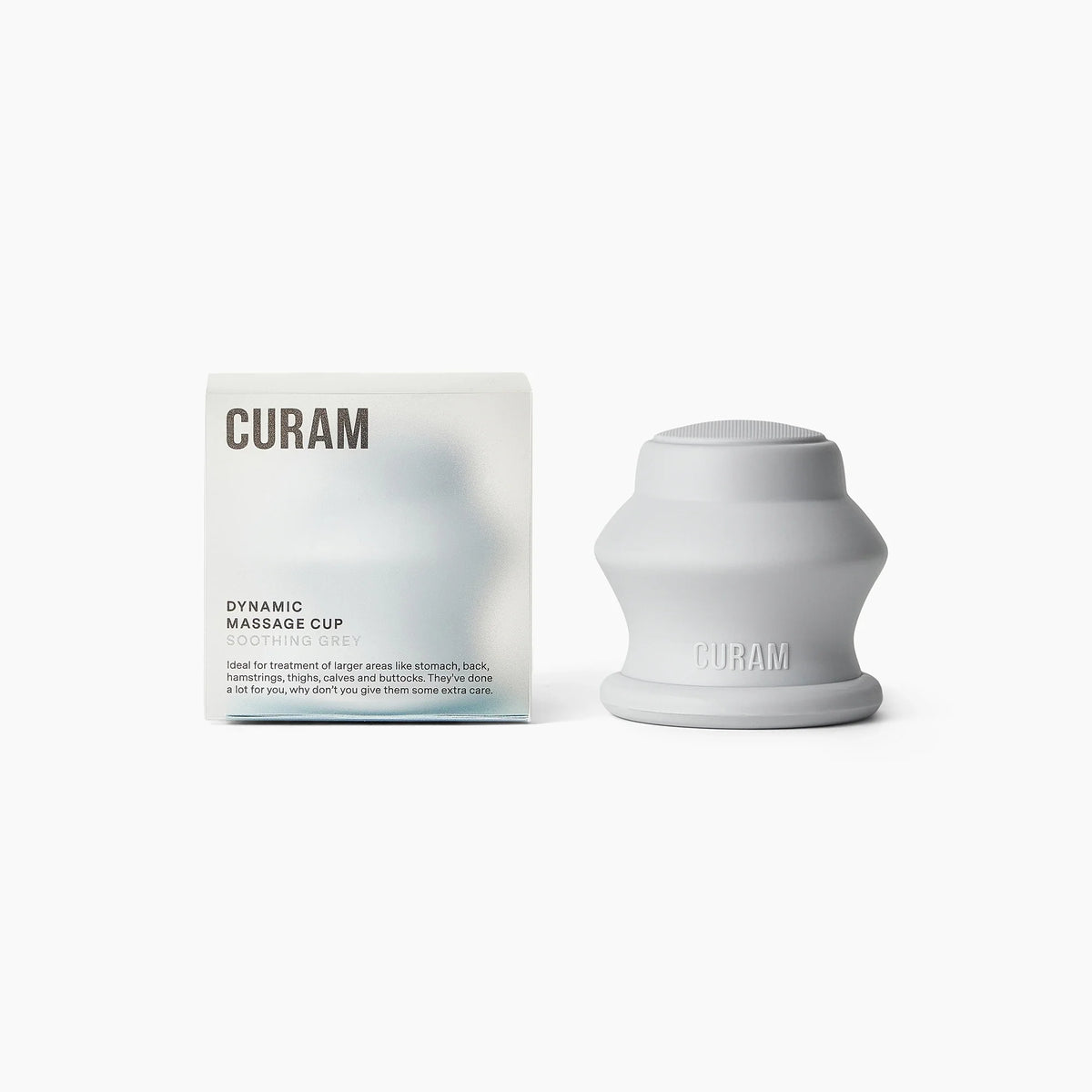
Cupping of the belly and lower back is used in IBS for two reasons. One is relaxation: light, slow cupping over the belly and static cups on the lower back are a powerful parasympathetic signal, the pulse drops, breathing deepens, and a gut in stress mode calms down. The other is mechanical: the cup lifts the abdominal wall and the superficial tissue, releases tight abdominal muscles and a tight diaphragm that often go with bloating and cramp, and strokes in the direction of the colon can help a sluggish gut get going. Small studies from China and Iran show symptom reduction in IBS, but they are small and cupping should be seen as a complement to diet and stress treatment, not as treatment in itself. How to: lie on your back with bent knees, oil the belly. Use the dynamic cup with light suction: the belly is sensitive and strong suction gives bruises and discomfort. Glide slowly clockwise in the direction of the colon, up the right side, across under the ribs, down the left side, in ever larger circles around the navel, five minutes. Finish with the cup still for two minutes just under the rib arch on each side (the diaphragm) and on the lower left belly. Then turn onto your front and place static cups with light suction on each side of the lower back for five to ten minutes: that is where the gut's nerve supply comes from, and many find it the most calming. Every evening for two weeks, then as needed. Don't cup the belly when pregnant, with fever, acute abdominal pain, a hernia, recent surgery, inflammatory bowel disease in a flare or straight after a meal (wait an hour). More in sluggish bowels and constipation and cupping at home.
Read more
Bloated stomach and gas, sluggish bowels and constipation, the diaphragm, stress, relaxation and breathing exercises, period pain and cupping – the complete guide.
Frequently asked questions
What are the symptoms of IBS?
Recurrent abdominal pain at least one day a week for three months, linked to defecation (eased or worsened by a bowel movement) or to a change in frequency or consistency; bloating that increases through the day, gas, alternating hard and loose stools, mucus and a feeling of incomplete emptying; worse with stress, lack of sleep and certain foods. Normal tests, normal weight and undisturbed sleep. Blood in the stool, night-time symptoms, weight loss, fever, anaemia or onset after 50 are not IBS until other things are ruled out.
Which diet helps IBS?
First regular meals eaten calmly, less coffee, alcohol, fizzy drinks, sweeteners and fatty food, and soluble fibre such as psyllium and oats instead of bran. If that isn't enough: low FODMAP in three steps, eliminate for four to six weeks, reintroduce group by group, personalise to your triggers, preferably with a dietitian. Three in four get clear relief. Don't get stuck in the elimination phase: it depletes the gut flora and makes food a burden.
How are IBS and stress connected?
The gut and brain steer each other via the vagus nerve and stress hormones, and in IBS that communication is hypersensitive: stress increases the gut's movements and pain sensitivity, and a restless gut keeps the stress system running. That is why IBS-focused CBT and gut-directed hypnotherapy work as well as diet in studies, and why slow exhalation, walks, sleep, heat and massage help. The pain is real; you simply have two ways in, the gut and the nervous system.
Does abdominal massage help IBS?
Yes, especially for bloating, cramp and sluggish bowels: lie on your back with bent knees and stroke with moderate pressure clockwise in the direction of the colon, up the right side, across under the ribs, down the left side, ten slow rounds, three minutes a day. Combine with slow belly breathing before and heat after. With diarrhoea-predominant IBS: lighter pressure and focus on the breathing.
Can cupping help IBS?
As a complement: light, slow clockwise cupping over the belly releases a tight abdominal wall and diaphragm and calms the nervous system, and static cups on the lower back for five to ten minutes are experienced by many as the most relaxing. Small studies show symptom reduction, but diet and stress treatment are the foundation. Always light suction on the belly, not in pregnancy, with fever, acute abdominal pain, a hernia, IBD in a flare or straight after a meal.
Related guides
Written by Curam. Last updated 17 October 2026. This is general self-care information and does not replace medical care. For sudden, severe or unusual symptoms, contact your doctor. Talk to your doctor before cupping if you are pregnant, take blood thinners or have a condition affecting skin, blood vessels or blood.


