


Myalgia means muscle pain (Greek mys, muscle, and algos, pain) and is one of the most common entries in a medical record, precisely because it says nothing about the cause. Muscles hurt for four main reasons: they have worked more than they are used to (soreness, overload), they have been tense for too long (stress muscles in neck, shoulders and jaw, static work, trigger points), they are affected by something in the whole body (infection with fever, stress and sleep deprivation, medications, nutritional deficiencies, hormones, rheumatic inflammation, fibromyalgia), or they are injured (strain, cramp, in rare cases a true inflammation of the muscle tissue). Local pain in one muscle or area is almost always the first two. Generalised pain in many muscles at once, without you having exerted them, is the latter, and that is the kind that deserves a doctor's visit if it lasts more than a couple of weeks. "Muscle inflammation" is a term used rather loosely: most of what is called that is sore, overworked muscles with mild irritation of tendon attachments, not inflammation in the muscle. True muscle inflammation, myositis, is uncommon and recognised by the muscles becoming weak (difficulty getting up from a chair, lifting the arms overhead) rather than sore, and it should always be investigated. Here are the causes, the warning signs and what actually helps.
Causes of muscle pain
| Cause | How it feels | What helps |
|---|---|---|
| Muscle soreness (DOMS) | Soreness and stiffness in the muscles you trained, coming 12–48 hours after and passing in 2–5 days | Light movement, heat, sleep, cupping; see muscle soreness |
| Overload and static work | Dull ache in neck, shoulders, forearms or lower back after a day at the desk, in the car or in repetitive work movements; tender knots in the muscle | Breaks, variation, ergonomics, strength, cupping; see cupping for people who sit a lot |
| Tension and stress | Ache and heaviness in neck, shoulders, jaw, upper back; often with headache, poor sleep, clenched jaw; worse at the end of the week | Relaxation, breathing, movement, sleep, cupping of neck and shoulders; see stress |
| Trigger points (muscle knots) | Tender, hard points in the muscle that on pressure give pain radiating elsewhere (neck to head, buttock to thigh) | Pressure, cupping, stretching, heat; see muscle knots and trigger points |
| Infection | Aching all over with fever, fatigue, headache; flu, covid, glandular fever, Lyme disease (with joint pain and fatigue) | Rest, fluids, fever reducers; passes with the infection; aching that remains for weeks afterwards is common and harmless |
| Sleep deprivation and exhaustion | Diffuse aching and tenderness all over, more pain sensitivity, morning stiffness; with long-term stress | Sleep first, then calm movement; see exhaustion disorder |
| Medications | Aching and weakness in large muscles (thighs, shoulders) weeks to months after starting statins (cholesterol-lowering); also some antibiotics (quinolones), cortisone, diuretics | Talk to your doctor, never switch yourself; statin pain disappears within weeks after a switch or dose reduction |
| Nutritional deficiencies | Vitamin D deficiency gives diffuse muscle and bone aching and weakness, especially in winter; iron deficiency gives tired, heavy muscles; magnesium deficiency cramps | Blood test; supplements only with confirmed deficiency |
| The thyroid | Underactive: stiff, sore, weak muscles with fatigue, feeling cold, weight gain | Blood test (TSH); treated |
| Rheumatic inflammation | Polymyalgia rheumatica (over 50): sudden severe aching and stiffness in shoulders and hips, worst in the morning for over an hour, with fatigue; rheumatoid arthritis: joint pain and swelling | Your doctor: blood tests (ESR, CRP); polymyalgia is treated effectively with cortisone |
| Fibromyalgia | Long-standing (over three months) pain all over with sleep disturbance, fatigue, concentration difficulties, tenderness to light pressure | See fibromyalgia and widespread pain |
| Menopause | New joint and muscle pain, morning stiffness, in women 45–55 | Strength training, movement; talk to your doctor about hormone therapy; see cupping during menopause |
| True muscle inflammation (myositis) | Increasing weakness in thighs, shoulders and neck over weeks (difficulty getting up, climbing stairs, lifting the arms), sometimes with a rash, sometimes with tenderness; uncommon | Always a doctor: blood test (CK), referral |
| Muscle breakdown (rhabdomyolysis) | Severe pain, swelling and weakness after extreme exertion, heat stroke or certain medications, with dark, cola-coloured urine | Emergency, can damage the kidneys |
What "muscle inflammation" really is
When someone says they have muscle inflammation in the shoulder or forearm, they almost always mean an overloaded muscle or tendon: tender to pressure, worse under load, sometimes slightly swollen, and it heals with offloading, gradual loading and time. It is not an inflammation in the muscle tissue but an irritation at the muscle-tendon junction and the tendon attachment, what at the elbow is called tennis elbow, at the heel Achilles tendinopathy, and so on. Anti-inflammatory medicines relieve but don't heal; loading in the right dose does. True inflammation in the muscle, myositis, is an uncommon autoimmune disease (polymyositis, dermatomyositis) or a consequence of viral infection, and it is recognised by weakness: you lose strength in thighs and shoulders over weeks without having exerted them. Read more about the difference in inflammation in the body, muscles and tendons.
When to seek care
- Emergency: severe muscle pain with swelling and dark, cola-coloured urine after hard exertion or heat; muscle pain with high fever, stiff neck and headache; sudden weakness in one side of the body; a swollen, warm, tender calf.
- Your doctor within a few days: sudden severe aching and stiffness in shoulders and hips if you are over 50 (polymyalgia); muscle pain that started after a new medicine; muscle pain with a rash, joint swelling or fever that doesn't pass in a week; increasing weakness (difficulty getting up, lifting the arms).
- Your doctor within a few weeks: aching all over lasting more than two to three weeks without explanation; aching with fatigue, weight change, feeling cold or low mood; local muscle pain not improved in four to six weeks despite self-care.
Your doctor usually takes blood tests (blood count, CRP and ESR, CK which shows muscle damage, TSH, vitamin D, iron, electrolytes) and reviews medications, sleep and stress. Most people are told the tests are normal, and then the cause is almost always load, tension, sleep or stress, which is treated with what follows below.
What helps muscle pain
1. Movement instead of rest
Aching muscles want to move, lightly and often: walking, cycling, swimming, light mobility. Movement increases blood flow, flushes out irritating substances and lowers pain sensitivity in the nervous system. Resting more than a couple of days makes most kinds of muscle pain worse. For generalised pain, regular low-intensity cardio three times a week is the best documented treatment.
2. Heat
Hot shower, bath, sauna, heat pad over the sore area for 15–20 minutes. Heat releases tension and increases blood flow; cold is for acute injuries with swelling, not for aching. See sauna and cold plunges.
3. Sleep
Muscles recover in deep sleep, and sleep deprivation lowers the pain threshold markedly; one night of poor sleep gives measurably sorer muscles the next day. Seven to nine hours, regular times, dark and cool; see sleep problems.
4. The right dose of load
With overload: reduce what hurts to a level you manage without it being worse the next day, and increase by ten percent a week. With tension pain: breaks every 30 minutes, vary working position, and build strength in the muscles that work statically (neck, shoulders, back) twice a week so they tolerate more.
5. Stress and the nervous system
Long-term stress keeps the muscles in low constant tension and makes the nervous system more pain-sensitive. Breathing exercises, relaxation and scheduled recovery are treatment, not luxury; see relaxation exercises and the vagus nerve.
6. Food, fluids, deficiencies
Eat enough protein (1.2–1.6 g per kilo of body weight per day when training), drink evenly, and take vitamin D during the winter half of the year if you live at northern latitudes and don't get it through food; otherwise supplements only after a blood test.
7. Cupping
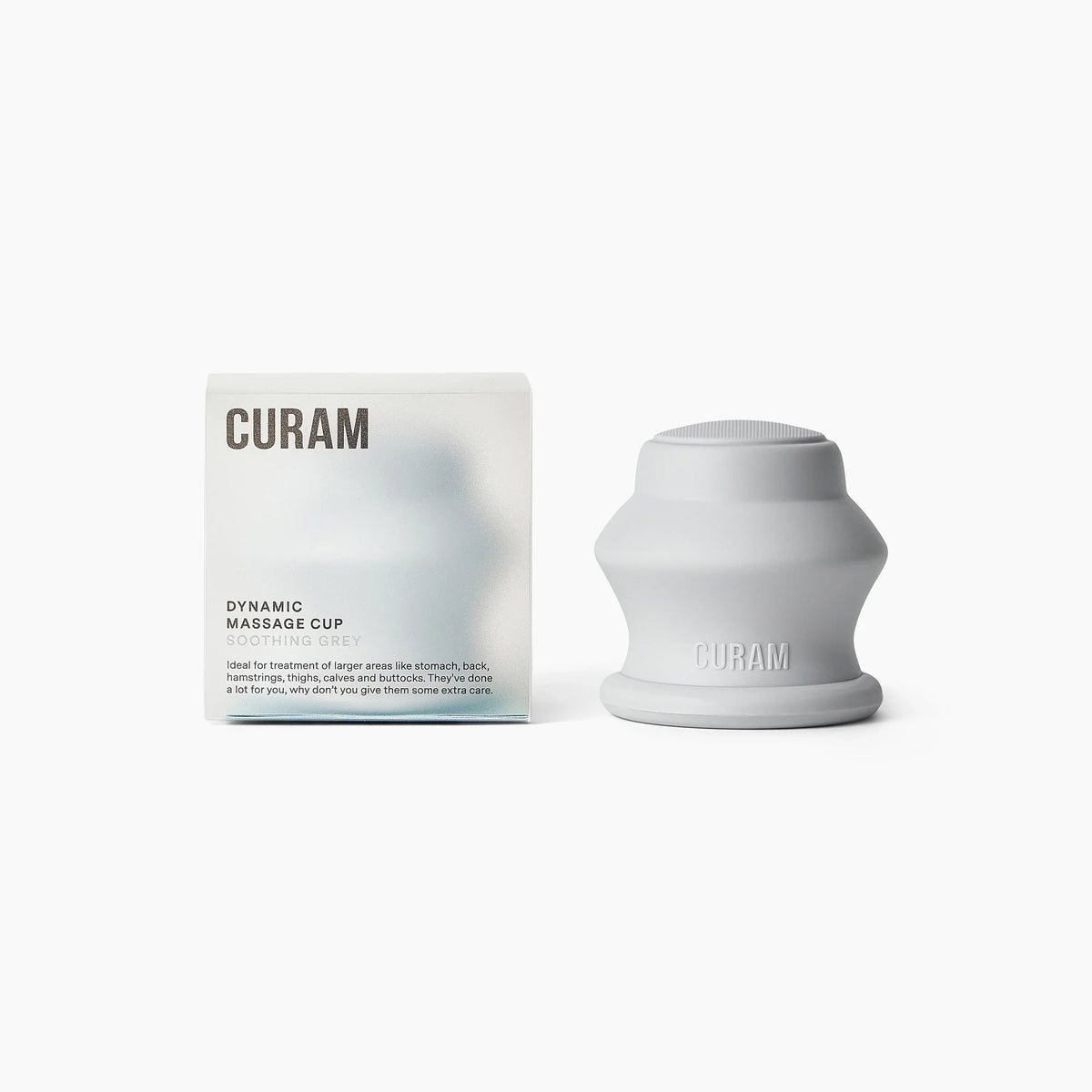
Cupping is one of the most direct ways to affect sore, tight muscles: the suction lifts skin and fascia from the muscle, increases blood flow two- to fourfold, releases adhesions and trigger points and gives a strong sensory signal that dampens the pain. Studies on cupping for neck, shoulder and lower back pain and for fibromyalgia show moderate pain relief and better function, on a par with massage and better than no treatment. How to: oil the skin, glide the dynamic cup in long strokes along the direction of the muscle fibres with light to moderate pressure, 3–5 minutes per area (neck and shoulders, upper back, lower back, thighs, calves), and then place static cups on the most tender points for 3–5 minutes. With generalised pain and fibromyalgia: light pressure, shorter time, more often, so the body doesn't react with more pain the next day. Routines are in the cupping programmes; the basics in the complete guide. Don't cup with fever and infection, over a swollen or newly injured muscle, with suspected myositis or rhabdomyolysis, and not if you take blood thinners without having asked; see when to avoid cupping.
Read more
Muscle soreness, fibromyalgia and widespread pain, stiff body, rheumatism and joint pain, fatigue and recovery after training.
Frequently asked questions
What is myalgia?
Myalgia means muscle pain and is a description, not a diagnosis. Local myalgia is almost always due to overload, tension or trigger points; generalised myalgia all over the body to infection, stress and sleep deprivation, medications (statins), nutritional deficiencies, the thyroid, rheumatic disease or fibromyalgia. Pain in many muscles without exertion lasting more than two to three weeks should be examined.
What is muscle inflammation?
In everyday language: sore, overloaded muscles and tendon attachments, which isn't an inflammation in the muscle but an irritation that heals with the right load. True muscle inflammation (myositis) is uncommon, autoimmune or post-viral, and causes increasing weakness in thighs and shoulders rather than soreness. Weakness that makes it hard to get up or lift the arms should always be investigated.
Why do my muscles hurt without having trained?
Most often: tension from stress and static work, sleep deprivation, an infection coming or just over, medications such as statins, vitamin D deficiency in winter, or in women around 50 the menopause. In people over 50 with sudden aching and stiffness in shoulders and hips in the morning: polymyalgia rheumatica, which is treated effectively. Get a blood test from your doctor if the pain has lasted more than a couple of weeks.
What helps muscle pain all over the body?
Light daily movement (walking, cycling, swimming) instead of rest, heat, seven to nine hours of sleep, stress management with breathing and relaxation, enough protein and fluids, vitamin D in winter, and cupping with light pressure on the sorest areas. If the pain is new, worsening or comes with fatigue, fever or weakness: a blood test from your doctor.
Does cupping help muscle pain?
Yes, for tight, overloaded and sore muscles: the suction increases blood flow, releases fascia and trigger points and dampens the pain signal, with moderate effect in studies on neck, shoulder and back pain and fibromyalgia. For generalised pain: light pressure, short time, often. Not with fever, over an injured or swollen muscle, with suspected myositis or dark urine, or with blood thinners without a doctor's OK.
Related guides
Written by Curam. Last updated 17 October 2026. This is general self-care information and does not replace medical care. For sudden, severe or unusual symptoms, contact your doctor. Talk to your doctor before cupping if you are pregnant, take blood thinners or have a condition affecting skin, blood vessels or blood.


