


Groin pain has four common explanations: overloaded adductors (the inner thigh muscles) or hip flexors after running, football, skiing or new sessions; an inguinal hernia, a soft lump in the groin that becomes clearer when you cough or stand; the hip joint, which often gives pain exactly in the groin with osteoarthritis or impingement; and in pregnancy, pelvic girdle pain at the pubic joint. Muscle pain hurts with load and is tender on the inner thigh, a hernia gives a lump, the hip gives deep pain with stiffness and reduced range. Sudden severe pain, a lump that cannot be pushed back, fever or pain in the scrotum are signals for urgent care. Here is how to tell the causes apart, when to seek care, self-care with exercises and how cupping of the inner thigh and hip flexor is used.
What is hurting? The causes
| Cause | Recognised by | What helps |
|---|---|---|
| Adductor pain (inner thigh) | Pain in the groin and along the inner thigh when kicking, side-stepping, running, squeezing the knees together. Tender to pressure at the adductor attachment on the pubic bone. Most common in football, hockey and runners | Calmer loading, the Copenhagen exercise and adductor training, cupping the inner thigh |
| Hip flexor (iliopsoas) | Pain at the front of the groin when lifting the knee, running uphill, after a lot of sitting; a tight feeling at the front of the hip | Hip flexor stretching, less sitting, core training, cupping the front of the thigh |
| Inguinal hernia | A soft lump in the groin or down towards the scrotum that shows when you stand, cough or lift and disappears when you lie down. Dull ache, heaviness | Assessment by a doctor; surgery if it causes problems. Self-care and cupping do not help |
| Hip joint (osteoarthritis, impingement, labral tear) | Deep pain in the groin, morning stiffness, hard to put on socks, pain when rotating the hip inwards or sitting deep. See the guide to hip pain | Mobility and strength, physiotherapist, investigation for long-standing problems |
| Pelvic girdle pain in pregnancy | Pain over the pubic bone and in the groins, worse turning in bed, on stairs and standing on one leg. See the guide to pelvic girdle pain | Pelvic belt, offloading, physiotherapist; no cupping on the pelvis |
| Lymph nodes | Tender lumps in the groin with an infection in the leg or foot, a wound, a sexually transmitted infection; sometimes fever | Treat the infection; lumps that grow or do not go back should be assessed |
| Stress fracture or avulsion | Pain that gets worse with every session, pain even at rest, in runners and young athletes (a tendon pulling off a bone fragment during a kick) | X-ray or MRI; rest from loading |
| Other | Kidney stones (pain radiating from the flank down into the groin, in waves), testicular pain, gynaecological causes, nerve entrapment (burning pain on the front of the thigh) | Medical care, urgent with severe pain |
Seek care if
Seek urgent care if a lump in the groin suddenly becomes hard, very tender and cannot be pushed back, especially with nausea and vomiting (strangulated hernia), if you have severe pain in the scrotum or a testicle (testicular torsion is an emergency), if you get sudden severe pain in the flank radiating down into the groin with blood in the urine, or if you have fever and tender lumps. Contact your doctor if the pain has not improved with self-care in four to six weeks, if you have a lump in the groin however small, if the pain is present at rest or at night, if the hip has become stiff or you limp, if you are pregnant with pelvic pain that disturbs daily life, or if you have numbness or weakness in the leg.
Self-care for muscular groin pain
- Reduce what hurts, but do not rest completely. Swap kicks, side-steps and sprints for cycling, swimming and easy running for a few weeks. Total rest weakens the adductors.
- The Copenhagen exercise (side plank with the top leg on a bench, lifting the body and the lower leg) is the best-documented exercise for preventing and rehabilitating groin injuries; start with the knee version, 3 x 6–10 per side, three times a week.
- Adductor strength with a ball: lie on your back, squeeze a ball between the knees for ten seconds, 10 repetitions; then the same with straight legs.
- Stretch the hip flexor and adductors once the acute phase has passed: a lunge with the back knee on the floor and the pelvis tilted backwards, 30 seconds per side; a sumo squat with the elbows against the knees. The exercises are in the guide to hip stretches.
- Core and glutes. A weak trunk and gluteal muscles put more on the adductors; see core exercises.
- Heat and massage of the inner and front thigh soften the tension; cupping below.
- Return gradually: first straight running, then side-steps, then kicks and sprints, with at least one pain-free session at each level.
Cupping the inner thigh and hip flexor
Cupping is used for muscular groin pain to increase circulation in the adductors and hip flexor and soften the tension pulling on the attachment at the pubic bone. You cup the muscle belly on the thigh, not the groin crease itself, not over a lump and not on the pelvis during pregnancy.
- Sit with the leg turned outwards, or lie on your back with the knee bent outwards. Oil the inner thigh with massage oil.
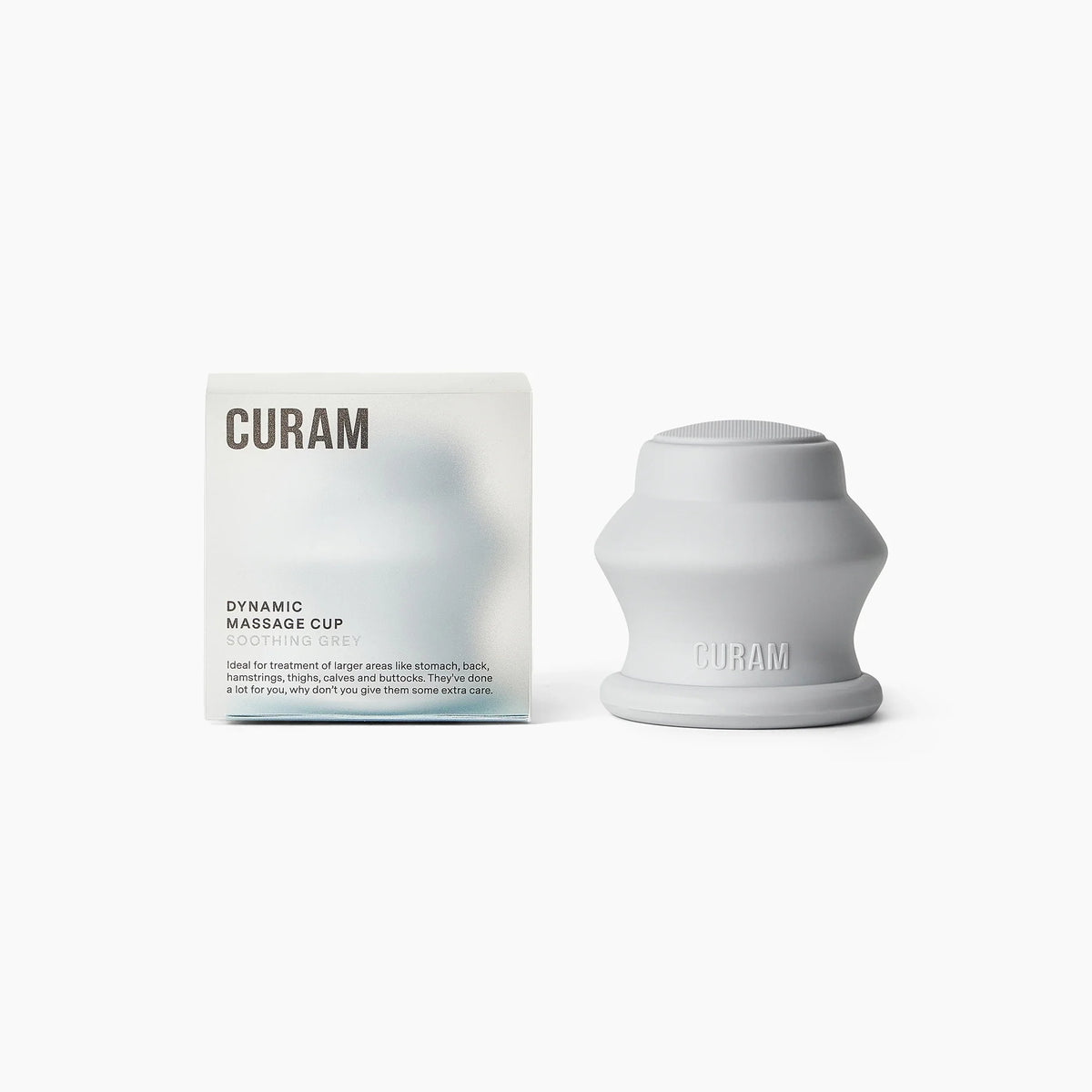
- Use the dynamic cup with light to moderate suction. Start a hand's width below the groin and glide long strokes down towards the inside of the knee, three minutes. Avoid the groin crease itself, where vessels, nerves and lymph nodes lie superficially.
- Hip flexor: lie on your back, cup the front of the thigh from a hand's width below the groin down towards the knee, two minutes. The iliopsoas itself sits deep behind the abdomen and cannot be reached with a cup; stretching and breathing work better there.
- Finish with hip flexor and adductor stretches, one minute each.
- Two to three times a week during rehab, and as preparation before sessions. Do not cup with a suspected hernia, stress fracture, freshly injured muscle (first three days), swollen lymph nodes or during pregnancy on the pelvis and lower abdomen.
The programs for runners and padel include thigh and hip; the basic technique is in Cupping at home.
Prevent groin pain
The Copenhagen exercise twice a week in season markedly reduces groin injuries in studies on football players. Warm up with side-steps and light kicks before sessions, increase load gradually, stretch the hip flexor if you sit a lot, and cup the inner thigh after heavy sessions so tension does not build up.
Frequently asked questions
How do I know if it is a hernia or a muscle?
A hernia gives a soft lump that shows when you stand or cough and disappears when you lie down, with a dull heavy feeling. Muscle pain gives no lump, is tender on the inner thigh and hurts when kicking, side-stepping and squeezing the knees together. Unsure: let a doctor examine it, it takes a minute.
Why does my groin hurt when I walk?
With every step the hip flexor and adductors work, so overloaded muscles hurt when you walk. Deep pain with stiffness and difficulty rotating the hip points to the hip joint, and a lump to a hernia. Pregnant women with pain over the pubic bone when walking often have pelvic girdle pain.
Does cupping help groin pain?
For muscular pain in the adductors and hip flexors, yes: it increases circulation and softens the tension pulling on the attachment. It does not help with a hernia, hip osteoarthritis, stress fracture or pelvic girdle pain, and should not be done in the groin crease itself.
How long does groin pain take to go away?
Mild adductor overload two to four weeks with the right training, a strain six to twelve weeks, long-standing groin pain in athletes often several months. If it is not improving in four to six weeks, or hurts at rest, it should be assessed.
Can pregnant women cup for groin pain?
No, not on the pelvis, groins or lower abdomen. Pelvic pain in pregnancy is usually pelvic girdle pain and is managed with a belt, offloading and a physiotherapist; see the guide to cupping during pregnancy.
Sources
- 1177 Vårdguiden (Swedish national health guide), search for "ljumskbråck", "ljumsksmärta" and "foglossning" for medical information and when to seek care.
- Curam's FAQ and cupping programs, developed with trained massage therapists.
Related guides
Written by Curam. Last updated 17 October 2026. This is general self-care information and does not replace medical care. For sudden, severe or unusual symptoms, contact your doctor. Talk to your doctor before cupping if you are pregnant, take blood thinners or have a condition affecting skin, blood vessels or blood.


