


The knee joint is surrounded by a joint capsule with joint fluid, and at the back of the knee there is a weak point between two tendon attachments where the capsule can bulge out when pressure in the joint rises. If the knee for any reason gets too much fluid, which it does with irritation of cartilage or meniscus, the fluid is pushed backwards through the weak point into a bursa under the inner head of the calf muscle, and a cyst forms there: Baker's cyst, after the surgeon who described it in the 1870s. In adults it is almost always secondary to something else in the knee: osteoarthritis (most common after 50), a meniscus tear (most common before 50), rheumatoid inflammation, or an old cruciate ligament injury. In children it occurs without cause and disappears by itself. The cyst itself is harmless. It can be completely symptom-free and found by chance on ultrasound, or give a palpable lump, tension and a feeling of fullness behind the knee, stiffness and difficulty bending the knee fully, and pain going downstairs and squatting. If it gets large it can press on vessels and nerves and cause a swollen calf and numbness in the foot. And sometimes it ruptures, the fluid runs down into the calf, and it looks and feels exactly like a blood clot: sudden swelling, warmth, redness and pain in the calf. That situation is why a swollen calf should always be assessed by a doctor the same day, since a blood clot can't be ruled out without ultrasound. Here is how to recognise the cyst, what other causes of pain behind the knee exist, when to seek care, and what helps.
How a Baker's cyst feels
- A soft to firm, round lump behind the knee, usually on the inner side, most palpable and tense when the knee is straight and softer when it is bent (Foucher's sign).
- Tension, pressure and a feeling of fullness behind the knee; the sense that "something is in the way" when you bend.
- Stiffness and difficulty bending or straightening the knee fully, worse after sitting and in the morning.
- Pain going downstairs, squatting, kneeling and on long walks; often also the symptoms of the underlying cause (knee ache, swelling at the front, locking with a meniscus tear).
- With a large cyst: swollen calf, heaviness, numbness or tingling in the lower leg and foot.
- With rupture: sudden pain, swelling, warmth and redness in the calf, sometimes a bruise that travels down towards the ankle after a few days. Seek care the same day (see below).
Other causes of pain behind the knee
| Cause | How it feels | What helps |
|---|---|---|
| Hamstring tendon attachments (inner or outer side of the back of the knee) | Tender right on the tendon, worse with sprinting, lunges, deep bending against resistance; common in runners and after bouncing stretches | Rest from what provokes it, eccentric hamstring training (nordic hamstring, light), cupping the back of the thigh |
| Calf muscle attachment (gastrocnemius, above the back of the knee) | Tender just below the back of the knee, worse with calf raises, uphill running, jumping | Calf stretch with straight knee, light calf raises, cupping the calf |
| Posterior horn of the meniscus | Deep pain behind the knee at full bending, squatting and twisting; sometimes swelling and a locking sensation | See meniscus tear; locking that doesn't release: care |
| Knee osteoarthritis | Ache around the whole knee including the back, morning stiffness, grinding; often with a Baker's cyst | See knee osteoarthritis |
| Tight muscle behind the knee (popliteus) and hypermobility | Dull ache behind the knee after long downhill walks or standing with hyperextended knees | Stop locking the knees when standing, strengthen the back of the thigh, cupping of back of thigh and calf; see hypermobility |
| Nerve pain from the back (sciatica) | Pain radiating from the buttock down the back of the thigh and behind the knee, often with numbness | See sciatica |
| Deep vein thrombosis (blood clot) | Swollen, warm, tender calf, often red, sometimes without clear cause; after travel, surgery, bed rest, the pill, pregnancy | Care the same day. Never cup, never massage |
The whole knee: knee pain: where does it hurt and what it can be; swollen knee at the front: swollen knee and fluid on the knee.
When to seek care
- Same day (urgent care): the calf has become swollen, warm, red or tender over hours to a day, with or without a known cyst. It can be a ruptured cyst and it can be a blood clot, and they can't be told apart without ultrasound. If you also get breathless or have chest pain: emergency services.
- Your doctor within a week or so: a new lump behind the knee (to confirm it is a cyst and find the cause); a cyst with numbness, calf swelling or clear effect on walking and bending; a knee that locks; pain behind the knee not improved after three to four weeks of self-care; a lump that is hard, growing or in an unusual place.
The doctor examines the knee and often does an ultrasound, which shows the cyst and rules out a blood clot. X-ray or MRI is done when the cause needs mapping (osteoarthritis, meniscus). Treatment is aimed at the cause: physiotherapy and training for osteoarthritis and most meniscus problems, sometimes a cortisone injection into the knee joint (not into the cyst) with a lot of fluid, and rarely aspiration of the cyst, which often returns if the cause isn't addressed. Surgery on the cyst itself is now rarely done.
What helps
1. Treat the cause
The cyst is a consequence of the knee producing too much fluid. If the irritation in the joint decreases, the fluid and the cyst decrease. For osteoarthritis it is strength training of thigh and hip, weight loss if overweight and regular low-impact movement (cycling, swimming, walking) that give results; for meniscus problems usually the same. Allow six to twelve weeks before the knee is calmer and the cyst smaller.
2. Exercises that offload the knee
- Front of the thigh without deep bending: seated leg extensions with an ankle weight or band, 3 × 12; mini squats to 30–45 degrees; step-ups on a low step.
- Hip and glutes: glute bridges 3 × 15, side-lying leg raises 3 × 15, clamshells with a band. Stronger hips make the knee track straighter and get less irritated.
- Back of the thigh: lying hamstring curls with a band or on a pilates ball, light and controlled, 3 × 12.
- Mobility: heel slides lying down (pull the heel towards the buttock and out again, 2 × 15) so the bend doesn't stiffen; gentle seated hamstring stretch with straight knee, 30 seconds × 3; calf stretch against a wall with straight knee, 30 seconds × 3. Stretch to tension, never into pain behind the knee, and avoid deep squatting positions while the cyst is tense.
- Cardio: cycling with a high saddle and light resistance, swimming with a crawl kick, walking on flat ground. For now avoid downhill running, deep squats and kneeling.
3. Relief
Cold on the back of the knee for 15 minutes after activity if it is tense and aching; leg elevated in the evening with a swollen calf; a light elastic knee support can feel good but shouldn't be tight behind the knee. Over-the-counter anti-inflammatories can relieve for a few days during an osteoarthritis flare, on the pharmacist's or doctor's advice.
4. Cupping: around it, never on it
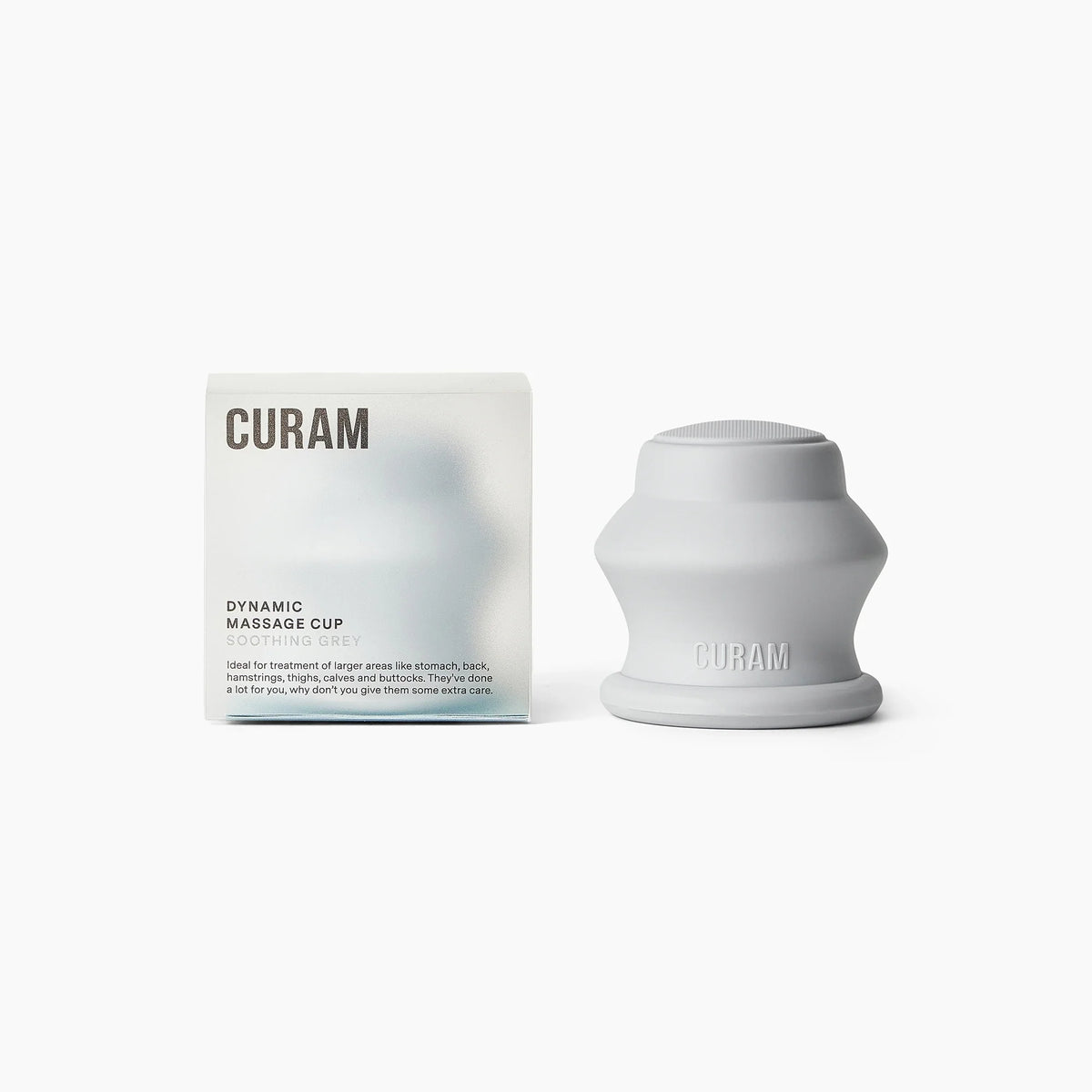
Cupping doesn't help the cyst itself, but it does exactly what offloads the knee: releases tight hamstrings and calves that pull on the back of the knee, increases blood flow in the thigh muscles that are to be trained, and reduces the surrounding stiffness. The rule is simple: never cup on the cyst, on the back of the knee or on a swollen, warm knee. Oil the skin and glide the dynamic cup with light pressure along the back of the thigh from just above the back of the knee up towards the sitting bone, 3 minutes, and along the front and outside of the thigh, 2–3 minutes; then the calf from the Achilles up to a hand's width below the back of the knee, 2 minutes, with light pressure and towards the knee but never up into the back of the knee. Finish with the stretches above. For osteoarthritis there is a full routine in the cupping programme for sensitive knees; the basics in the complete guide. Don't cup at all with a suspected blood clot, with a ruptured cyst and swollen calf (wait until the doctor has assessed and the swelling has settled), on varicose veins behind the knee, or if you take blood thinners without having asked; see when to avoid cupping.
Read more
Knee osteoarthritis, meniscus tear, swollen knee and fluid on the knee, cracking knees, calf cramps and muscle strain in the calf and thigh.
Frequently asked questions
What is a Baker's cyst?
A fluid-filled bulge of the knee joint capsule backwards into a bursa behind the knee. It forms when the knee produces too much joint fluid for some other reason, most often osteoarthritis or a meniscus tear, and the fluid is pushed backwards through a weak point in the capsule. The cyst is harmless in itself and shrinks when the cause is treated.
How does a Baker's cyst feel?
Like a soft, tense lump behind the knee, most palpable with a straight leg, with pressure and fullness behind the knee, stiffness, difficulty bending the knee fully and pain going downstairs and squatting. A large cyst can cause a swollen calf and numbness in the foot. Many cysts are completely symptom-free.
Does a Baker's cyst go away by itself?
In children yes, almost always. In adults it shrinks when the underlying cause is treated: training of thigh and hip, weight loss and low-impact movement for osteoarthritis, rehab for meniscus problems. Aspiration and cortisone give temporary relief but the cyst often returns if the irritation in the joint persists. Surgery on the cyst itself is rarely done.
When is pain behind the knee dangerous?
When the calf becomes swollen, warm, red or tender over hours to a day: it can be a blood clot or a ruptured cyst, and they can't be told apart without ultrasound; seek care the same day, and emergency services with breathlessness or chest pain. Also seek care if the knee locks, if the lump is hard or growing, or if numbness and calf swelling develop.
Can you cup a Baker's cyst?
No, never on the cyst, behind the knee or on a swollen, warm knee. However, cupping the back, front and outside of the thigh and the calf (up to a hand's width below the back of the knee) helps release the muscles that pull on the back of the knee and prepares the thigh for the training that offloads the knee. With a suspected blood clot or recently ruptured cyst: no cupping at all until the doctor has assessed.
Related guides
- Thigh pain – front, back, outside and inside: what it can be
- Calf pain – where does it hurt and what it can be
Written by Curam. Last updated 17 October 2026. This is general self-care information and does not replace medical care. For sudden, severe or unusual symptoms, contact your doctor. Talk to your doctor before cupping if you are pregnant, take blood thinners or have a condition affecting skin, blood vessels or blood.


