


Ankle pain without a recent sprain is usually tendons overloaded by running, stairs, new shoes or a lot of standing: the Achilles tendon at the back, the peroneal tendons on the outside, the tibialis posterior on the inside and the toe extensor tendons on top of the ankle. Next most common is an old sprain that has left instability and weakness, so the ankle gives way easily and aches after loading, and over the years osteoarthritis in the joint after repeated injuries. Pain at the front of the ankle when you bend the foot upwards or squat is impingement, pain at the back when standing on tiptoe can be an extra bone (os trigonum) or the Achilles attachment. A hot, red, swollen ankle without injury, especially with fever or sudden severe pain at night, is gout or infection and should be assessed straight away. Here is the location map, the warning signs, the self-care, the exercises that give stability and how cupping of the calf and foot is used.
Where does it hurt? The location map
| Location | Likely cause | Typical |
|---|---|---|
| Outside, behind and below the ankle bone | Peroneal tendons (overload or instability after a sprain) | Pain and sometimes swelling along the tendons, worse walking on uneven ground, a feeling that the foot gives way. See the guide to a sprained ankle |
| Inside, behind the ankle bone | Tibialis posterior tendon | Pain and swelling on the inside, the arch collapses, hard to stand on tiptoe on one leg. See the guide to flat feet |
| Back, above the heel | Achilles tendon | Stiff and tender in the morning, pain with running and calf raises. See the guide to Achilles tendinopathy |
| Back, deep, when standing on tiptoe | Posterior impingement (os trigonum), common in dancers and footballers | Sharp pain when the foot is pointed fully downwards |
| Front of the ankle | Anterior impingement, toe extensor tendons, laces that rub | Pain with deep squats, uphill, tightly laced shoes; sometimes swelling on top of the ankle |
| Inside the joint, stiff and swollen | Osteoarthritis after injuries, cartilage damage, joint inflammation | Stiff in the morning, ache after loading, clicking, swelling that comes and goes |
| The whole joint hot, red, very tender | Gout, infection, rheumatic disease | Sudden severe pain, often at night, fever; assess straight away |
| Dull ache, swelling around the ankle without a clear tender point | Fluid retention, a lot of standing | Swelling that decreases with the legs raised. See the guide to swollen legs and feet |
| Sharp pain that increases with every run | Stress fracture in the ankle or midfoot | Tender point on the bone, pain even at rest; needs an X-ray |
Seek care if
Seek urgent care if the ankle is hot, red, heavily swollen and very tender without injury, especially with fever (infection or gout), if you cannot bear weight after a twist or fall, if the foot is deformed, or if the calf is swollen and tender at the same time (clot). Contact your doctor if the pain has not improved with self-care in four to six weeks, if the ankle gives way repeatedly, if the joint swells recurrently, if you have numbness, if the pain is present at rest or at night, if you suspect a stress fracture, or if you have diabetes or reduced sensation with foot problems.
Self-care that helps
- Reduce what hurts for two to three weeks (running, jumping, uneven ground, deep squats) but walk and cycle in a pain-free range; total rest makes the joint stiff and weak.
- Cold and elevation for swelling after loading, 15 minutes; heat for stiffness in the morning.
- Shoes: a firm heel counter, cushioning, not laced tightly over the ankle; insoles for flat feet or a high arch. Replace worn running shoes.
- Daily mobility: ankle circles, writing the alphabet with the foot, calf stretch with a straight and bent knee, 30 seconds each, and the "knee to wall" test for ankle flexion: toe 10 cm from the wall, the knee should reach the wall without the heel lifting.
- Stability and strength (what prevents new sprains and reduces ache): single-leg stance 30 seconds, then on a cushion, then with eyes closed; calf raises 3 x 15, slowly down; ankle out and in against a resistance band 3 x 15; side-steps and small hops when pain-free. See balance exercises.
- With instability after an old sprain: an ankle brace or tape for sport for a few months while you build up strength; a physiotherapist if the foot gives way often.
- Gradually back: walking, then brisk walking, then running on flat ground, then uneven, with a pain-free day at each level.
Cupping the calf and foot for ankle pain
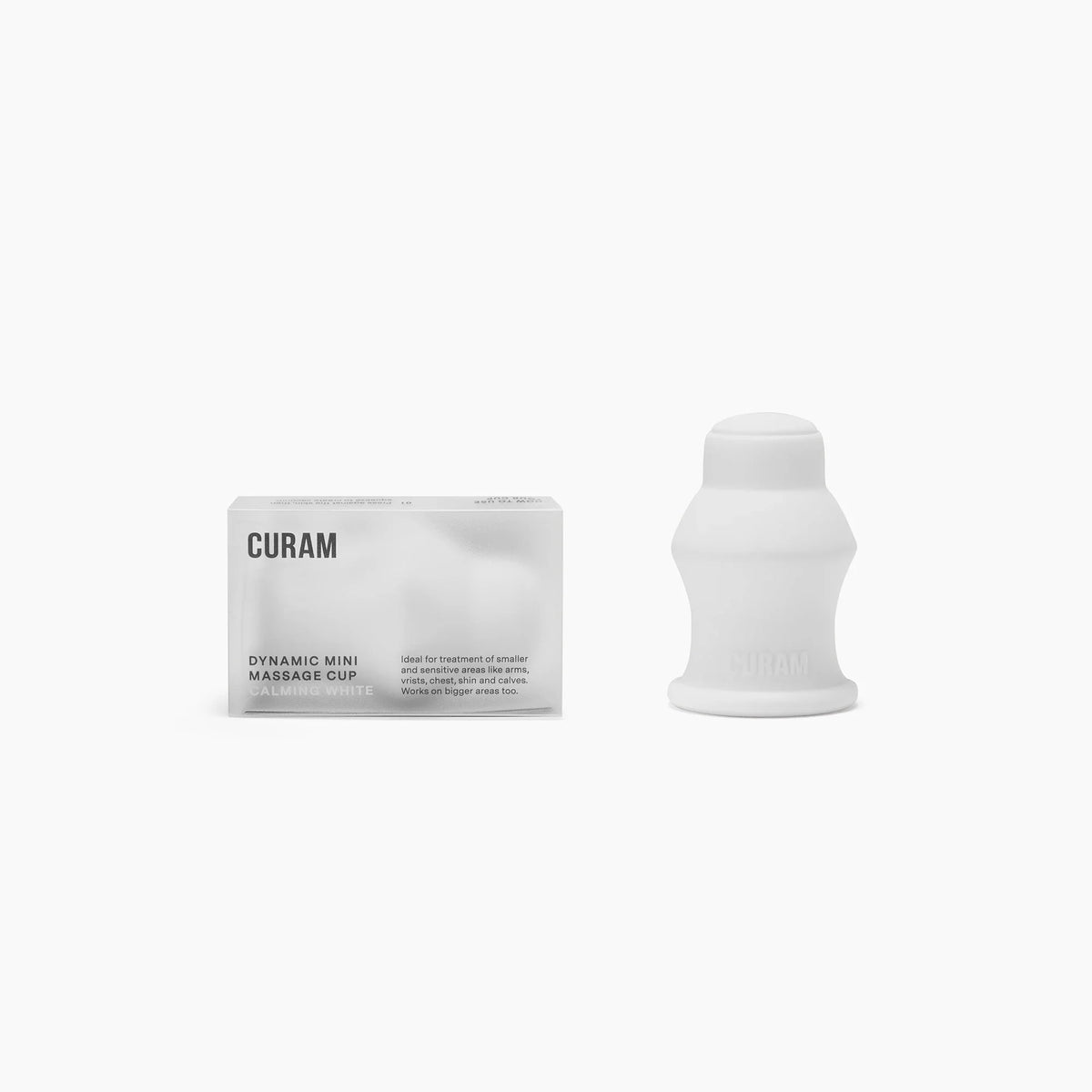
The tendons around the ankle are controlled by muscles in the calf and lower leg, and those are what become tight and overloaded; the ankle joint itself is not cupped, but the muscles around it make a big difference. Cupping increases circulation, softens the calf so the ankle can bend more, and reduces the pull on the tendons. Use the mini cup with light suction and massage oil.
- Sit with the foot in your lap or lie on your front. Oil the calf and the sides of the lower leg.
- Calf: long strokes from the heel up towards the back of the knee, two to three minutes; circles on the thickest part of the calf. A tight calf limits ankle mobility more than anything else.
- Outside of the lower leg (peroneal muscles): strokes from the ankle bone up towards the knee along the outside, one minute. With instability after a sprain they are often tight.
- Inside of the lower leg (tibialis posterior): light strokes from the inner ankle bone up towards the knee, one minute.
- Front of the lower leg (toe extensors, with pain at the front of the ankle): strokes from the ankle up towards the knee beside the shin bone, one minute.
- Sole: strokes from the heel towards the toes, one minute. Finish with ankle circles, a calf stretch and balance exercises. Three times a week.
The full lower leg and foot routine is in the Footloose cupping program and the program for runners. Do not cup the ankle joint itself, a hot, red and swollen joint, within three days of a sprain, with a suspected clot or stress fracture, with reduced sensation, or on sores and eczema.
Frequently asked questions
Why does my ankle hurt without a sprain?
Usually overloaded tendons around the ankle (Achilles, peroneals, tibialis posterior, toe extensors) from running, standing or new shoes, an old sprain that has left instability, or osteoarthritis after previous injuries. Impingement at the front or back gives pain at the end of range. A hot, red and swollen joint without injury is gout or infection and should be assessed straight away.
What helps ankle pain?
Offloading what hurts, cold for swelling, the right shoes, daily mobility (ankle circles, calf stretch), stability and strength exercises (single-leg stance, calf raises, resistance band) and cupping or massage of the calf and lower leg muscles. If it is not improving in four to six weeks, let a clinician assess it.
Does cupping help ankle pain?
Indirectly, yes: cupping the calf and lower leg muscles, which control the ankle tendons, softens the tension, increases mobility and reduces the pull on the tendons. The ankle joint itself is not cupped, nor a hot, swollen joint or a fresh sprain.
Why does my ankle give way?
Usually after one or more sprains that have loosened the ligaments and weakened the balance and the muscles that stabilise the ankle. Balance and strength exercises for a few months, a brace for sport and cupping of the outside of the lower leg build up stability; if it gives way often despite training, let a physiotherapist or orthopaedic surgeon assess it.
How long does ankle pain take to heal?
Tendon overload two to eight weeks with offloading and training, instability after a sprain three to six months of training, osteoarthritis is long-term but influenceable. Pain at rest, recurrent swelling or a joint that gives way should be assessed.
Sources
- 1177 Vårdguiden (Swedish national health guide), search for "ont i fotleden", "stukad fot" and "gikt" for medical information and when to seek care.
- Curam's FAQ and cupping programs, developed with trained massage therapists.
Written by Curam. Last updated 17 October 2026. This is general self-care information and does not replace medical care. For sudden, severe or unusual symptoms, contact your doctor. Talk to your doctor before cupping if you are pregnant, take blood thinners or have a condition affecting skin, blood vessels or blood.


