


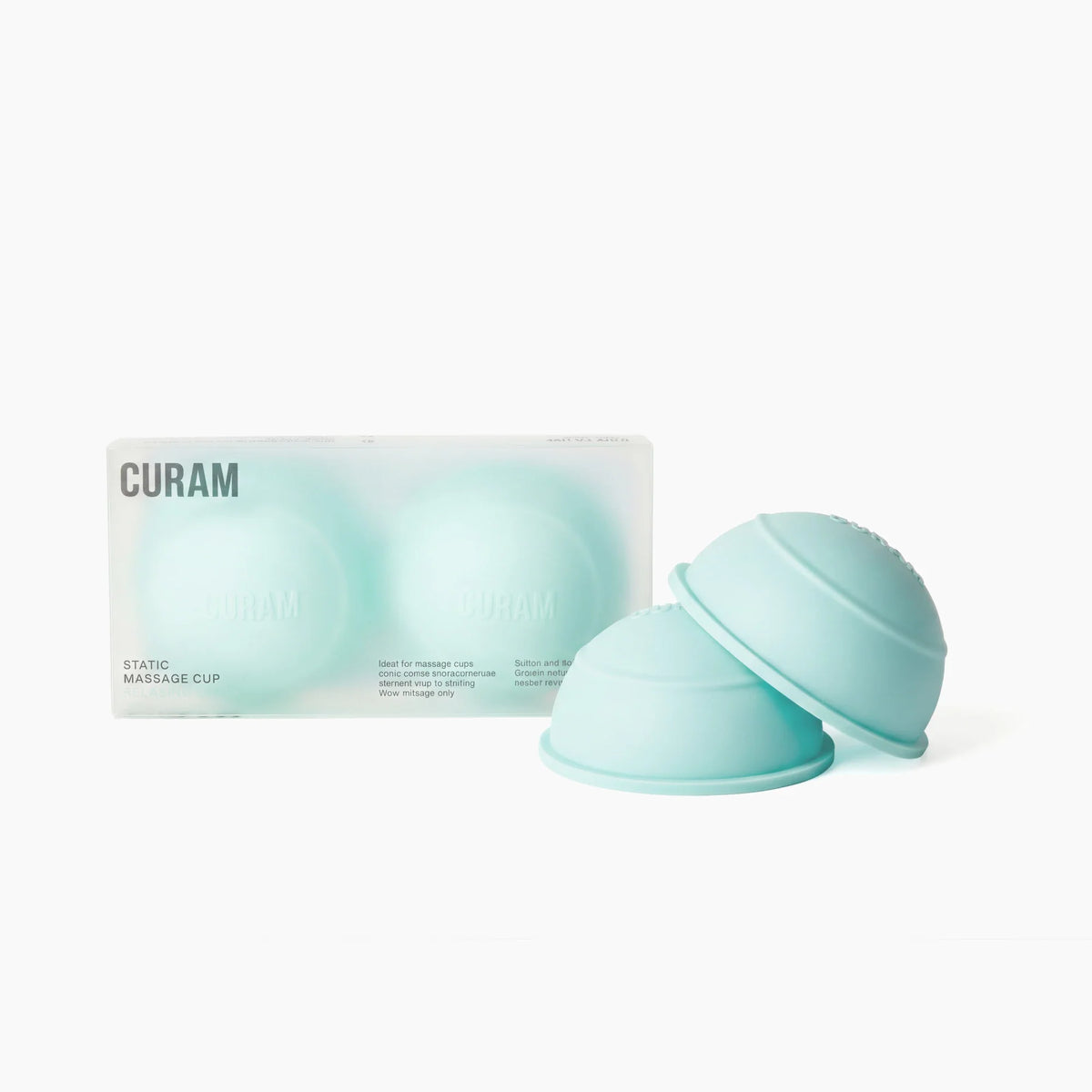
The neck and back are where stress, screens and sitting settle, and massage there is what most people long for and fewest dare to give. It is easier than it seems if you follow five principles: slowly (half as fast as you think), with body weight instead of the thumbs' force (lean in, straight arms), along the muscle fibres and toward the heart on the long strokes, ask about the pressure (good massage doesn't hurt; "good pain" is the limit), and start and finish softly. With five techniques (stroking, kneading, thumb pressure, knuckles and cross-fibre friction) and a map of where you may and may not press, you can give a 15-minute massage that removes most of a day's tension. On yourself, the neck and shoulders are reachable with the hands, while the back needs a ball against the wall or cups; cupping is altogether what makes back massage at home realistic, since static cups "hold" while you do something else and the dynamic cup replaces the heavy strokes that tire the masseur. Here are the techniques, the map, the routines and the cupping.
The basics that make a massage good
- Surface: the person being massaged lies on their front on a bed or on the floor with a pillow under the stomach and the forehead on the hands or a rolled towel, or sits astride a chair with the arms on the backrest (best for neck and shoulders). The masseur stands or kneels with a straight back at the side.
- Oil: a massage oil on bare skin for long strokes; without oil through thin clothes, kneading and thumb pressure work but stroking doesn't.
- Tempo and pressure: slow, even, first light to warm up and then deeper; press with the heel of the hand, knuckles or forearm rather than the thumbs, which tire and get sore. The pressure comes from leaning your body weight in, not from arm strength.
- Direction: long strokes toward the heart (from the lower back up toward the shoulders, from the shoulders in toward the neck and then out), kneading and pressure along the length of the muscle.
- Communication: ask "more or less?" after the first minute, and watch breathing and tension; if the person holds their breath it is too hard.
Where you may press, and where you never should
| Massage here | Never here |
|---|---|
| The upper trapezius (between neck and shoulder), the tightest part on most people | The front and sides of the neck in front of the large neck muscle (carotid artery, nerves, thyroid, windpipe) |
| The back of the neck either side of the vertebrae, up to the base of the skull | Directly on the vertebrae of the spine and neck; press on the muscle beside them |
| The muscle attachments at the base of the skull (small circles) | Firm pressure on the base of the skull with dizziness or a headache that is new or unusual |
| The muscles between the shoulder blades and along the inner edge of the blade | The bony edge of the shoulder blade itself with firm pressure; the armpit (vessels, nerves, lymph nodes) |
| The erector spinae either side of the spine from the pelvis up | The lowest ribs at the sides with firm pressure (the kidneys), and the abdomen from the back |
| The gluteal muscles (often the root of low back pain) | The tailbone directly, and the iliac crest with firm pressure |
| The lower back muscles with the palm, not the thumbs | A warm, swollen or newly injured spot, bruises, rashes, varicose veins |
Don't massage at all with fever or infection, a suspected blood clot, a recently injured or operated back or neck without the doctor's go-ahead, osteoporosis with a compression fracture (only very lightly), acute lumbago in the first days (light heat and stroking are fine), with cancer without consulting a doctor, or if the person takes blood thinners and bruises easily (light pressure). Neck massage with dizziness, numbness in the arms or a headache that is new and severe: have it examined first (dizziness, numbness).
The five techniques
- Stroking (effleurage): the whole palms glide slowly with even pressure along the muscle, toward the heart. Opens, closes and links everything. Warms, spreads the oil, calms.
- Kneading (petrissage): lift and roll the muscle between thumbs and fingers or between the hands, like kneading dough; on the trapezius, glutes and erector spinae. Slowly, not pinching.
- Thumb pressure and circles: the thumb or knuckle presses straight down on a tight spot, holds 10–30 seconds until it gives, or makes small circles; on muscle knots in the trapezius, between the shoulder blades, in the buttock. Press in slowly, don't jab.
- Knuckles and forearm: roll the knuckles or glide with the soft part of the forearm along the erector spinae and over the glutes for deep pressure without tiring the thumbs; the forearm is the best tool on the lower back.
- Cross-fibre friction: short strokes across the muscle fibres with the fingertips on a tough, stiff spot (the edge of the shoulder blade, the neck's muscle attachments), 20–30 seconds; softens scar tissue and tough bands.
Massaging your own neck and back
- Neck and shoulders with the hands (3 min): opposite hand over the shoulder, knead the trapezius between fingers and heel of the hand, 1 minute per side; then fingertips either side of the neck vertebrae, small circles from the base of the skull down toward the shoulders; finish with the thumbs in the muscle attachments at the base of the skull, light pressure with the chin slightly tucked, 30 seconds. More in stiff neck and tight shoulders.
- The back with a ball (3 min): a tennis ball or massage ball between the back and a wall, roll slowly over the muscles beside the spine, pause on tender points 20–30 seconds; the same on the glutes. See massage ball or cupping.
- The back with cups (8 min): the realistic way to "massage" your own back: static cups either side of the spine between the shoulder blades or in the lower back for 5 minutes (place them lying on your side or sitting leaning forward, then lie on your back on a soft surface or stay seated), and the dynamic cup with oil on the lower back muscles and glutes as far as you can reach, 1–2 minutes per side. The full approach is in cupping on the back.
- Finish with shoulder rolls, chin tucks and cat-cow.
Massaging someone else: a 15-minute routine
- Stroking (2 min): hands either side of the spine at the lower back, glide slowly up toward the shoulders, out over the shoulders and down the sides; 10 times with increasing pressure. Spreads the oil and tells the body it is time to relax.
- Shoulders and trapezius (3 min): stand at the head end or the side, knead the trapezius between thumbs and fingers from the neck out toward the shoulder joint, both sides; thumb pressure 10–20 seconds on the knots you find; cross-fibre friction along the upper edge of the shoulder blade.
- Neck (2 min): fingertips either side of the neck vertebrae, small circles from the base of the skull down, light pressure; one hand at a time with the other as support on the shoulder; finish with light traction at the base of the skull (hands cupped under the back of the head, pull gently toward you) for 20 seconds. Never on the front of the neck.
- Between the shoulder blades (3 min): ask the person to place the hand on the back so the shoulder blade wings out, and work with thumbs and fingertips along the inner edge of the blade and in the muscles between blade and spine; knuckles in long strokes upward; cross-fibre friction on tough spots. This is where most people want the most time; see pain between the shoulder blades.
- Lower back and glutes (3 min): the forearm or heel of the hand in long strokes along the erector spinae from the pelvis upward, never on the vertebrae; kneading of the glutes through thin clothes or on bare skin, deep thumb pressure in the buttock for piriformis; light pressure over the sacrum. Not hard over the lowest ribs at the sides.
- Finish (2 min): long strokes as at the start, lighter and slower, and finally still hands on the upper back for a few breaths. Cover with a blanket; the person should lie still for a minute.
With cups it gets easier: place static cups on the trapezius or between the shoulder blades for 3–5 minutes while you massage the lower back, and use the dynamic cup for the long strokes along the erector spinae instead of the hands; it saves your strength and gives a depth that is hard to reach with the hands. Guide for practitioners: cupping for massage therapists.
Afterwards, and how often
Drink water, move the shoulders, avoid hard training in the next few hours. Mild soreness the next day is normal after deep massage the first few times; bruises mean too much pressure. Once a week as a routine, more often with a stiff neck during a hard period, and ideally combined with neck exercises and breaks from the screen, since massage relieves but doesn't change what creates the tension. More on the effects of massage and its forms in massage – types and effects; more situations where you should abstain in when to avoid cupping.
Frequently asked questions
How do you give a good neck massage?
Have the person sit astride a chair with the arms on the backrest or lie on their front. Warm up with strokes over the shoulders, knead the trapezius between thumbs and fingers from the neck out toward the shoulder, make small circles with the fingertips either side of the neck vertebrae from the base of the skull down, press 10–20 seconds on knots, and finish with light traction at the base of the skull. Slowly, with body weight, never on the front of the neck or directly on the vertebrae.
How do you massage your own back?
Neck and shoulders you reach with the hands; the back needs tools: a ball between the back and the wall for tender points, and cups for most of the rest: static cups either side of the spine for 5 minutes and the dynamic cup with oil on the lower back and glutes as far as you can reach. That gives a depth and relaxation the hands can't manage on your own back.
Where shouldn't you press in a back massage?
Never directly on the vertebrae (massage the muscles beside them), not hard over the lowest ribs at the sides (the kidneys), not on the tailbone or iliac crest with firm pressure, not in the armpit, not on the front of the neck, and not on a warm, swollen, newly injured spot, bruises, rashes or varicose veins.
How hard should you press?
Firm but pleasant: "good pain" is the limit, and the person should be able to breathe calmly throughout. Start light, increase gradually, and ask after the first minute. The pressure should come from body weight (lean in with straight arms) and from the heel of the hand, knuckles and forearm, not from the thumbs, which tire and hurt.
Does cupping help as a complement to massage?
Yes, in two ways: static cups hold an even lift on the trapezius or between the shoulder blades for 3–5 minutes while you massage something else, and the dynamic cup with oil replaces the heavy long strokes along the erector spinae so the masseur doesn't tire and the pressure reaches deeper. For anyone massaging themselves, cups are what make the back reachable.
Related guides
- Foot massage and reflexology – how to at home
- Acupuncture, acupressure or cupping – differences and evidence
- Neck pain – where does it hurt and what it can be
Written by Curam. Last updated 17 October 2026. This is general self-care information and does not replace medical care. For sudden, severe or unusual symptoms, contact your doctor. Talk to your doctor before cupping if you are pregnant, take blood thinners or have a condition affecting skin, blood vessels or blood.


