


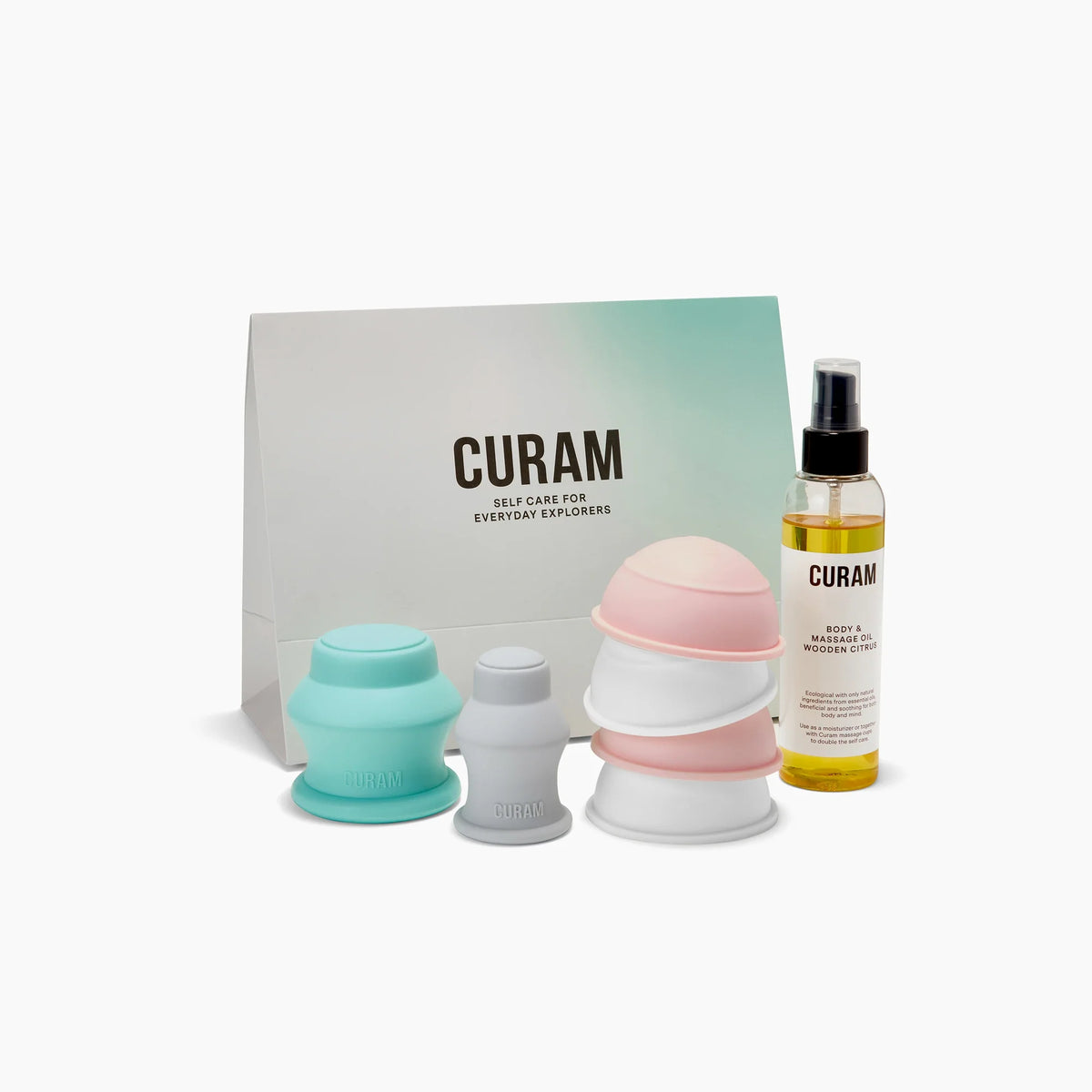
For the massage therapist, cupping is a way to work on the connective tissue through lift rather than pressure. Static cupping releases trigger points and prepares tissue while you work elsewhere; dynamic cupping replaces or reinforces long effleurage strokes and spares your hands and thumbs. Here is how to build both into a treatment, protocols for 30 and 60 minutes, contraindications, hygiene and how to talk to the client about marks.
Why cupping in the massage?
- Reversed force. The lift creates glide between skin, subcutis and muscle sheath that is hard to reach with pressure, especially over large, dense areas such as thighs and lower back.
- Relief for you. Dynamic cupping with oil does the work over thighs, back and calves without load on thumbs and wrists.
- Parallel work. Static cups on shoulders or lower back work while you massage legs or neck.
- A distinct experience for the client. Warmth, a pulling sensation and often an immediate sense of lightness, which makes cupping easy to sell as an add-on.
Static cupping in treatment
Use Curam Static Cups (4 × 7.5 cm). Place the cups on trigger points and dense areas: trapezius, inside of the shoulder blades, rhomboids, erector spinae in the lower back (on either side, never on the vertebrae), gluteal muscles, outer thigh. Three to eight minutes depending on tissue and the client's experience. Adjust suction by squeezing more or less, and via the top of the Static Cup. Remove by pressing in the rim, never pull straight up. Static cupping leaves marks; inform beforehand.
Dynamic cupping in treatment
Use the Dynamic Cup (7 × 7 cm) on thighs, glutes, back and calves, and the Dynamic Mini Cup (7 × 5 cm) on arms, neck, around knees and ankles. Plenty of oil. Strokes along the muscle, across, in zigzags and circles; for lymphatic effect, towards the nearest lymph station. Vary the suction: light for lymph and sensitive tissue, moderate for connective tissue. Let the cup release before the back of the knee, armpit and groin. Dynamic cupping normally gives only redness.
Protocols
30 minutes: back, neck and shoulders
- Oil, dynamic strokes along the erector spinae and over the trapezius (5 min).
- Static cups on the trapezius and inside of the shoulder blades (5–8 min) while you work manually on neck and skull base.
- Remove the cups, dynamic strokes with the mini cup from neck towards shoulders (3 min).
- Manual finish, effleurage, brief stillness (5 min).
60 minutes: full body with a recovery focus
- Back of legs: dynamic cup on calf and thigh towards the back of the knee and groin, static cups on dense points in thigh/glutes while you work manually (15 min).
- Back as above (20 min).
- Front of legs and arms with the mini cup (10 min).
- Chest and breathing: static cups below the collarbones during the closing manual work on the neck (10 min).
- Finish and water (5 min).
Contraindications and caution
Abstain with fever and infection, on damaged, inflamed or sunburnt skin, directly on varicose veins, with known or suspected blood clot, with blood-thinning treatment without a doctor's advice, during pregnancy on torso and lower back (face and light static on shoulders/calves is fine), during cancer treatment, over fresh scars (wait 6–8 weeks), and on the front of the neck, the spine, groin and armpits. Be careful with thin skin (elderly, cortisone treatment), diabetes with reduced sensation, lipoedema (light suction, short time) and clients who bruise easily. Full list in What is cupping? The complete guide.
Hygiene
Silicone tolerates soap and warm water, surface disinfectant and boiling. Clean the cups between every client, let air dry, store dry. Keep at least two sets in rotation. Replace cups with cracks.
How to talk about marks and expectations
Tell the client before the treatment that static cupping can leave round marks that last a few days and are not bruises in the usual sense, and ask whether that suits them (party, photo shoot). Describe the effect honestly: relief of tension and increased mobility in the short term, part of a routine rather than a one-off fix. Recommend self-care between visits with their own cups; it improves results and is a natural add-on sale: Cupping at home.
Want to learn in detail?
Body Cupping Professional (19 videos, 3.5 h, in Swedish) shows all of the above hands-on, including lymphatic drainage and recovery for athletes. Overview of all training: Become a cupping therapist. Want to offer the cups in your practice: retailers and partners.
Frequently asked questions
Should I charge extra for cupping?
Most offer cupping as a 10–15 minute add-on or as a standalone 30–45 minute treatment. The add-on format is the easiest to start with.
How many cups do I need?
For treatment: four to six static cups, two dynamic and two mini cups, in two sets for rotation. Body Kit Large plus an extra set of static cups is a good start.
Can I cup over the massage oil I already use?
Yes, if it gives glide without absorbing too fast. Curam's body oil is made for exactly this, see The best oil for cupping.
How long may a static cup stay on?
Three to eight minutes. Longer increases the risk of blisters without adding effect.
Written by Curam. Last updated 16 October 2026. This is general self-care information and does not replace medical care. Talk to your doctor before cupping if you are pregnant, take blood thinners or have a condition affecting skin, blood vessels or blood.


