


Nerve pain (neuropathic pain) is pain that comes from the nerve itself, not from the tissue it passes through, and it therefore feels different: burning, electric, stabbing, shooting, radiating along a path (down the arm to certain fingers, down the leg to the foot), accompanied by numbness, pins and needles, a "dead" feeling or weakness, can be triggered by light touch, is often worse at night and at rest, and is less affected by how you load than ordinary muscle or joint pain. The most common cause is a trapped nerve: a nerve is compressed, stretched or irritated at one of the body's narrow passages, by a herniated disc, narrowing, swelling, tight muscles or external pressure. Each place has its name and its pattern: the nerve roots of the neck (cervical radiculopathy), the lower back (sciatica), the elbow (ulnar), the wrist (carpal tunnel syndrome), the buttock (piriformis), the outer thigh (meralgia paraesthetica), the outside of the knee (peroneal nerve), the foot (tarsal tunnel, Morton's neuroma). Nerves heal slowly but most entrapments resolve in weeks to months once the nerve gets room: offloading what presses, nerve gliding, movement, posture and strength, and cupping of the muscles that press on the nerve, never on the nerve itself. Here is how to recognise nerve pain, the map, the warning signs and what helps.
Nerve pain or muscle pain? How to tell them apart
| Nerve pain | Muscle and joint pain | |
|---|---|---|
| Character | Burning, electric, stabbing, shooting, "like a shock" | Dull, aching, stiff, tender |
| Distribution | Along a path, often to a defined area (certain fingers, outside of the foot) | Local to where it sits, or diffusely radiating without a sharp border |
| Sensation | Numbness, pins and needles, reduced sensation, hypersensitivity to touch | Normal sensation |
| Strength | Weakness in certain muscles, dropping things, the foot dragging | Strength normal or limited by pain |
| Provocation | Certain positions (bent elbow, bent wrist, sitting, coughing), stretching the nerve | Loading and moving the muscle or joint, pressure on the spot |
| Daily pattern | Often worse at night and at rest | Often worse after activity, stiff in the morning |
Many have both at once, because a trapped nerve causes protective tension in the muscles around it, and a tight muscle can compress a nerve; that is why treating the muscles often helps the nerve pain too.
Where is the nerve compressed? The map
| Site | Recognised by | Common cause | Guide |
|---|---|---|---|
| Neck (nerve root C5–C8) | Pain from the neck down into the shoulder blade and arm to certain fingers, worse with turning and extending, eased with the hand on the head | Herniated disc, narrowing, tight neck muscles | Numb hands, Stiff neck |
| Collarbone and chest muscle (TOS) | The whole arm goes numb with overhead work or carrying | Rounded shoulders, tight pectoralis minor, an extra rib | Numb hands |
| Elbow (ulnar nerve) | Little finger and half the ring finger go numb, worse with a bent elbow | Pressure and bending, the "funny bone" | Elbow pain |
| Wrist (median nerve) | Thumb, index and middle finger go numb, worst at night | Carpal tunnel syndrome | Carpal tunnel syndrome |
| Lower back (nerve root L4–S1) | Pain from the back or buttock down the leg below the knee, numbness in the foot, worse with coughing and sitting | Herniated disc, narrowing (spinal stenosis) | Sciatica, Herniated disc |
| Buttock (sciatic nerve under piriformis) | Deep pain in the buttock and back of the thigh, rarely below the knee, worse with sitting | Tight piriformis, prolonged sitting | Piriformis |
| Outer thigh (meralgia paraesthetica) | A burning, numb area the size of a hand on the outside and front of the thigh, no weakness | Pressure from a belt, tight trousers, pregnancy, weight gain; the nerve is compressed at the groin | Groin pain |
| Outside of the knee (peroneal nerve) | Numbness on the top of the foot and outside of the lower leg, difficulty lifting the foot ("foot drop") | Legs crossed for long, a cast, kneeling, weight loss | Foot pain |
| Ankle (tarsal tunnel) | Burning and tingling in the sole and toes, worse when standing | Flat feet, swelling, tight shoes | Flat feet |
| Forefoot (Morton's neuroma) | Burning between the third and fourth toes, a feeling of a bunched sock | Tight shoes, heels | Morton's neuroma |
| Both hands and feet, symmetrically | Numbness "like socks and gloves", creeping onset, balance affected | Polyneuropathy: diabetes, B12 deficiency, alcohol, medication; not entrapment | Doctor, blood tests |
| A band on one side of the trunk | Burning pain that precedes a rash with blisters | Shingles | Doctor within 72 hours for antiviral treatment |
When is it urgent?
- Call emergency services: sudden numbness or weakness in one side of the body or the face, with speech difficulty or loss of vision (stroke); back pain with numbness in the genital area, difficulty urinating or weakness in both legs.
- The same day: rapidly increasing weakness (the foot drags, can't lift the arm, losing grip), nerve pain after an injury or fracture, fever with nerve pain, or burning pain in a band on the trunk (shingles is best treated within three days).
- Within one to two weeks: nerve pain or numbness that has lasted more than two to three weeks, that wakes you every night, that causes weakness or muscle wasting, that is in both hands and feet, or if you have diabetes. The doctor examines reflexes, sensation and strength, takes blood tests and can refer you for nerve conduction studies, MRI and physiotherapy.
What helps a trapped nerve
- Give the nerve room: remove the external pressure (belt, elbow on the table, crossed legs, tight shoes, bent wrist at night), change working position, a night splint for the wrist, a pillow that keeps the elbow straight.
- Movement, not rest: nerves need blood flow and glide; walking and light activity improve most entrapments, bed rest worsens them. Only avoid the positions that provoke.
- Nerve gliding ("nerve flossing"): calm movements that get the nerve to slide in its path without provoking tingling, 10 repetitions two to three times a day; specific exercises for the median, ulnar and sciatic nerves are in numb hands and sciatica.
- Posture and strength: forward head posture and rounded shoulders reduce the space for the nerves of the neck and arm; a weak trunk and glutes increase the load on the lower back. Posture exercises, core, glutes.
- Medication: ordinary painkillers help poorly against nerve pain; a doctor can try specific drugs (amitriptyline, gabapentin, duloxetine) for long-standing nerve pain, and cortisone for acute nerve root inflammation. Topical capsaicin or lidocaine patches for superficial nerve pain.
- Sleep, stress and understanding: nerve pain is amplified by poor sleep, stress and fear; knowing that the nerve heals, if slowly, lowers the pain measurably.
- What doesn't help: hard massage or pressure directly on the nerve, aggressive stretching of the irritated nerve, chiropractic "cracking" with a suspected herniated disc, and resting for weeks.
Cupping for nerve pain: around the nerve, never on it
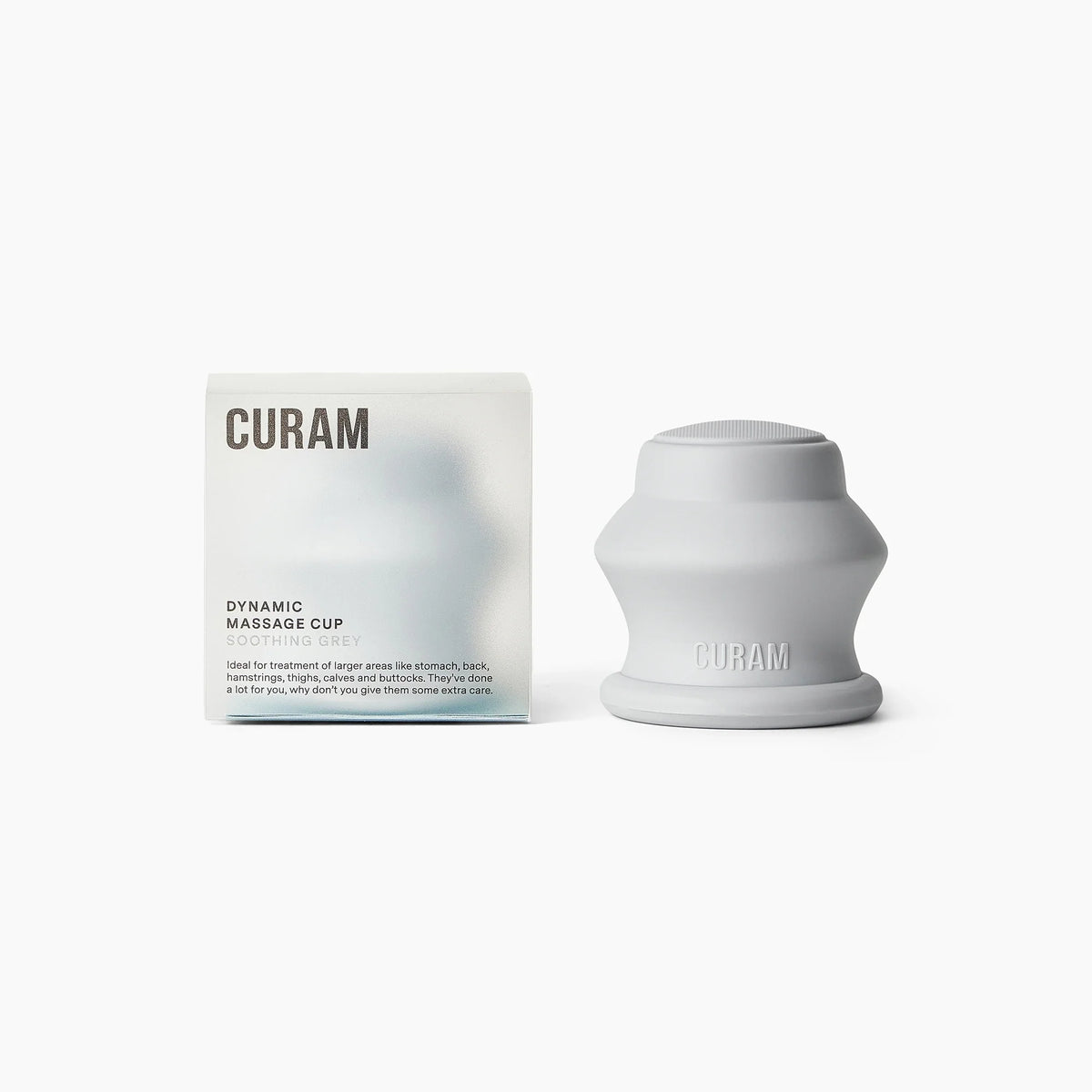
Cupping doesn't affect the nerve directly, but it does help on the muscles and fascia that press on it: piriformis and glutes in sciatica from the buttock, the lower back muscles in protective tension around a herniated disc, the neck and shoulder muscles with a nerve root, the pectoralis minor in TOS, the forearm muscles in carpal tunnel and ulnar entrapment, the hip flexors and groin in meralgia, the calf in tarsal tunnel. When the muscles release, the nerve gets more room and blood flow, and the protective tension that itself hurts decreases. The rules are strict: never cup directly over the nerve where it lies superficially (the elbow crease and the inside of the elbow tip, the inside of the wrist, the back of the knee, the outside of the knee just below the joint, the front of the neck, the groin), never over a numb area (you can't feel if the suction is too strong), never with new weakness that hasn't been assessed, and stop if the tingling increases during or after.
- Sciatica and piriformis: the dynamic cup with oil over the glutes in slow strokes, 2 minutes per side; a static cup in the middle of the buttock (on piriformis) for 3–5 minutes; the lower back muscles either side of the spine, 2 minutes. Not on the sciatic nerve itself in the back of the knee.
- Nerve root and TOS: the upper trapezius, the back and sides of the neck down toward the shoulder, 2 minutes per side; the pectoralis minor below the collarbone, static for 3 minutes. Never on the front of the neck.
- Carpal tunnel and ulnar: the small cup along the inside and outside of the forearm from the wrist toward the elbow, 2 minutes; stop 3 cm from the inside of the wrist and the elbow crease.
- Meralgia: hip flexors and the front of the thigh in strokes from the knee upward, 2 minutes; not over the groin or the numb area.
- Tarsal tunnel and foot: the calf from the heel toward the back of the knee, 2 minutes; the sole lightly with the small cup, not the inside of the ankle where the nerve runs.
- Afterwards: nerve gliding for the nerve in question and gentle movement while the tissue is warm. Programmes: the cupping programmes.
With blood thinners, diabetes with reduced sensation in the feet, or uncertainty about the cause: ask your doctor before cupping. More situations in when to avoid cupping.
What is reasonable to expect?
Nerves heal slowly, about a millimetre a day once the pressure is gone. Mild entrapments (carpal tunnel, ulnar, meralgia, peroneal after crossed legs) often improve in four to eight weeks with offloading and nerve gliding; sciatica and cervical nerve root pain from a herniated disc in six to twelve weeks for most, sometimes longer, and numbness can linger for months after the pain has gone. Weakness that doesn't improve, increasing numbness or pain that is unchanged after six to eight weeks of proper self-care should be reassessed; for pronounced carpal tunnel syndrome and some herniated discs, surgery is a good solution.
Frequently asked questions
What does nerve pain feel like?
Burning, electric, stabbing or shooting, radiating along a path to a defined area (certain fingers, the outside of the foot), accompanied by numbness, pins and needles or weakness, can be triggered by light touch and is often worse at night and at rest. Muscle pain is dull, local, tender to pressure and worse after loading.
How do I know where the nerve is trapped?
The pattern reveals it: thumb, index and middle finger at night is the wrist; little and ring finger with a bent elbow is the elbow; the whole arm with neck pain is the neck; leg below the knee with coughing and sitting is the lower back; buttock and back of thigh with sitting is piriformis; outer thigh without weakness is meralgia; top of the foot after crossed legs is the peroneal nerve; the sole when standing is tarsal tunnel.
What helps a trapped nerve?
Remove what presses (position, belt, tight shoes, bent wrist at night), keep moving, do nerve gliding exercises without provoking tingling, improve posture and strength, and cup the muscles around the nerve to give it room. Ordinary painkillers help poorly; a doctor can try specific medication for long-standing nerve pain.
When should you seek care for nerve pain?
Call emergency services for sudden numbness or weakness in one side of the body, or back pain with numbness in the genital area and difficulty urinating. The same day for rapidly increasing weakness or burning pain in a band on the trunk (shingles). Within one to two weeks for symptoms lasting more than two to three weeks, night pain, weakness, symmetrical numbness in hands and feet, or diabetes.
Does cupping help nerve pain?
Not on the nerve directly, but cupping the muscles that press on it (glutes in sciatica, neck and chest muscle with a nerve root and TOS, forearm in carpal tunnel) gives the nerve more room and blood flow and reduces protective tension. Never directly over the nerve where it lies superficially, never over a numb area, never with unassessed weakness, and stop if the tingling increases.
Related guides
- Back pain – where does it hurt and what can it be?
- TENS for pain – how it works, and TENS or cupping
Written by Curam. Last updated 17 October 2026. This is general self-care information and does not replace medical care. For sudden, severe or unusual symptoms, contact your doctor. Talk to your doctor before cupping if you are pregnant, take blood thinners or have a condition affecting skin, blood vessels or blood.


