


Menopause is technically a single day: the day twelve months have passed since the last period, on average at the age of 51. Perimenopause is everything that happens before, and that is where the symptoms sit. From the age of 40 the number of follicles decreases so the ovaries respond unevenly to the brain's signals: in some cycles there is no ovulation (and no progesterone is formed), in other cycles oestrogen is overproduced, and the levels can be higher than ever one week and lower than in 30 years the next. It is the swings, not the deficiency, that give the early symptoms, and that is why a hormone test rarely says anything: it shows one day on a rollercoaster. Progesterone, which is calming and sleep-inducing, falls first, which gives worse sleep, anxiety and PMS that gets worse; oestrogen's peaks and troughs give palpitations, migraine, tender breasts, mood swings and the first hot flushes; and when oestrogen eventually falls for good come dry mucous membranes, joint pain, dry skin, urinary urgency and the classic hot flushes. Perimenopause lasts four years on average, in some ten, and passes into menopause when periods stop. About one in four has symptoms so severe that they affect work and relationships, and many wrongly receive antidepressants, sleeping pills or a thyroid work-up instead of the right diagnosis and treatment. It is possible to feel well in perimenopause, but it requires that you and healthcare recognise it.
The symptoms of perimenopause, roughly in the order they come
| Symptom | Why | Common when |
|---|---|---|
| Shorter or irregular cycle, heavier or lighter periods, PMS that gets worse | Irregular ovulation, low progesterone, high oestrogen peaks | Often the first, 40–45 |
| Sleep problems: difficulty falling asleep, waking at 3–5 am, waking hot or with palpitations | Falling progesterone (the GABA effect disappears), night-time hot flushes, cortisol | Early, often before the hot flushes |
| Anxiety, irritability, low mood, a "short fuse", tearfulness, the feeling of losing yourself | Oestrogen and progesterone govern serotonin and GABA; sleep deprivation amplifies | Early to middle |
| Brain fog: forgetfulness, difficulty finding words, poor concentration | Oestrogen swings affect the brain's energy metabolism; sleep deprivation | Middle |
| Palpitations, extra beats, anxiety-like attacks | Oestrogen swings affect heart rhythm and the autonomic nervous system | Middle; often investigated as heart problems with normal findings |
| Hot flushes and night sweats | The fall in oestrogen changes the brain's thermostat | Middle to late; 3 in 4 get them |
| Joint and muscle pain, morning stiffness, "osteoarthritis overnight", frozen shoulder | Oestrogen is anti-inflammatory and keeps cartilage, tendons and joints lubricated | Middle to late; very common and often unrecognised |
| Weight gain around the belly despite the same habits, bloating, swelling | Changed fat distribution, insulin sensitivity, fluid retention at oestrogen peaks | Middle |
| Headache and migraine that change pattern | Oestrogen falls trigger migraine | Middle |
| Dry mucous membranes (genitals, eyes, mouth), stinging during sex, urinary urgency, recurrent UTIs | Low oestrogen in the mucous membranes | Late, and continues after menopause if not treated |
| Dry skin, thinner hair, palpitations, reduced libido, tiredness | Low oestrogen, sleep deprivation, all of the above | Late |
How to know you are in perimenopause (and what resembles it)
The diagnosis is made on age plus symptoms plus the change in the menstrual cycle, not on tests: if you are over 45 with an irregular cycle and typical symptoms that is enough; at 40–45 the symptom picture plus the cycle should be assessed; under 40 hormone tests should be taken (FSH, oestradiol, AMH) since early menopause needs investigation and treatment. A routine FSH test in someone over 45 gives little information since the level swings; a high FSH supports the diagnosis, a normal one doesn't rule it out. What resembles it and should be ruled out with blood tests: underactive thyroid (tiredness, weight gain, feeling cold, low mood), iron deficiency (tiredness, palpitations; heavy bleeding is common in perimenopause and causes iron deficiency), B12 deficiency, diabetes, and depression and anxiety disorders, which exist in parallel but don't explain hot flushes and cycle change. Keep a symptom diary for two months (day of cycle, sleep, mood, hot flushes, ache) and bring it to your doctor, gynaecologist or a menopause clinic; say "I think I am in perimenopause". Seek care soon for very heavy bleeding (changing protection every hour), bleeding between periods or after sex, bleeding after twelve months' absence, palpitations with chest pain or fainting, and low mood with thoughts of not wanting to live.
What helps
- Hormone therapy (MHT/HRT) is now recommended early, already in perimenopause, for those with symptoms, and most women under 60 or within ten years of the last period can use it: oestrogen (patch or gel through the skin gives the lowest risk) plus progesterone (body-identical, at night, which also improves sleep) for those with a womb; cyclically as long as periods continue. It removes hot flushes and night sweats, improves sleep, mood, joint pain and brain fog in most, and protects the skeleton. The risks (breast cancer, blood clots) are small with transdermal oestrogen and body-identical progesterone in healthy women under 60, and the scare picture from the 2002 study applies to older women with older preparations. Discuss with a gynaecologist or menopause clinic; general practices vary in knowledge.
- Local oestrogen (pessaries, cream, ring) for dry mucous membranes, stinging and urinary urgency: safe for almost everyone, even those who don't want systemic treatment, and should continue for life.
- A hormonal IUD gives progesterone protection and reduces heavy bleeding, and can be combined with oestrogen.
- Sleep first among lifestyle measures: fixed times, a cool bedroom (18 degrees, a thin duvet, cooling sheets), no alcohol (causes night-time waking and hot flushes), no screen in the last hour, and cupping as an evening routine (below). See sleep problems.
- Strength training two to three times a week and a daily walk: preserve muscle and skeleton, improve sleep, mood and insulin sensitivity, reduce joint pain and belly fat. See strength training at home.
- Alcohol and caffeine down, protein (1–1.2 g/kg) and fibre up, regular meals: more stable blood sugar gives a more stable mood and fewer hot flushes.
- CBT for menopausal symptoms has a good effect on sleep, the impact of hot flushes and mood; mindfulness and breathing exercises lower the stress system that amplifies everything.
- Non-hormonal medicines when hormones aren't possible: low-dose SSRIs/SNRIs for hot flushes and mood, gabapentin for night sweats, and newer agents (fezolinetant) for hot flushes via a doctor.
- Supplements: vitamin D if deficient, calcium via the diet, magnesium can help sleep in some; red clover, soy and black cohosh have weak or no support and black cohosh can affect the liver. Save the money.
- Talk about it: with partner, manager and friends. Half of all women of working age have menopausal symptoms that affect work, and the silence makes it worse.
Cupping and lymphatic massage in perimenopause
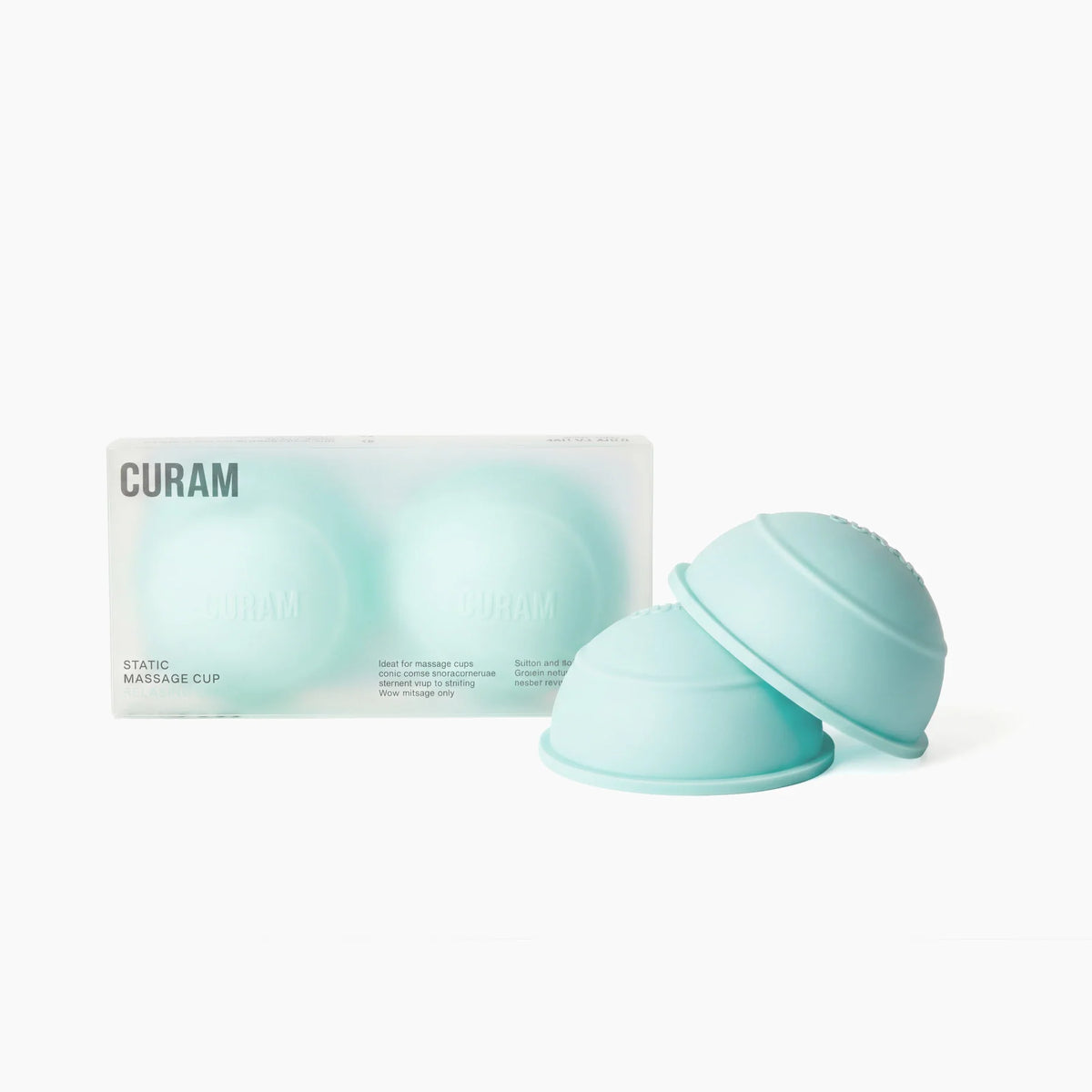
Cupping doesn't affect the hormones, but it affects four of the things that make perimenopause hard. Sleep and stress: static cups with light suction on the back and slow cupping of neck and shoulders in the evening activate the parasympathetic nervous system, lower the pulse and make it easier to fall asleep; many with night-time waking describe sleeping longer stretches after an evening routine with cupping. Swelling and heaviness: the oestrogen peaks retain fluid, and lymphatic massage and light cupping of legs, belly and arms towards the lymph nodes empty the tissue in the evening. Joint pain and stiffness: cupping of the muscles around stiff joints (neck, shoulders, lower back, hips, hands via the forearms) increases blood flow and reduces the muscle tension that makes morning stiffness worse; see cupping during menopause for the joint section. Headache and jaw tension: temples, skull base and neck as in head massage. This is what an evening routine looks like, ten to fifteen minutes, three to four evenings a week: a cool shower (not hot, it triggers flushes), oil the skin, the dynamic cup with light suction from the ankle towards the back of the knee and from the knee towards the groin, ten strokes per path, the belly in clockwise circles for three minutes, then neck and shoulders from the skull base downwards and outwards, ten strokes, and finally static cups with light suction on each side of the spine between the shoulder blades and on the lower back for five minutes while you breathe out slowly. Bed straight after, a cool room. For tender breasts: don't cup the breasts, stroke lightly towards the armpit. The face: the skin becomes thinner and more sensitive in perimenopause, so the lightest suction and more oil than before; see collagen. Don't cup with unexplained bleeding that should be investigated, with strong suction if you are on hormone therapy and bruise more easily, or during a migraine attack. More in lymphatic massage at home.
Read more
Cupping during menopause, PMS and PMDD, sleep problems, palpitations, fluid retention, osteoporosis, frozen shoulder and stress.
Frequently asked questions
What are the first symptoms of perimenopause?
Most often a cycle that becomes shorter or irregular with heavier or lighter periods and PMS that gets worse, sleep problems with waking at three to five, anxiety and irritability, palpitations and brain fog. Hot flushes, joint pain, weight gain around the belly and dry mucous membranes usually come later. It is the hormone swings, not the deficiency, that give the early symptoms, and they are often confused with stress, depression or thyroid.
At what age does perimenopause start?
On average at 45, often already at 40, and it lasts four years on average, in some up to ten, until periods have stopped (menopause, on average at 51). Smokers and those whose mother started early begin earlier. Symptoms before 40 should be investigated with hormone tests since early menopause needs treatment; after 45 the diagnosis is made on symptoms and cycle.
Can you take a test to see if you are in perimenopause?
Over 45: no, not usefully, since hormone levels swing from day to day; the diagnosis is made on age, symptoms and cycle change, and a high FSH supports it while a normal one doesn't rule it out. Under 40: yes, FSH, oestradiol and AMH should be taken. Thyroid, iron, B12 and blood sugar should however be checked in everyone, since they give similar symptoms and often coexist.
What helps perimenopause symptoms?
Hormone therapy is now recommended early for those with symptoms and is safe for most under 60 (transdermal oestrogen plus body-identical progesterone), local oestrogen for dry mucous membranes, a hormonal IUD for heavy bleeding, sleep and a cool bedroom, strength training and walks, less alcohol and caffeine, CBT, and if needed non-hormonal medicines. Cupping in the evening helps sleep, stress, swelling and joint pain. Red clover and black cohosh have weak support.
Does cupping help in perimenopause?
For the sleep, the stress, the swelling, the joint pain and the tension in neck and back, not for the hormones. An evening routine with light dynamic cupping of legs and belly towards the lymph nodes, neck and shoulders, and static cups on the back for five minutes, three to four evenings a week, means many fall asleep more easily and sleep longer stretches. A cool shower before, a cool room after. Not with unexplained bleeding or during a migraine attack.
Related guides
Written by Curam. Last updated 17 October 2026. This is general self-care information and does not replace medical care. For sudden, severe or unusual symptoms, contact your doctor. Talk to your doctor before cupping if you are pregnant, take blood thinners or have a condition affecting skin, blood vessels or blood.


