


An infrared sauna heats you with infrared radiation, the same type of heat as the sun and a fire, which penetrates a few millimetres into the skin and heats the tissue directly rather than via the air. That is why 40–60 degrees is enough to make you sweat as much as in an 80–100-degree wood-fired sauna, the air is comfortable to breathe and you can manage 20–40 minutes. Physiologically the same thing happens as in a regular sauna: the skin's vessels dilate, the pulse rises as on a gentle walk, the heart pumps more blood and you sweat out fluid and salts. The benefits supported by research are relief of muscle and joint pain, better recovery after training, lower blood pressure with regular use, better sleep and relaxation. Claims about detox, weight loss through fat burning, cellulite treatment and that "infrared reaches deeper and heals more" have no support. This guide covers how an infrared sauna works, the difference from a traditional sauna, what research says point by point, how to use one at home with a blanket or cabin, when to avoid it, and how infrared sauna and cupping complement each other. For sauna in general, cold plunges and ice baths, see sauna, cold plunge and ice baths for recovery.
How an infrared sauna works
Infrared light is electromagnetic radiation with a longer wavelength than visible light, which we experience as heat. The sauna's panels (ceramic or carbon) emit the radiation, which is absorbed by the skin and the top few millimetres of tissue, where it is converted to heat. The body reacts as to any heat: the skin's vessels dilate to carry the heat away, the pulse rises by 20–40 beats, sweating starts after 5–10 minutes, and the core temperature slowly rises by up to a degree. It is the body's own heat regulation, not the radiation itself, that produces the effects. Marketing divides into near (NIR), mid (MIR) and far (FIR) infrared and promises different effects from each; in practice most saunas use far infrared, and there are no studies showing that the wavelength matters for the experience or the health effects. Red light therapy (visible red and near-infrared light at low dose without heat) is a different thing, see red light therapy.
Infrared sauna or traditional sauna: the differences
| Infrared sauna | Traditional sauna (wood/electric) | |
|---|---|---|
| Temperature | 40–60 degrees | 70–100 degrees |
| How the heat reaches you | Radiation directly on the skin, the air stays cool | Hot air (and steam when water is thrown) |
| Time per session | 20–40 minutes | 8–15 minutes per round, often in several rounds |
| Warm-up | 10–15 minutes | 30–60 minutes |
| Sweating | About the same, starts earlier | Heavy, fast |
| Feel | Mild, easy to breathe, possible to read or listen | Intense, ritual with steam, cold plunge and rounds |
| Load on the heart | Lower, like a walk | Higher, like a brisk walk or light jog |
| Power use | 1.5–3 kW, about like an oven | 6–9 kW electric heater |
| At home | Blanket from around 200 pounds, cabin 1,500–6,000 pounds, needs only an ordinary socket | Needs a sauna room, often an electrician or a chimney |
| Research | Less, but shows similar effects on blood pressure, vascular function and pain | Extensive (Finnish cohort studies on heart and longevity) |
What decides the health effect is that you get properly warm, raise your pulse and sweat, and you do that in both. Those who find a regular sauna too hot, get headaches, have mild heart problems or want to sit for a long time and relax often prefer infrared. Those who want the classic experience with steam and cold plunges, or lean on the Finnish research on heart health, choose traditional. Many use both.
The benefits: what research actually says
- Muscle and joint pain: small studies on rheumatoid arthritis, ankylosing spondylitis and chronic pain show reduced pain and stiffness during and after infrared sauna, without side effects. The effect is short-lived (hours to days) but repeatable. In fibromyalgia there are Japanese studies with better pain and quality of life after a few weeks of daily use.
- Recovery after training: a Finnish study on runners and strength athletes showed faster recovery of muscle strength and less soreness after infrared sauna compared with passive rest, without the cardiac load a traditional sauna gave. See recovery after training.
- Blood pressure and vascular function: regular heat treatment lowers blood pressure by a few mmHg and improves the vessels' ability to dilate, in both infrared and traditional sauna. Japanese studies on heart failure patients (so-called Waon therapy with infrared sauna at 60 degrees) showed better heart function and fewer hospital admissions.
- Sleep and stress: body temperature rises during the sauna and then falls, which is the signal the body uses to fall asleep; an evening sauna gives deeper sleep for many. The relaxation and the calm pulse afterwards lower the stress response. See sleep problems.
- Skin: blood flow in the skin increases and the pores are opened by sweat, giving temporary glow. There is no support for infrared sauna reducing wrinkles, cellulite or scars. With rosacea and eczema the heat can make things worse.
- Weight loss: you lose 0.5–1 kg of fluid per session, which comes back when you drink. Energy use during 30 minutes equals a gentle walk, not a workout. An infrared sauna is not a method for burning fat.
- Detox: sweat is 99 percent water and salts; the amount of heavy metals and environmental toxins leaving the body through sweat is negligible compared with what the liver and kidneys handle. "Detox" is a marketing word.
- Immune system: regular sauna has been linked in Finnish studies to fewer colds; the mechanism is probably the heat stress effect on immune cells, which reasonably applies to infrared too. See strengthen the immune system.
Infrared sauna at home: blanket or cabin, and how to do it
An infrared sauna blanket is a heated blanket you lie in, often at 45–70 degrees, for 200–500 pounds. Pros: cheap, rolls up, works in any room. Cons: your head is outside (which makes the heat easier to tolerate but the experience is different), you lie still in your own sweat, and the material needs wiping after every use. An infrared cabin for one to four people costs 1,500–6,000 pounds, needs only an ordinary socket (most one- to two-person models run on a standard circuit) and takes a square metre or two. Pros: a real sauna experience, you can sit and read, easy to keep clean. Cons: price and space. Look for low-emission panels (low EMF), CE marking, wood not glued with formaldehyde, and an adjustable thermostat.
- Preheat 10–15 minutes to 45–55 degrees. Beginners start low.
- Drink two to three decilitres of water before, and keep water with you.
- Sit or lie 15–20 minutes the first times, up to 30–40 minutes once you are used to it. You should sweat and feel warm, not get palpitations, dizziness or nausea; then you get out.
- Afterwards: a cool shower (not ice cold right away if you are unused to it), a glass of water with a pinch of salt or a banana, ten minutes of rest. Skip alcohol before and right after.
- How often: two to four times a week gives most of the effects in the studies; daily is fine for healthy people. For pain the evening is best, for recovery after training within a few hours of the session.
- Hygiene: a towel under you, wipe panels and bench, air the cabin after each use; wipe the blanket with mild soap.
When not to use an infrared sauna
Skip the sauna with fever or an ongoing infection, an acute injury with swelling (the first two to three days), after drinking alcohol, if you are pregnant (talk to your midwife; heat in the first trimester is advised against), with unstable heart disease, a recent heart attack or very low blood pressure, with multiple sclerosis (many get worse from heat), and if you take medicines that affect sweating or blood pressure without having talked to your doctor. Children under 8 should not sit in an infrared sauna, older children only briefly and with an adult. Implants (pacemaker, insulin pump) need the doctor's go-ahead. With rosacea, eczema and psoriasis that worsen with heat, try short sessions at low temperature or abstain. Skin cancer treatment, fresh tattoos, laser and fillers: wait until the skin has healed.
Infrared sauna or cupping, or both
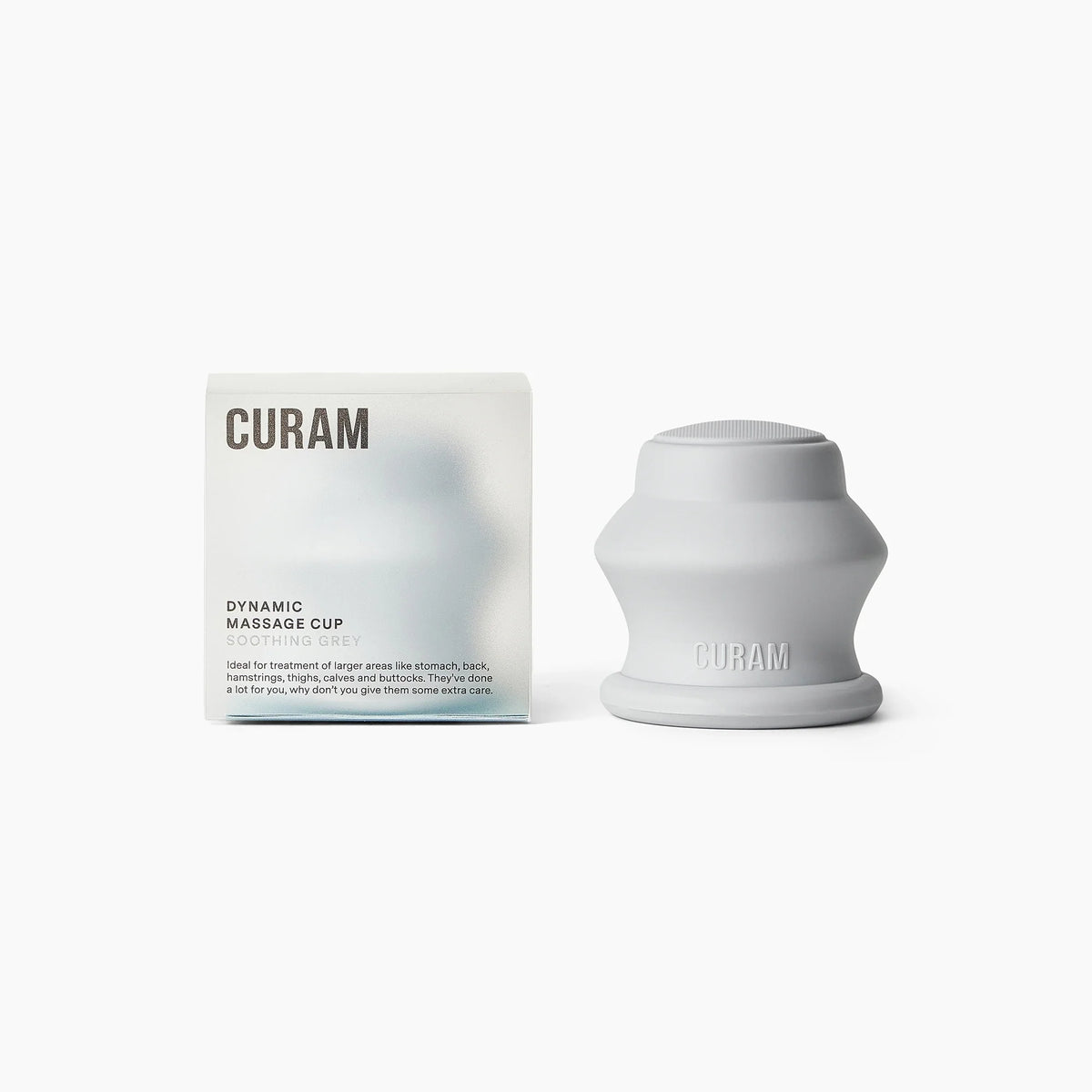
Infrared sauna and cupping do different things. The sauna heats the whole body, increases circulation everywhere, relaxes the nervous system and gives a general sense of recovery, but it does nothing specific for the knot in the shoulder, the tight calf or the locked lower back. Cupping is local: the cup's suction lifts the skin and the superficial fascia, increases blood flow several times over right there, loosens adhesions and releases tight muscle bands in a few minutes. Those who want relaxation, better sleep and general recovery get the most from the sauna. Those who have a specific tight or sore area get the most from cupping. Together they are better than either alone: 15–20 minutes of infrared sauna warms up and softens the tissue, and five to ten minutes of cupping right afterwards on the tight spots (neck, shoulders, lower back, calves) goes more easily, hurts less and lasts longer when the muscles are already warm and well perfused. Use a little oil on the sweaty skin so the cup glides, draw the dynamic cup slowly along the muscle, and leave static cups for two to three minutes on the sorest points. Drink afterwards, since both heat and cupping increase fluid needs. The combination is especially good the evening after a hard training session, for a stiff neck after a day at the desk, and for chronic pain in fibromyalgia and osteoarthritis where the heat lowers pain sensitivity before the cupping works locally. See also cupping or massage gun and foam roller or cupping.
Read more
Sauna, cold plunge and ice baths, red light therapy, poor blood circulation, recovery after training, fibromyalgia, sleep problems, and when to avoid cupping.
Frequently asked questions
What is the difference between an infrared sauna and a regular sauna?
An infrared sauna heats the body directly with infrared radiation at 40–60 degrees, so the air is cool and you can sit 20–40 minutes; a regular sauna heats the air to 70–100 degrees and you sit 8–15 minutes per round. The body's reaction (dilated vessels, higher pulse, sweating) is largely the same, but infrared loads the heart less and is easier to breathe in. Research is larger for traditional sauna, but the effects on blood pressure, pain and recovery look alike.
What are the benefits of an infrared sauna?
Supported by research: relief of muscle and joint pain (rheumatism, fibromyalgia, chronic pain), faster recovery and less soreness after training, lower blood pressure and better vascular function with regular use, better sleep and relaxation, and possibly fewer colds. Not supported: detox, fat burning, cellulite treatment and wrinkle reduction. The fluid you lose comes back when you drink.
How long and how often should you sit in an infrared sauna?
Start with 15–20 minutes at 45–55 degrees and increase to 30–40 minutes once used to it; two to four times a week gives the effects in the studies, daily is fine for healthy people. Drink before and after, get out with dizziness, nausea or palpitations, and skip the sauna with fever, alcohol, an acute injury, unstable heart disease and early pregnancy.
Is an infrared sauna at home worth the money?
An infrared sauna blanket for 200–500 pounds gives the heat and the sweating but your head is outside and you lie in your own sweat; a cabin for 1,500–6,000 pounds gives the real experience and runs on an ordinary socket. If you use it three times a week for pain, recovery or sleep it is worth it; if you want to lose weight or "detox" it is not. Buy low-emission panels, CE marked, and avoid cabins with glued wood boards.
Infrared sauna or cupping, which helps best?
They do different things: the sauna heats the whole body and gives general relaxation, better sleep and circulation; cupping works locally and releases the tight neck, calf or lower back in a few minutes. For general recovery choose the sauna, for a specific sore area the cupping. Best is the combination: 15–20 minutes of infrared sauna and then five to ten minutes of cupping on the tight spots while the muscles are warm; it goes more easily, hurts less and lasts longer.
Written by Curam. Last updated 17 October 2026. This is general self-care information and does not replace medical care. For sudden, severe or unusual symptoms, contact your doctor. Talk to your doctor before cupping if you are pregnant, take blood thinners or have a condition affecting skin, blood vessels or blood.


