


A sprained ankle is almost always an inversion injury: the foot rolls inwards, and the ligaments on the outside of the ankle (mainly the anterior talofibular ligament) are stretched or torn partly or completely. It hurts, swells within an hour, often turns blue a few days later, and you limp. Grade 1 is a stretch and takes one to two weeks; grade 2 a partial tear, three to six weeks; grade 3 a complete tear, six to twelve weeks, sometimes longer. The most important news of recent years: rest and prolonged cold are no longer the advice. Today's recommendation (PEACE & LOVE, which has replaced RICE) is to protect and offload the foot for one to three days, elevate it, avoid anti-inflammatories in the first days if you can (they can disturb healing), tape or wrap, and then as soon as possible load, move and train balance. A foot that starts moving within one to two days heals faster, gets less stiff and is sprained again less often than one that has rested for a week. What decides whether you go to urgent care or your doctor for an X-ray is the Ottawa rules below, not how swollen the foot is. And what decides whether you sprain it again is the rehab training, not time. Here is the whole course, from the first hour to the first match.
Should the foot be X-rayed? The Ottawa rules
Only about 15 per cent of all sprains are fractures, and the Ottawa rules pick them out with near-complete certainty. Seek care for an X-ray if any of the following applies:
- You cannot take four steps on the foot, either right after the injury or now (limping counts as steps).
- It is tender when you press on the back or tip of the outer ankle bone (the lowest six centimetres of the fibula).
- It is tender on the back or tip of the inner ankle bone.
- It is tender over the outside of the foot at the base of the fifth metatarsal (the bony bump halfway along the outside of the foot) or over the navicular on the top inside of the foot.
Also seek care for deformity, numbness in the foot, a cold or white foot, very heavy swelling immediately, a distinct "crack" with inability to stand, a sprain in a child (growth plates are injured more easily than ligaments) or in an older person with osteoporosis, and if the foot has not clearly improved in a week. Pain on the inside of the ankle or high up between the shin bone and fibula (high ankle sprain, syndesmosis injury) takes longer and should be assessed.
The first three days: PEACE
- Protect: offload for one to three days, crutches if you can't walk without limping heavily, but start putting weight on the foot as soon as it works without sharp pain.
- Elevate: the foot above heart level as often as you can in the first days; it reduces swelling more than anything else.
- Avoid anti-inflammatories (ibuprofen, naproxen) for the first two to three days if the pain is manageable: the inflammation is part of healing. Paracetamol is fine. Ice relieves pain, 10–15 minutes at a time through a towel, but prolonged and repeated cold delays healing; use it for pain relief, not as treatment.
- Compress: elastic bandage or support sock in the daytime, from the toes up over the ankle, moderately firm, never at night.
- Educate: the foot heals through loading and movement, not through rest, injections or machines. Ultrasound, laser and electrotherapy add nothing.
Healing time: grade 1, 2 and 3
| Grade | What has happened | Signs | Walk normally | Run | Sport with changes of direction |
|---|---|---|---|---|---|
| 1 | Ligament stretched, a few fibres torn | Mild swelling, slightly tender, can walk almost normally | 1–3 days | 1–2 weeks | 2–3 weeks |
| 2 | Partial tear | Clear swelling and bruise, limping, some instability | 1–2 weeks | 3–4 weeks | 4–6 weeks |
| 3 | Complete tear | Heavy swelling, can't bear weight, the ankle feels loose | 2–4 weeks (often a brace) | 6–8 weeks | 8–12 weeks, sometimes longer |
The bruise often travels down towards the toes and heel after a few days: that is gravity, not a new injury. Swelling left in the evenings for several months is normal after grade 2–3. Pain and swelling that don't decrease at all in two weeks, or an ankle that "gives way" when rehab is done, should be assessed by a physiotherapist or doctor (cartilage, tendon or syndesmosis injury).
Rehab exercises week by week
This programme applies to grade 1–2; with grade 3 you follow your physiotherapist but the principles are the same, just slower.
Day 1–3: mobility without load
- The alphabet: sit with the leg hanging and "write" the alphabet in the air with the big toe, twice, three times a day. Pumps out swelling and keeps mobility.
- Pump: pull the toes towards you and point away, 20 times every waking hour.
- Towel pull: sit, towel around the forefoot, pull the foot gently towards you for 20 seconds, 5 times.
Day 3–14: loading, strength and balance
- Walk normally, without limping, even if slowly: limping trains in a faulty gait pattern. Barefoot on the floor at home.
- Calf raises on two legs, 3 × 15, then on one leg when it works without pain.
- Resistance band: band around the forefoot, push the foot outwards (eversion) against resistance, 3 × 15; these are the muscles that protect the outer ligaments. Also inwards, up and down.
- Balance: stand on the injured leg for 30 seconds, 5 times, first with support, then without, then with eyes closed, then on a pillow. Balance training is the single most important exercise for not spraining it again.
Week 2–6: back to running and sport
- Single-leg balance with perturbation: throw a ball against the wall, bend down and touch the floor, stand on a wobble board.
- Hops: two-footed on the spot, then sideways over a line, then on one leg, then forwards landing stably. Start when you can do 20 single-leg calf raises without pain.
- Running: straight ahead on even ground when you can hop on one leg ten times without pain and walk stairs normally; then curves, then changes of direction and side steps, finally sprints and trails.
- Back in the game when you can do all of the above at full speed without pain or a feeling of instability, and without swelling the next day. Tape or a soft brace for the first three to six months in sports with changes of direction halves the risk of spraining it again.
How to avoid spraining it again
About one in three who sprain an ankle sprain it again within a year, most often because rehab ended when the pain was gone instead of when the balance was back. Continue the balance exercises three times a week for three months, train calf and hip strength (the hip controls where the foot lands), warm up with balance and hops before sport (see warm-up before training), and use shoes with a stable heel. Ankles that give way repeatedly despite training are chronic instability and should be assessed: sometimes a ligament operation is needed.
Cupping after a sprain
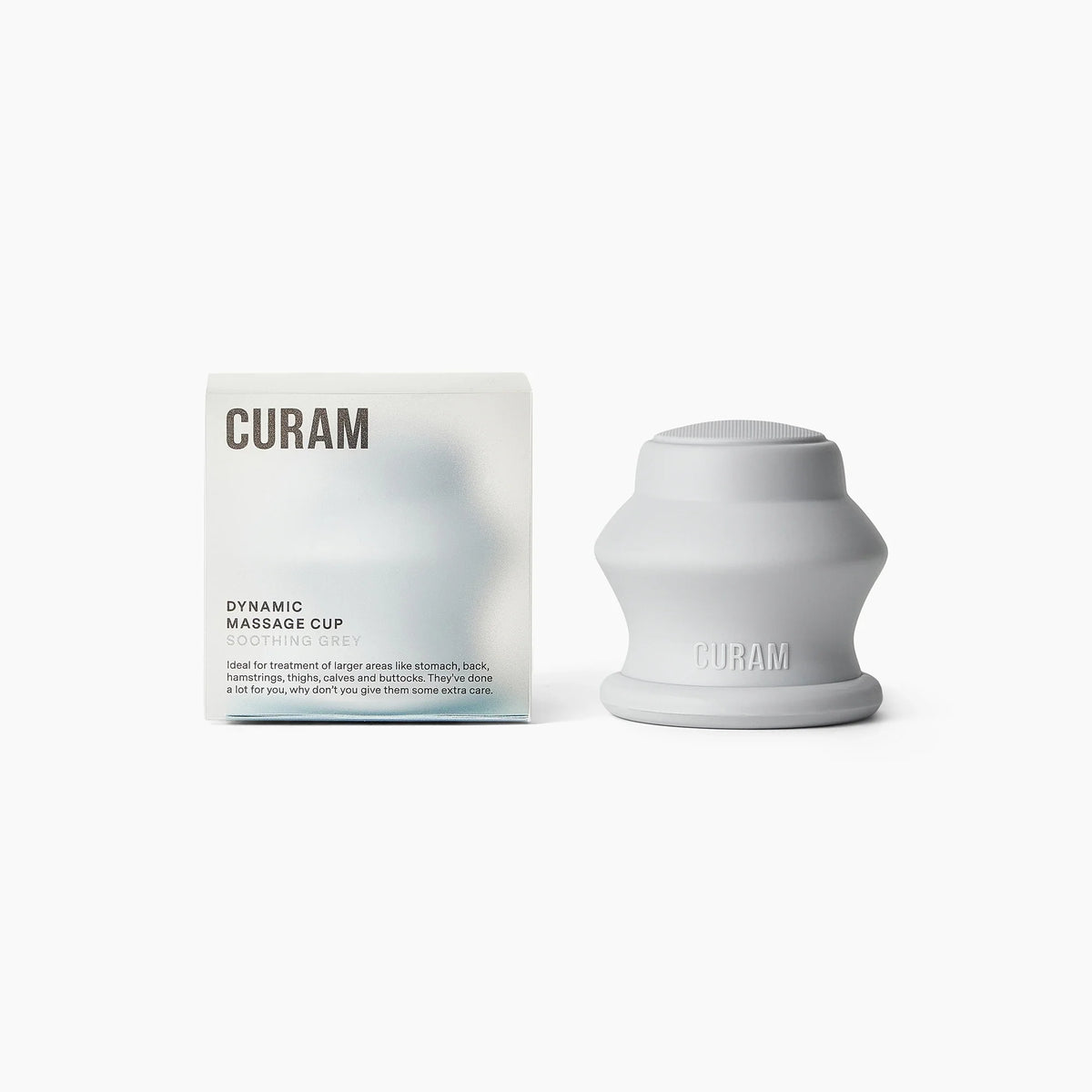
Do not cup on or near the ankle in the first three days, not over the bruise, and never over a joint that may be broken or has heavy swelling and heat. From day three to five, once the swelling has stabilised, light cupping helps with two things: the swelling that lingers, and the stiffness in the calf that always follows a week of limping. How to: lie with the foot raised, oil the calf and lower leg. Glide the dynamic cup with light suction from the calf up towards the back of the knee, ten strokes on both sides of the calf, then from just above the ankle up towards the knee on the outside and front of the lower leg. That is lymphatic drainage in the right direction: the fluid should leave the foot, towards the lymph nodes behind the knee and in the groin. Around the ankle bone itself: a small cup with the lightest suction, still for 30 seconds on three to four points above the swelling, never gliding over it. For the stiffness in the calf after a few weeks: moderate suction, lengthwise strokes along the calf muscle and the Achilles tendon (not over the tendon insertion on the heel itself). Five to ten minutes a day, followed by the mobility and balance exercises above. Stop if the foot gets warmer, redder or more swollen afterwards. More on the technique in cupping at home and on swelling in swollen legs and feet.
Read more
Ankle pain, foot pain: where does it hurt, Achilles tendinopathy, shin splints, runner's knee, muscle soreness and cupping – the complete guide.
Frequently asked questions
What should I do right away when I have sprained my ankle?
Offload the foot, raise it above heart level, cool for 10–15 minutes through a towel for the pain, wrap with an elastic bandage in the daytime and take paracetamol if needed; preferably avoid ibuprofen and naproxen for the first two to three days. Test the Ottawa rules: if you can't take four steps, or it is tender on the back of the ankle bones, on the outside of the foot at the fifth metatarsal or over the navicular, the foot should be X-rayed. Start moving the foot (the alphabet, pumping) on the first day.
How long does a sprained ankle take to heal?
Grade 1 (stretched ligament): walk normally in a few days, run after one to two weeks. Grade 2 (partly torn): walk normally in one to two weeks, run after three to four, sport with changes of direction after four to six. Grade 3 (completely torn): six to twelve weeks, often with a brace. Evening swelling can last for months after grade 2–3 without anything being wrong. No improvement at all in two weeks: seek care.
Should I get a sprained ankle X-rayed?
Only if the Ottawa rules apply: you can't take four steps on the foot, or it is tender when you press on the back or tip of the outer or inner ankle bone, on the outside of the foot at the base of the fifth metatarsal or on the navicular on the top inside of the foot. Also X-ray children, older people with osteoporosis, and any deformity, numbness, cold foot or a foot that doesn't improve in a week. Other sprains need no X-ray.
Which exercises should I do after a sprain?
Day 1–3: the alphabet with the big toe, pump the foot, towel pull. Day 3–14: walk without limping, calf raises, resistance band outwards, inwards, up and down, single-leg balance 30 seconds × 5 (then eyes closed, then on a pillow). Week 2–6: balance with perturbation, hops two-footed, sideways and on one leg, then running straight ahead, curves, changes of direction. Continue the balance training three times a week for three months: that is what prevents spraining it again.
Can I cup a sprained ankle?
Not in the first three days, not over the bruise and never over a joint that may be broken. From day three to five: light cupping from the calf towards the back of the knee and from the lower leg towards the knee to drain the swelling, still cups with the lightest suction above the swelling at the ankle bone, and after a few weeks moderate suction along the calf for the stiffness. Five to ten minutes a day, followed by mobility and balance exercises. Stop if the foot gets warmer, redder or more swollen.
Written by Curam. Last updated 17 October 2026. This is general self-care information and does not replace medical care. For sudden, severe or unusual symptoms, contact your doctor. Talk to your doctor before cupping if you are pregnant, take blood thinners or have a condition affecting skin, blood vessels or blood.


