


Pain in the thoracic spine, that is, the part of the back between the neck and the lower back, and aching between the shoulder blades is very common and is usually because the joints of the upper back have become stiff and the muscles between the shoulder blades tight and overworked, after hours of sitting bent forward at a screen, a steering wheel or a phone. The upper back is built for rotation and extension, and when it does not get them it stiffens, while the muscles meant to hold up the shoulder blades work statically until they ache. What helps is mobility for the upper back, strength for the upper back muscles, a workstation that does not pull you forward, breaks, heat and relaxation of the muscles, where cupping works very well. But the upper back is also where pain from the heart, lungs, oesophagus, gallbladder and shingles can be felt, so the warning signs matter. Here are the causes, when to see a doctor, the exercises that help and how to cup the upper back.
Why does the upper back hurt?
The most common causes are muscular and joint-related: tight muscles between the shoulder blades (rhomboids, lower trapezius) held stretched when the shoulders fall forward, stiff joints between the vertebrae and between the ribs and vertebrae (a "stab" on deep breaths or twisting is often a locked rib joint), trigger points radiating towards the shoulder blade, and an upper back that has rounded so the neck and lower back have to compensate. Risk factors are screen work, driving, breastfeeding and carrying small children, a heavy backpack, stress with raised shoulders, and training that only strengthens the front of the body. The pain is often dull, worse after sitting still and better with movement and heat. If it is linked to the neck, read Stiff neck and tight shoulders; to the shoulder, Frozen shoulder and shoulder pain.
When to see a doctor
Call emergency services if pain in the upper back or between the shoulder blades comes suddenly together with pressure or pain in the chest, shortness of breath, cold sweats, nausea or pain radiating into the arm or jaw; in women a heart attack can present precisely as aching between the shoulder blades. Also call emergency services for sudden, tearing pain in the upper back (blood vessels) or breathing difficulty. See a doctor the same day if you have a fever, cough or pain on deep breaths (lungs), pain after a fall or trauma, one-sided burning pain followed by blisters on the skin (shingles), pain under the right shoulder blade after fatty food (gallbladder), or weakness, numbness or difficulty walking. Contact your doctor if the pain wakes you at night, if you have osteoporosis or cancer in your history, if you are losing weight without trying, are under 20 or over 50 with new back pain, or if you are not better after four to six weeks of self-care.
Self-care that helps
- Mobility for the upper back, daily. Cat–cow on all fours; "thread the needle" (on all fours, pass one arm under the body and rotate); seated rotation with arms crossed; extension backwards over a chair back or a foam roller across the upper back, hands behind the head, five slow extensions; "open book" lying on your side. Five minutes is enough.
- Strength for the upper back two to three times a week: rows with a resistance band, "Y–T–W" lying on your stomach, shoulder blade squeezes (draw the shoulder blades together, hold five seconds, ten times), face pulls. Strength is what lets the muscles hold you upright without aching.
- The workstation. Screen at eye level and close enough that you do not lean forward, forearms supported, the chair so that you sit on your sitting bones, the phone at eye level instead of in your lap. Alternate sitting and standing.
- Breaks. Get up every 30 minutes, draw the shoulder blades back and down, stretch the arms over the head and breathe deeply three times. It sounds too simple but it is what changes most.
- Breathing. Deep breaths down into the belly and out into the ribs move the joints of the upper back; stressed, shallow breathing locks them. Five slow breaths every hour.
- Heat over the upper back for 15–20 minutes, followed by the mobility exercises.
- Sleeping position. A pillow that keeps the neck in line, avoid lying on your stomach, and on your side a pillow to rest the upper arm on so the shoulder does not fall forward.
- Medical options for prolonged problems: physiotherapy with manual treatment and an exercise programme, an ergonomic assessment.
Cupping the upper back and between the shoulder blades, step by step
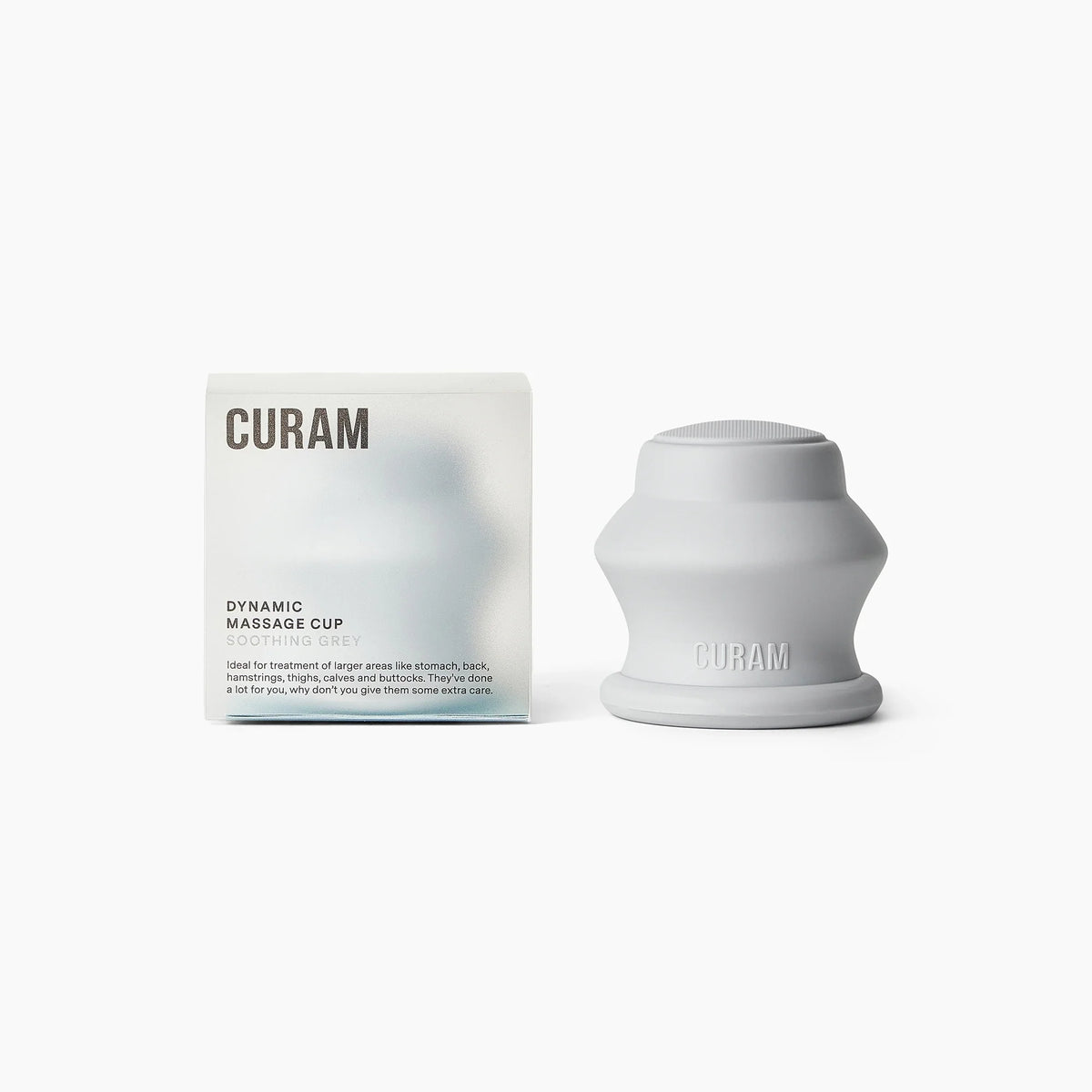
The upper back is one of the areas where cupping works best of all: the muscles are superficial, often full of trigger points, and hard to reach yourself. Static cups between the shoulder blades are a classic, and dynamic cupping along the muscles quickly gives a feeling of space in the upper back. You need someone to help you, the dynamic cup, static cups and body oil. Never cup on the spine itself or on the bony edge of the shoulder blade with strong suction.
- Warm up with a shower or heat pad for ten minutes.
- Oil the whole upper back from the base of the neck to the lowest ribs and out over the shoulder blades.
- Along the spine. Glide the cup with light to moderate suction in slow strokes upwards along the muscles two fingers from the spine, from the lowest ribs up to the base of the neck, five to eight strokes per side. Never cross over onto the spine.
- Between the shoulder blades. Strokes from the spine out towards the inner edge of the shoulder blade, in rows from the neck downwards, and in circles over the rhomboids. This is almost always where the most tender points sit.
- Shoulder blade and trapezius. Strokes over the flat back of the shoulder blade and from the base of the neck out towards the shoulders.
- Static. Two to four static cups with light to moderate suction on the most tender points between the shoulder blades and on the trapezius, three to five minutes. Lie still and breathe deeply; the breathing moves the back under the cups.
- Finish with extension backwards over a roller or chair back, shoulder blade squeezes and a few deep breaths.
Two to three times a week for a period, then as needed. Cupping on the upper back often leaves clear marks; that is normal and passes within a few days to a week, read about cupping marks. The whole back step by step in Cupping on the back, the basics in Cupping at home, and a daily routine for those who sit a lot in Cupping for people who sit a lot.
When not to cup
Not if you have any of the warning signs above before they have been assessed, not directly on the spine or on the bony edge of the shoulder blade with strong suction, not with shingles, rashes, wounds or bruises, not after a fall before the injury has been assessed, not with osteoporosis and strong suction, and not without medical advice if you are pregnant, take blood thinners or have heart or lung disease. If the pain increases with cupping, stop.
Frequently asked questions
Why does it hurt between the shoulder blades?
Usually because the muscles that hold the shoulder blades in place are held stretched and statically tense when the shoulders fall forward during screen work, and because the joints of the upper back have become stiff. Mobility, strength, breaks and relaxing the muscles help. If the pain comes suddenly with chest pain or shortness of breath: call emergency services.
Can upper back pain come from the heart?
Yes, especially in women a heart attack can present as aching between the shoulder blades, often together with pressure in the chest, shortness of breath, nausea or cold sweats. Sudden pain with such symptoms is an emergency. Muscular pain is instead dull, affected by position and movement, and has been there for a while.
Does cupping help with upper back pain?
Yes, the upper back is one of the areas where cupping works best: the muscles between the shoulder blades are superficial and respond quickly to both dynamic and static cupping. Combine it with mobility and strength, otherwise the tension comes back.
What is a "stab" in the upper back on deep breaths?
Often a locked joint between a rib and a vertebra, which gives a sharp, local pain on deep inhalation or twisting. It is harmless and usually releases within a few days with movement, heat and deep breaths; a physiotherapist can help. If it comes with fever, cough or breathlessness, the lungs should be assessed.
How should I sit to avoid upper back pain?
Screen at eye level, arms supported, sitting bones in the chair and the ribcage over the pelvis, not in front of it. More important than the perfect position is changing position often and getting up every half hour.
Sources
- 1177 Vårdguiden (Swedish national health guide), search for "ont i ryggen" for medical information and when to seek care.
- Curam's FAQ and cupping programmes, developed together with trained massage therapists.
Written by Curam. Last updated 17 October 2026. This is general self-care information and does not replace medical care. For sudden, severe or unusual symptoms, contact your doctor. Talk to your doctor before cupping if you are pregnant, take blood thinners or have a condition affecting skin, blood vessels or blood.


