


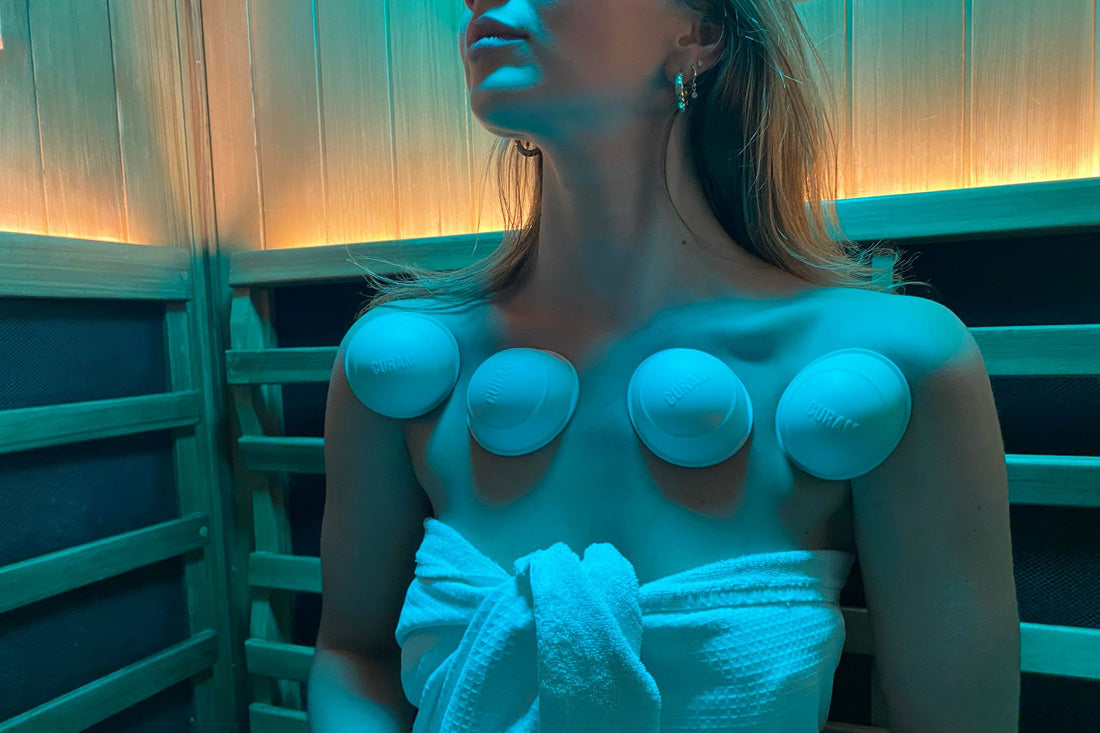
Cupping is good for tension and stiffness, circulation and lymphatic flow, recovery after training, breathing and relaxation, and the structure of skin and connective tissue. The effects come from the cup's vacuum lifting skin and connective tissue, increasing blood flow locally and letting tissue layers glide against each other. Here are five effects you can feel yourself at home, how to get them, and what the research says. Want the basics first? Read What is cupping? The complete guide.
1. Open up your breathing
Attach Curam's static cups below the collarbones and leave them for a couple of minutes. Many find that breathing becomes calmer and deeper, and that it is a simple way to come down and land in the body when stressed. You can also place the cups on the lower ribcage, towards the sides, front or back, and use them as a focus for attention: breathe in towards the cups, breathe out and let the ribs sink. See the breathwork programme.
2. Relaxation
Slow cupping, especially static cupping on shoulders and back in the evening, is experienced by most as deeply relaxing. It has to do with touch and warmth in the tissue signalling calm to the nervous system. Combine with slow exhalation, or follow Curam Recovery® Meditation, a guided ritual with breathing and static cupping.
3. Recovery from training
After training there is more waste and fluid in the muscles and the connective tissue is tight. Dynamic cupping with the dynamic cup and oil, in strokes towards the nearest lymph node, increases blood flow and supports lymphatic flow, and many experience less stiffness the next day. Before the session, a few quick strokes over thighs and calves can serve as a warm-up. Guide: Recovery after training.
4. Circulation and lymphatic flow
The vacuum widens the small vessels and draws oxygen-rich blood to the area (the redness you see), and the movement of the cup helps lymph fluid, which has no pump of its own, move towards the lymph nodes. That is why cupping is often used for heavy legs, swelling and general tissue wellbeing. Good lymphatic flow is also part of the immune system's work, but cupping does not "boost" the immune system in a medical sense. Guide: Lymphatic massage at home.
5. Skin and connective tissue, including cellulite
Cellulite depends on how fat cells, connective-tissue strands and fluid interact under the skin, combined with circulation. Cupping is a deep massage of skin and connective tissue that stimulates blood and lymphatic circulation and softens the strands, which can give smoother and more even skin over time. It is not fat burning and nothing happens in a week. How to: Cupping for cellulite.
What does the research say?
Studies on cupping most often show reduced perceived pain and increased mobility in the short term for neck, back and muscle complaints, but the studies are small and of varying quality, and long-term effects are poorly studied. There is no support for cupping curing disease. Think of cupping as self-care: a tool for circulation, tension, recovery and wellbeing. More on the evidence in the pillar's research section, and on risks in Cupping: pros and cons.
How to get started
You reach all five effects with a dynamic cup, two static cups and an oil, that is the contents of Body Kit Small. Our free cupping programmes show routines for different purposes, and Cupping at home shows the technique step by step. Cannot find what you are looking for? Get in touch and we will help you find the right one.
Frequently asked questions
What is cupping good for?
Tension and stiffness, circulation and lymphatic flow, recovery after training, relaxation and breathing, and the structure of skin and connective tissue. It is self-care, not treatment of disease.
How fast do you notice an effect?
Warmth, lightness and relaxation are felt immediately. Effects on mobility, swelling and skin build up over weeks of regular use.
Is cupping good for the immune system?
Cupping supports lymphatic flow, which is part of the immune system's transport route, but there is no evidence that cupping strengthens the immune system itself.
Which cup should I start with?
The dynamic cup covers most purposes. Static cups suit breathing, relaxation and neck/shoulders.
Written by Curam. Last updated 16 October 2026. This is general self-care information and does not replace medical care. Talk to your doctor before cupping if you are pregnant, take blood thinners or have a condition affecting skin, blood vessels or blood.


