


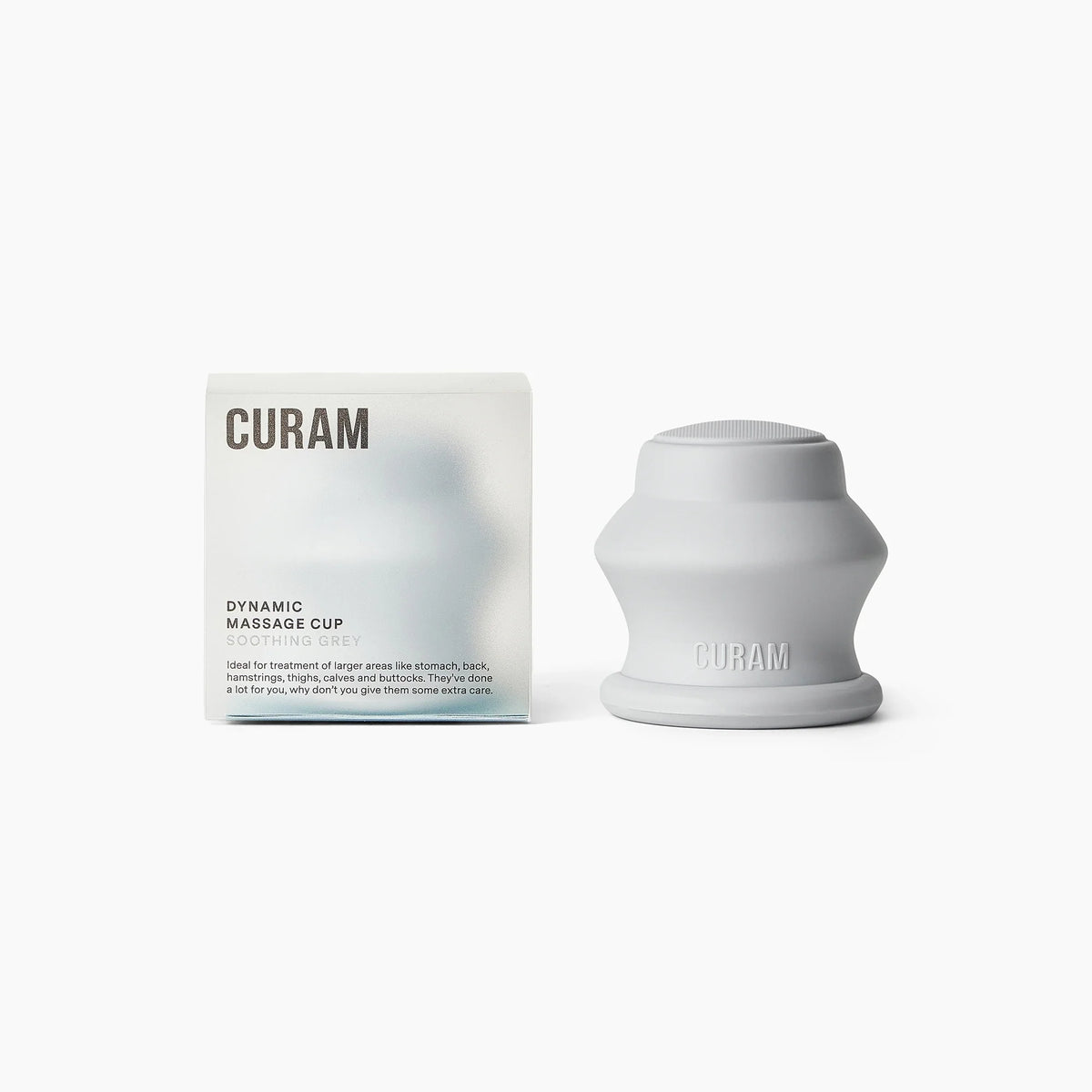
Cupping at home needs a silicone cup, a little oil and ten minutes. You squeeze the cup, place it on oiled skin and either leave it (static) or glide it in slow strokes (dynamic). Start with light suction, three times a week, and increase once your body is used to it. Here is what you need, how to create the suction, both techniques, a walk-through area by area, how often, and what to avoid. New to cupping altogether? Read What is cupping? The complete guide first.
What you need
- Dynamic Cup (7 × 7 cm) for thighs, glutes, back and calves.
- Dynamic Mini Cup (7 × 5 cm) for arms, neck, knees and ankles.
- Static Cups (set of 2) for neck, shoulders and sore points.
- Curam Body & Massage Oil so the cup glides and seals in dynamic cupping.
- All of it comes in Body Kit Small, with a video guide and the Curam Start programme.
For the face you use the Face Cup and Face Cup Mini, see Face cupping: how to do it. Body cups must never be used on the face.
How to create the suction
Squeeze the cup from the sides, place the opening on the skin and release slowly. The harder you squeeze, the stronger the suction. Start lighter than you think: the skin should lift visibly and turn pink, not red or purple. To remove the cup, press a finger in under the rim so air gets in; never pull straight up.
Cup keeps releasing? More oil, squeeze harder, or move to a flatter area. It is normal for cups to release now and then, especially over bone and in motion.
Static cupping
The cup is attached and stays put. Used on neck, shoulders, upper back and sore points. Start with two to three minutes per spot, no more than five in the first weeks, and use a timer. Static cupping leaves round marks that fade in a few days; shorten the time and lighten the suction if you want to avoid them. You can put static cups on and do something else: read, work, watch TV.
Dynamic cupping
The cup is glided over the skin with oil. Used on larger areas and for lymphatic massage. Slow strokes, about one centimetre per second, along the muscle first, then across, in zigzags and circles. For lymphatic massage, glide towards the nearest lymph node: groin, back of the knee, armpit, collarbone. Let the cup release before you reach the knee fold, groin or armpit. Dynamic cupping normally leaves only redness.
Area by area
Neck and shoulders
Static cups on top of each shoulder, on the trapezius, for three to five minutes. With the mini cup: strokes from the base of the skull down along the muscles on each side of the spine, out towards the shoulders. Never on the spine itself or the front of the neck.
Back
Get help for dynamic cupping of the whole back. On your own, place static cups on either side of the spine in the lower back or between the shoulder blades. Not on the vertebrae. Guide: Cupping on the back.
Thighs and glutes
Dynamic Cup with oil, from the knee up towards the groin on the front, back and outside of the thigh, five strokes per lane. Glutes in circles. The outer thigh is often tight: light suction the first times. See also Cupping for cellulite.
Calves
Mini cup from the ankle up towards the back of the knee on the inside, back and outside of the calf, three to five strokes per lane. Good after training and for heavy legs.
Arms
Mini cup from wrist to elbow and from elbow to shoulder. Static on the forearm for mouse arm.
Abdomen
Light suction only, dynamic, in clockwise circles around the navel. Not during pregnancy.
Chest and breathing
Static cups below the collarbones for two to three minutes while you breathe slowly. Never on the breasts or the front of the neck.
How often?
Beginners: about three times a week. Static: a couple of minutes per spot. Dynamic: a few strokes per area, building up to three to five minutes per area. Experienced users often cup daily, on different areas. Let marked areas rest until the marks are gone. Drink water before and after. Our free cupping programmes give you ready-made routines for runners, office workers, lymphatic flow, headaches, sleep and more.
What to avoid
- Areas that are never cupped: the front of the neck, directly on the spine, groin, armpits, genitals, lower abdomen, eyelids, kneecap and back of the knee.
- Damaged, inflamed or sunburnt skin, varicose veins, fresh scars.
- Cupping with fever, infection, blood clot, during pregnancy on the body, during cancer treatment, or on blood thinners without your doctor's approval.
- Strong suction and long times at the start. Most problems come from doing too much too soon.
Cleaning and storage
Wash the cups in warm water with mild soap after every use and let them air dry. Silicone can be boiled. Store dry and away from direct sunlight, which can fade the colour. A silicone cup lasts at least five years.
Frequently asked questions
How do I get the cup to stay on?
Use oil for dynamic cupping, squeeze the cup properly where it is widest and release slowly. If it still releases, that is normal; add more oil and reattach.
Should I move the cup in a particular way?
Static: let it sit. Dynamic: zigzags, circles or long strokes. For lymphatic massage, glide towards the nearest lymph node.
Static or dynamic, which should I choose?
Both increase circulation and soften connective tissue. Static suits points and small areas, dynamic suits large surfaces and lymphatic flow. Most people combine them.
How long can a static cup stay on?
Two to five minutes in the first weeks. Longer increases the risk of blisters without adding effect.
Can I cup in the shower?
Yes. Silicone tolerates water and heat, and shower gel can replace oil as the glide.
Why do I get marks?
Marks come from strong or stationary suction. Keep the cup moving and use lighter suction if you want to avoid them. They are harmless and fade in a few days.
Written by Curam. Last updated 16 October 2026. This is general self-care information and does not replace medical advice. Talk to your doctor before cupping if you are pregnant, take blood thinners or have a condition affecting skin, blood vessels or blood.


