


Blog
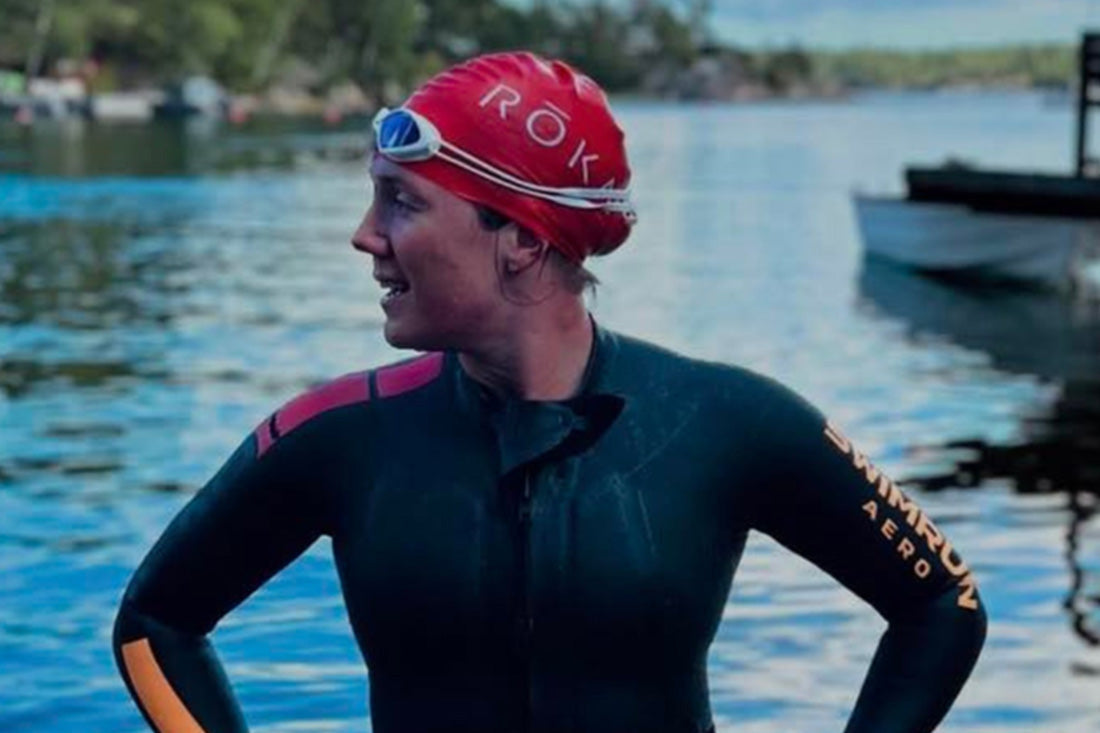

Sofie Nelsson about finding freedom through running
Sofie Nelsson is a running coach through the Swedish Athletics Association, she has coached running groups for many years and is one of Asics front runners. She is also one of those who have tested the program Curam has created in collaboration with Magasin Spring, "Cupping for runners". Which she gave a big thumb up for when she experienced that the muscles become softer and more flexible and that it helped speed up recovery after a tough workout. How came that you started with running? I started with running just over ten years ago when I studied Media and Communication Science in Jönköping. I trained a lot at the gym then. Above all, I went to group training and thought it was really fun. But then I started running outside because it was such a nice way to unwind and clear my brain. I ran without a timer so had no idea how fast or far I ran, it was just a nice feeling. Then I participated in a running race in Jönköping and came in fourth place. I do not remember the time but after that I started to compete and challenge myself in running and I decided to get a running watch and run more races. The following year, I bought a friend's starting place for the Stockholm Marathon and had no idea what it meant. I thought it would be good to have tested the distance before the race so I had my sister with me on the bike and in the basket she had a bottle of water and some raisins when we set off on a round of about 40 km. It went well and I felt that now I know that I have the strength to get around at least. When I was on the starting line for the Stockholm marathon in 2012, it was 4 degrees, rain and wind in June. I did not have much to compare with so I ran away in the rain and had quite fun along the way despite the weather. Passed it at 3:50 and was very happy and felt that I want to do more of this. Then it just rolled on with the running and I have run the marathon as fastest in 2:47 and reached the top 10 at the Swedish Championships in 10, 21 and 42 kilometers. What do you appreciate most about running? I love the freedom and that it can be anything from a form of exercise to something social to discover the world. I enjoy the feeling of running and need it to feel good. What does your running look like in everyday life and do you train something else? I wish I was better at getting more mobility and strength into my training, but I try to go on a yoga session every week and run some strength with my running groups so that I also get my weekly dose. I run basically every day but then some workouts are tough intervals, some calm distance workouts and some long workouts. What is the best thing about being a coach? I think it is fantastic fun to inspire others to find the same joy in running as I have done. For me, it is something more than just a form of exercise. It's a way to socialize, experience new places, relax, challenge myself and feel free. Running is a part of my life and my everyday life. I coach running groups and meet friends to run. A favorite pass is Friday mornings when me and my friends are seen running and ending the pass with a joint breakfast at a bakery in town. Then you get a perfect start to the day. In 2017, you ran the "Great wall marathon"! Tell us about it! It was an amazing experience and I actually won this starting point and trip. So me and my boyfriend got to enjoy this adventure together. We had been to China on the wall before but of course had not run a marathon there before. The race went on an incredibly hot day and the temperature was close to 40 degrees. About a third of the race goes on the wall and the rest through nearby villages. In total you pass 5000 steps and a fairly hilly course so you do not go here to run fast. I had run the Barcelona marathon at 2:47 that spring and on the Great Wall of China I ran in just over 4 hours just a few months later, which says a lot about the track. And to finish as the first lady was powerful and something I will remember! Many runners had to break due to the heat and my guy collapsed instead shortly after the finish. Everything went well but that says something about how tough it actually was that day. What are your dreams and goals for your running? Like for many others probably, I dream of running in New York, but Tokyo would also be cool. Then I love adventurous running so running cool races in the mountains feels just as enticing. For example in the Alps where they have the Marathon du Mont Blanc. I also run to experience so going and running in new places gives mg also a lot of energy and inspiration. Then I also aim to be even faster on the mile up to the marathon. How would you recommend to train before a marathon or half marathon as a "regular exerciser"? My best tip is to start on time if you are not already running when you register for a race. It is not about having to run to have a good time but to get a good experience of the race. If you are not prepared, it will most likely be very difficult and not a fun memory at all. Following a schedule is a good idea to know that you are on the right track to reach your goals. The training should be adapted to the distance you want to run and training for a marathon does not have to mean that you run that marathon in training. But you need to get your body used to being out longer, so up to 32 km or 3 hours can be good. Find a level that fits and take it from there. Can everyone run a marathon/half marathon according to you? I want to believe that anyone who wants to run a half marathon / marathon can do it. But it is important to be humble if you are not a regular runner. It is long and requires some preparation. But with the right foundation, I am convinced that it works for everyone! What does marathon speed mean? When I say that someone should keep their marathon pace on a workout, I usually mean the "competitive speed" you have in a marathon. For me, that would mean about 3:55 min/km. For someone else, it can mean 5:30min/km, etc. This can be difficult to know if you have not run a marathon or trained for a certain pace in the distance. But there is no general pace to refer to. But the longer you run, the slower you can go. That is, you probably do not have the same pace if you are to compete in 5 km as if you were to run races in 42 km. Can you name some competition results you are particularly happy with? I am happy with my 6th place in the Barcelona marathon with a time of 2:47. I am also happy with my results at the Swedish Championships in several distances. Actually, I'm usually happy when I finish. I think that was what the body was able to do today and that I completed the race always feels like a win. However, I can feel pressure from others that I should perform. Like when you get the question before a local race before the start "You win today?". Then I can feel that I have high expectations of myself and that I do not know if I can live up to them. Because even if you are in good shape, anything can happen and the daily form is crucial for the result. Tell us about a wonderful travel memory of yours! I love to combine travel with running so I have many fond memories of, for example, running around Mont Blanc in four days with some friends. We ran a total of 170 km and 10,000 altitude meters these days. But with great views and good company, it was pretty easy. We ran with all the packing and lived in small hostels up in the mountains along the way and filled up with water and food in villages we passed. During the pandemic, when there were no races, how did you keep up the motivation and what did you learn from this? I had quite an easy time motivating myself. I have as much passion for running for adventure as for performing so much focus ended up testing new trails around Värmland and Dalsland where we live. There was also a lot of social running with the closest friends. This is the advantage of a sport that is practiced outdoors. So we were not so limited. You are now pregnant, congratulations! Do you want to share your experiences of what it is like to be pregnant and a runner so far? A roller coaster to be pregnant and a runner. At least for me. For the first 17 weeks I was stronger than ever and ran more or less as usual in quantity and intensity. The stomach had not started to grow and did not have such big problems with anything else the first time either. For example, I ran the mile on 35.07 in a test run on a treadmill in week 16. I think it worked for me because I am used to running so much and that I still listened to my body. But after week 17 I got to learn what joint loosening was. First thought that my bad butt / lumbar spine was due to overload with the run. But that was not the case. When you are in that period of pregnancy, a hormone begins to be secreted which is supposed to make the pelvis softer before the birth and if you are unlucky then you get pain from it. Some manage without even noticing it. I started limping when I walked and the run went from 100 to 0 in one day. I had to adapt the training and the cross trainer became my new friend in combination with a little more strength. After a few weeks, everything eased and I was able to walk and even jog a bit without getting hurt. Then came another setback and I got even worse from just walking. So I think I will have to become a good friend even with the bike outdoors to get me through this pregnancy to some extent. It may sound like a ridiculous thing to be bitter about because otherwise everything looks very good and the baby seems to feel good. But for someone who is used to moving a lot every day, it will be a tough adjustment for the mental. Had my biggest interest been to sit inside and crochet, I might not have complained at all. Thoughts about your running when you gonne become a mother? My opinion right now is that life does not have to change so much just because you have children. I think the child will be a part of the life I had before and something that just makes it even more fun! Then maybe you can take advantage of the time in a different way and become a little more flexible in your plans. But there the running is perfect because I can go out at any time. No times to fit and I can walk right outside the door. If I'm lucky, the baby can come along in the pram on the runs eventually and hook on to our breakfasts with friends on Fridays. I also want to continue to perform and run faster if the body wants. Life does not end just because you have children, it is just a new little human that gilds the life you already have. Tell us about the training camp you lead with Pampas! These training trips are wonderful and we go to small picturesque villages in Spain. Most often to the area around the Pyrenees where we run different tours in the mountains every day and combine it with everything from good food and drink to wine tasting or olive oil tasting for those who want, nice accommodation and wonderful community. Now it has been a bit of a break due to the pandemic and now further due to the baby in the womb but looking forward to going away again. I also organize smaller events at home in Sweden as well and then often together with spa/manor facilities. There is the same focus on combining great running with enjoying good food and relaxation in a beautiful environment. The trips to Spain require a little more running experience and the events at home suit everything from new to experienced runners. We know that you are a frequent user of Curams massage cups, can you share how you prefer to use them? I love using my cups from Curam. They are so flexible and easy to use so I usually sit on the couch in the evening with them. Either I put them statically for a few minutes where a little extra love is needed or I pull the dynamic cup over my legs to start circulation and improve recovery after, for example, a tough interval workout. I think the feeling is very nice and relaxing for the muscles as soon as I use them and they give the recovery a boost so that I am fresher for future sessions. It is important to take care of the body to cope with the training I expose it to. But also for everyday life and everything it has to endure there. I think almost everyone can benefit from a little cupping now and then.
Learn more
The importance of lymph health and the function of the lymphatic system in the body
Sara Ivarsson works as a running trainer, yoga instructor and lymph masseur and was one of the first participants who attended Curam Recovery training. It turned out then that Sara had a big interest and great knowledge about lymph health, which we asked her to share with you. How did you get interested of yoga and in lymph health? I have always been active and liked sports and health. As a kid, I used to do a thousand different sports before I got caught up in running. I have competed a lot in running over the years before I started coaching. Now I have coached and trained individuals and groups for 15 years. As a youngster, there was more "No pain, no gain" and "Mind over matter" mentality and I pushed myself very hard. It was not sustainable in the long run and mainly created mental barriers and performance anxiety. Thanks to my uncle, I came in contact with yoga and slowly the realization of wholeness and balance was awakened. This year I am celebrating my 10th birthday as a yoga teacher and my attitude nowadays is "Mind in matter". I work both with yoga for cancer patients in my non-profit association Move Breathe Pause and in my company Everflow I am developing concepts around lymph yoga and lymph health. My interest in the lymphatic system and lymph health was aroused when there was talk of lymphedema during a yoga training for cancer patients. I became curious to learn more and what a new world that was opening up for me! This was 4 years ago and since then I have resigned from my part-time job as a decorator to be able to work full time with health and wellness as a lymph masseur, scar tissue therapist and yoga teacher. I just started a education as a fascia therapist to be able to even better help my clients by creating more flow, strengthening their health, gaining more energy and living life to the fullest. How did you come to attend the Curam Recovery training? I have used dynamic cupping as a treatment method when I provide treatment for the lymphatic system for a long time. When I came in contact with Curam, I fell because it was a Swedish brand and thought it felt more fun and better to work with them compared to other cups. I also like that Curam is based on self care because it is something I also advocate a lot when it comes to the lymphatic system. When I then saw the training in Curam Recovery, it felt natural. As I also work as a yoga teacher and running trainer, Curam Recovery was a perfect group class for recovery. The training gave me an opportunity to get to know more about the use of the static cups that I have not used so much before. Thanks to the cups, there will be a new focus for the participants and it is interesting to see the effects. You talk a lot about circulation and the importance of flow, can you develop your view on this? Flow is life simply and absolutely necessary for health. All cells in the body are surrounded by fluid and circulation is needed for this fluid to be healthy and fresh and give the cells a good environment to live in. Slow or stagnant flow in the fascia and lymphatic system produces cells that can not absorb oxygen and nutrients or dispose of their waste and slag products properly. And it simply creates a body that does not feel well and gives rise to inflammation, stiffness, aches, generally poorer health and disease. Then there is also an interesting aspect about flow and flow when it comes to thoughts, feelings and the experience of life, and how it is related to health. You know, the difference between when thoughts and ideas just flow compared to when it feels like sausage stuffing in the brain. Or when you get stuck in your feelings and how we do not feel good about it. Emotions need to flow through us, have a beginning and an end. Feeling flow in life, creativity and inspiration go hand in hand with the flow in the body. The physical affects the emotional and mental and vice versa. It all fits together. What is the function of the lymphatic system in the body? The lymphatic system transports away excess fluid, slag products and waste from our tissues. The lymphatic system is also the immune system's highways (lymph vessels) and analysis centers (lymph nodes) and they are full of patrolling immune cells that will find and neutralize bacteria, viruses, parasites and tumor cells. The lymphatic system also transports certain proteins, fatty acids and hormones that are too large for the blood vessels to absorb. Because the lymphatic system largely ensures that the environment in which your trillions of cells live is as good as possible, it has a finger in every pie in all functions of your body - such as the cells' nutrient exchange; the body's resilience; inflammatory processes; and the health of the gastrointestinal tract, nerves and cardiovascular system. This means that if the lymphatic system is sluggish and can not do its job well, all other systems in the body also work worse. How do you suggest to take care of the lymphatic system in the best way? In fact, many of the general health tips regarding exercise, diet, skin care and stress that are circulating today are good for the lymphatic system. Maybe it's so that we feel good when we do those things precisely because the lymphatic system works better from them. Then the body can more effectively clear away inflammatory substances, toxins, slag products and bacteria. We simply feel better and do not get as sick when the lymphatic system works well - this applies to colds and eczema as well as cardiovascular diseases and pain problems. 5 simple tips you can do for your lymphatic system are: 1) Move evenly during the day. Movement increases lymph flow through muscle activity while sitting still causes the flow to stop. Movement does not mean exercise. Honest frequent recurring daily movements and less sedentary are far more important than a hard workout. 2) Breathe properly. Breathing works as a pump for lymph flow day in and day out and is SO important. These two are the easiest and cheapest ways to keep the lymph flow going. Both movement and breathing act as pumping mechanisms for the lymph that does not have a heart like the blood has. 3) Eat lots of vegetables and fruits and drink enough water. Most are dehydrated today and then the flow in the body does not work well. Less coffee, alcohol and soft drinks, and more plain water. Avoid foods that create inflammation and strain the lymphatic system such as sugar, processed foods and foods with a lot of additives. 4) Review what you have in bathroom cabinets and cleaning cabinets. Reduce the amount of chemicals you expose your body to for example such as from skin care, deodorants and cleaning products. The principle behind this, and also the inflammatory diet, is that everything that enters the body must be cleansed of lymphatic system, liver and kidneys. With all the external toxins and debris we get in us, these organs and the lymphatic system become easily overloaded and do not have time = more slag products remain in the body. 5) Stress management. Stress and the secretion of stress hormones disrupt the flow in various ways, for example, the walls of the lymphatic vessels go into spasm and in the long term, the lymph tissue is broken. What can you do to reduce stressful situations and situations, and if stress is unavoidable, can you find ways to deal with it? It does not matter if it is yoga, a forest walk, talking and hugging a friend / partner, dancing, running, meditating, painting, playing music - find what works for you. It is these "simple" everyday things that are more of a lifestyle that are the important basis. It will make a difference. If you get 1-5 in place, there will be other interventions such as lymph massage; cupping; and self-care for the lymphatic system etc. get so much better effect. Lymphatic massage is fantastically good and a great help on the way to better lymphatic health, but without 1-5 the result will not be long-lasting. For tips on self-care of the lymphatic system, follow me on instagram. What is the result in our bodies with a less functioning lymphatic system? A non-functioning lymphatic system can manifest itself in many different ways because its function affects all other systems in the body, but common examples of a poorly functioning and sluggish lymphatic system are: You are swollen and feel tense and heavy in the body. You are often ill or constantly suffering from small colds and mucus formation. You are constantly tired and powerless. You have problems with your stomach and digestion. You have aches and pains, often a little unexplained that move around the body. You are stiff and sore. You experience tingling, numbness or ant insects. Your skin is tired and dull or has problems with acne, eczema or other rashes. You experience that wounds or injuries heal poorly. When the lymph system, on the other hand, works properly, you have a lot of energy, an immune system on top, experience less stress, feel supple and light in the body, the skin has luster and you recover faster after injuries and operations. Can you give tips on how to work with the lymphatic system on your own? Everyone should give the lymph system a little more love, basically everyone needs it today. If you want to work with your lymphatic system, you can think of two things: firstly, how you can increase the speed of a sluggish flow, and secondly, if there is something in the way that impedes the flow. In addition to breathing and moving, you can speed up the flow manually through gentle strokes over the skin. Many people usually take too hard, but lymph massage should be gentle because you work with the skin and fluid layer just below. The light pressure should go along the body part and not down towards the muscles. In addition to the strokes that increase the flow, it is important to loosen stops that may occur along the lymphatic pathway. Fibrosis is common, which is a thickening and stagnation of connective tissue (fascia), lymph fluid and slag products. The fibrosis stops the lymph flow even more and other techniques than the soft coats are needed to loosen them. Here, the cups can be a great help! The copper works with the fascia and can help to release tensions and stagnations that make the flow of lymph fluid narrower and more difficult. It helps to get the flow and circulation going simply. All your lymph fluid goes to your collarbones. Just behind your collarbones, the large lymph vessels attach to veins in the blood system. The fluid from the lymphatic system must be emptied into the blood system, the two systems cooperate with the circulation in your body. In principle, this means that fluid from the head and neck drains down towards the collarbones and all fluid from the body goes up to the collarbones. If you have swollen ankles or hands, it can sometimes feel tempting to stroke and massage there to get rid of the swelling. But we must loosen stagnation and ensure that there is free flow above the swellings first. So whether you want to work with your foot or leg, you start at the collarbones. Liquid flows where there is lower pressure. If you start stimulating at your collarbones so that the lymphatic system can more efficiently drain the fluid into the blood system, the fluid pressure up there decreases. Then the fluid in the rest of the body has somewhere to go and can flow more efficiently towards the collarbones. Then you work your way part by part all the way out, eg collarbones, armpits, sternum, abdomen, groin, thighs, knee creases. Part at a time to loosen any stagnation and give free space for the lymph fluid to constantly flow where there is less pressure. If you want a more detailed description, check out Sara's blog www.everflow.se During the training day, you told me that you offer scar treatment, you can tell us a little more about it! Scars play a big role in the flow in the body and I have almost not a single customer who does not have scars from an operation or injury - although they primarily come for lymphatic massage and not scar treatment. So the work with scars I started with to improve the flow for my customers but it gives so much more. For example, I have a customer who had a scar along the lower abdomen after an emergency operation and a small 30-year-old scar on the foot. With just one treatment of the scar on the foot, the mobility improved enormously and she felt a completely different contact with the ground and how she could use the whole leg, for example during training. The scar on her stomach gave her a lot of discomfort and she hardly wants to see or touch either the scar or the stomach. After treatment, her stomach feels like a part of her again. Another woman who was completely numb around her entire breast after an operation due to breast cancer has regained the feeling. What I wish more people knew is that it is possible to do something about problems that come from scars in various forms, regardless of whether it is a change in feeling, limited mobility, swelling or aches, tingling and pain. I remember the reaction from the woman who had had breast cancer after the treatment. She was very emotional and wondered why no one had told her that there was anything to do, why the care did not give her any information. The care may not have the resources at the moment (they should have, however) but at least they should be able to tell patients about the possibilities that exist when problems arise after operations and treatments. Something that should also be present in healthcare is better knowledge of the lymphatic system. In some countries, healthcare offers lymphatic massage before and after surgeries as it improves healing and recovery. I have had several clients who have had operations abroad and have been told by the doctor to book a lymph massage when they return home. I have never heard that recommendation from the Swedish healthcare system. How do you use Curam masage cups? I use Curam's cups both privately on myself and when I treat clients. A given everyday thing is to use the dynamic cup in the shower. It is always ready on the edge of the bathtub so it is easy with selfcare in the shower after I have been running or been out with my mountain bike. If I want to give the body a little extra love, I do a longer routine with the dynamic cup and Curam's body and massage oil, perhaps with lit candles and nice music. The static cups are often located at the neck and shoulders or lumbar spine. These are the areas that are affected both when I work in front of the computer and treat. Under the soles of the feet with your feet on the coffee table in front of the TV is also a favorite after a long day on your feet with treatments. With clients, I mainly use the dynamic cup in order to increase the lymph flow and to loosen the pressure in the fascia. I have recently added Curam Recovery Signature Treatment to the services I offer, and then it will be a combination of the two cups. What is your best health advice? Laugh a lot! Some of the best and most beneficial there is, on so many levels. And a piece of advice I got from my acupuncturist once. Think of your energy as finances. It is good to have a buffer in the savings account in case something unforeseen happens, such as the washing machine breaking down. You also need to have a buffer of energy so that you can handle when something unforeseen happens in life. If the calendar is constantly fully booked, you are constantly at the limit of what you can handle, it will be very difficult to handle difficulties and changes in life, whether it is a quarrel with your partner, a changed work situation or a sick child. Buffer on the savings account and buffer on the energy account! Thanks Sara for your sharing your knowledge and good advices!
Learn more
Veteran runner BG Nilensjö shares his best tips before the Swedish indoor championships 2022
BG Nilensjö, editor-in-chief of Magasin Spring, a running fanatic - who has been running every day for 5 years (!), and a big fan of sun and heat. Who could be better to have a chat with, to get some inspiration and tips from, right before the big running season? Hello BG, tell us about your previous work experience and why you started Magasin Spring? I studied psychology at the university, but already after a year of working I slipped into marketing and sales. Since then, I have worked at many different companies and one of my last positions was as a marketing director at Sweden's largest magazine publishing agency. I became incredibly fascinated by the process of creating a magazine and, since I have always liked writing, it led me to start my own magazine - Magasin Spring. I see it as the staff magazine for Swedish running. Today I work with it on my own, which means that I write, take pictures, sell ads, etc. It is incredibly stimulating to work with my hobby. How did you get into running and what does running mean to you? I played all kinds of sports when I was young, such as football, handball and badminton, which was what I practiced the most. I always had a good physique and could keep going for a long time. In the military I ran the regimental championships which I won over real runners. At the time I really had no idea how good I was. I later got to be part of the regiment's military pentathlon team and I invested a lot in this. After military service, when I studied psychology, I usually trained 20 hours a week. Running was one of five branches, but it went well. I became European Champion in pentathlon in 1989 and 1990 and, even though I only ran about 50 km a week, I did 31 minutes per (Scandinavian) mile. After the pentathlon and a few years with young children, I started running and at the same time became chairman of IS Göta in Helsingborg. Now I have run that club for over 20 years and been responsible for the training. It has become like my family, I am single and have my running as an important part of life. What type of running do you prefer and what is competing like for you today? I still compete a lot. I have won about 80 Swedish Championship medals and have some Swedish records as a veteran. My favorite is 3000 meters on the track but I run everything between 800 meters and marathons. I am currently on a runstreak, meaning I have been running at least 40 minutes a day for over 5 years, which may seem a little crazy. :) Normally a RS is 1.6 km (1 mile) but I thought it was too little, haha .. What is your strength as a runner? I have a good feeling for speed, know how the races should be set up – an even pace always gives the best results. That I love to compete also means I perform better during competitions than training, something happens in me that is difficult to explain. Do you have any other passion besides running? I travel a lot, like the heat and have in recent years taken at least 4 weeks in the sun every fall. Rent an apartment, run twice a day and then sit and write. Writing is also a passion. I have also renovated a few houses, currently working on two as well. It's great to create with your hands, to have an idea and see it come true. I like to read If I have time left over, but making the magazine, being chairman of two different boards, sitting on a third, renovating - means that time disappears quickly and is rarely enough for much more. What does your running routine usually look like and do you complement it with other training? I usually run 8 sessions a week, 2 hard sessions with the club - one with short intervals and one with longer ones. Then I want a longer session of at least 90 minutes. The rest are calm sessions to get air, breathe, oxygenate the brain and find solutions to various things that gnaw. I run a lot in 6 min pace, which is very slow for me. It is usually about 100 km a week + some push-ups after each session. Nothing else. My training during the hard workouts always has a purpose, an alluring goal. Most often it is the hunt for a record, right now I am chasing two Scanian records for 1500 and 3000 meters indoors. What is your view on recovery and how do you practice it? My running is like 10 hours a week, it is basically 6% of the week. The 10 hours give me energy, I always feel more alert and stronger after a workout than before. The muscular recovery I get in the form of sitting and working and the hours in bed. Would you like to share a particularly memorable race or running memory? I have many crazy memories that give me goosebumps. I became Nordic champion in pentathlon in 1990 on my home turf with the family present. To stand on that podium and listen to the national anthem was touching. I did some races where I ran as if in a fog, 1.15 on the half marathon when I was 52 years old was such a race. Third at the World Championships for veterans the same year, 9.27 in 3000 meters. I also broke the Swedish record for 10 km in the M50 twice, 34.05 at best. In principle, times are always what gives me goosebumps. Winning a medal is not as important - I can only influence my own performance and make good times, break records, etc. It's a kick for me. What does your dreams and goals look like when it comes to running? My dreams are about beating times/breaking new records, to succeed in something that no one else has done before. Many of the records I have broken have lived for over 20 years, it's cool. Due to an injury 5 years ago, I no longer perform at the highest level, but breaking Scanian records is good enough. My philosophy today is that I would rather run a bit slower and be able to train than go too hard, get injured and not be able to run at all. I'm not a marathon runner, but the Valencia marathon in December has been a nice way to end every year. This year I will go down three weeks before, train like a crazy person and then finish with the race and chase sub 2.48. What are your advice to training and preparing for a marathon, half marathon or a shorter race as a regular exerciser? The basis is always continuity. It does not really matter what you do, as long as you do it. Train regularly. When you have reached the level where running is part of everyday life, you can take the next step, set a time goal and train to reach that goal. That is when intervals and variation are important parts. A good piece of advice is to read Magazine Spring, to be inspired by others. What are your recommendations for training the week before a race? It all depends on the distance. Before a marathon, I train so much I can barely stand to see the clothes until 5-6 days before. Last year I went to Marbella - trained 2.5 weeks with 150-180 km a week. The last four days I eased up on training, did some loose jogging. Then, at the competition, the body wanted nothing more than to run. You get a supercompensation. If it is a shorter race, I work a lot to find the right speed and to mentally prepare myself, much of the result is between the ears. I can memorize the race many times before, and that process should be with a positive outcome. There are many who fail mentally before the race, it usually leads to things going badly. How do you get better endurance as a runner according to you? By training, every workout improves you. The best runners run about 160 km a week, there is a connection between the number of miles and results. It should be the right mile, but bottom line is it’s easy - the more you run, the better you get. How many times a week should you run to improve your endurance as a regular exerciser? Is it ok to run every day according to you? If you can run calmly, it’s ok every day, but if you cannot keep the pace down, it will only break down the body. The general rule is to increase slowly. I coach quite a few runners, if I can increase the amount by 10-20% in one year, that's good. You need to start from yourself, if you run 3 times a week and a total of 25 kilometers, gradually increase and aim for an average of 30 km. Add a session every two weeks or run a little longer on your regular runs. If you want to improve as a runner, 3 sessions a week is a good first step. What are your top 3 favorite races to run? Valencia Marathon even though I do not like 42 km, that race is an experience and a marathon is always special - no matter how it goes I think you are a winner when you have run 42 kilometers. The Skåne Championships on 10 km of country road. There are three laps on a flat track in Ystad, around 100 starting and most people are chasing times, haha – I realize some think I am weird. Championships I do not really like specific races but prefer championships. The Swedish Championships both indoors and outdoors in arena have the highest priority for me. They are in new arenas every year, but the competitors are in many ways the same, nice people who share the passion. How do you stay healthy and injury-free as an "older" runner. By listening to the body, never taking too big risks is important. When I was the best veteran 5 years ago nothing held me back, the bar was raised every time I competed and trained… I closed my eyes to the signals and did tough workouts even though my body did not want to. Now I see many of my workouts as recovery. If there is time and economy, go for a massage now and then, buy a massage gun or massage cups. Simply take care of your body. What´s your opinion about alternative treatment methods, such as cupping? When I was injured 5 years ago, I tested a number of different treatments. Nothing helped until I came to a guy who put cups on me, almost everywhere, and explained that most injuries are in the connective tissue. By increasing the circulation, the body's own healing process is stimulated. It was completely new to me and after that I visit him a few times every year. I also have Curam's cups at home, I'm not good at it but a few times a month there is a cup on me while I am working. It's easy to use and I can feel that it is helping. What upcoming races are you looking forward to in 2022? Next weekend, March 26/27, there is the Swedish Indoor Championships, it will be incredibly fun. The indoor races are very exciting and cool to run, you are against your watch and your goals. No external stuff interferes. Sometimes I do championship races, with sprints - but I like a steady speed and to focus on time. I have a Swedish Outdoor Championships in Kalmar coming up, with a few races I hope to perform well in, and then Valencia this autumn. We wish you good luck!
Learn more
Swedish freestyle skier Caroline Strömberg is aiming for the Freeride World Tour 2022
Caroline is one of the world's best freeriders. A form of skiing where the athletes will ride down steep mountains without groomed slopes and try to find challenging and pleasant ways down the mountain. At the same time it is important to have a high risk assessment. She combines competing with her own company InspireUs and is also employed by the Chamber of Commerce of Central Sweden. It sounds like you are really filling your days, how do you manage to get everything together? When I hear this, it strikes me that I am either catastrophically bad at scheduling, or brutally good, haha. Something I have learned over the years as a skier is to be flexible and not to stress myself unnecessarily. I think it is the calm that allows me to drive on with one thing at a time and then change plans or focus if necessary and accelerate to finish what is to be done. Sometimes it is not only positive to be able to see solutions and opportunities in everything. I think it would benefit me if I saw limitations sometimes too, or on second thought, how fun would that be? ;-) How did you end up with free riding? I competed in alpine skiing when I was younger and skiing has always been a big part of my life. When I finished high school I dreamed of going deep powder in Canada and after a couple of years in Åre I made sure to make that dream come true by living two winters in Revelstoke, BC. Freestyle skiing is an incredibly complex experience. It is challenging in so many ways, partly the skiing itself but also everything around. The sport is not under any union so you are always your own boss, coach, project manager and tour guide. Despite being more than ten years in the sport, I still feel that there are things I can develop and learn, which is very cool! The best part is probably all the wonderful people I get to meet and all the cool places I get to visit thanks to skiing. Do you have any other interests than skiing? Absolutely! I have played football up to div. 1. I play a lot of golf, which has been an interest since I was 9 years old, and went to an equestrian high school. Unfortunately I have become allergic to horses, but still dream of living on a horse farm when I grow old. During the summer I like to go for long runs in the mountains, biking trail and gravel and I spend many hours in the gym with crossfit-like training too. A bit of everything quite simply ;-) Tell us about InspireUs! In 2012 I, Rebecka Harlaut and Anna Karlström were in Canada together and had before the winter talked about that it would be fun to have a project to work on when we were there, to have something to focus on the hours we were not on the mountain. Once we were there, we did not really have that project, but we also did not really have the motivation on the mountain as it was a fairly dry winter. As we started combing the net for inspiration, we were quite shocked at how few women there were to be inspired by and how the girls who actually got to be seen were portrayed. So, from the feeling of wanting to create a place for girls to be seen in a nice way for the athletes they are and without being objectified, the inspiring community grew. Since 2012 an incredible amount has happened in both the ski industry and in the world around these issues. We do still see some worrying trends and hope we can be a part of changing them for the better. Together with Åre Skidfabrik, Extrem skis and the community we developed a freestyle ski for girls which has been awarded an ISPO award. It is a real dream ski for all women who want to have fun on the mountain and develop in their skiing under safe conditions. How do you work with recovery to optimize your performance? Skiing is quite hard on the body. It is both physically heavy and you are not always careful to keep hydrated and replenish energy during long days. I like to alternate skiing with a lot of cross-country skiing during the winter, to activate other muscles. I also do a lot of yoga and during spring, summer and autumn I hold a lot of yoga classes. In winter yoga is my way of landing in the body and creating space among all the thoughts in my head. And since I started with Curam's massage cups, they are a given part of my yoga routine. What's the next milestone in your skiing career? I have set my sights on qualifying for the freeride world tour, the freestyle world cup. Right now I compete at the level below and need to win my tour to get a place in the higher division. This year I placed 3rd, so it is within reach but not quite there yet. When I get there, of course, the goal is to win and be named world champion! Do you have a dream ski destination? I have been dreaming of skiing in Chile and Argentina for many years now. Maybe it's time to make that dream come true soon! What is one of your best skiing moments? There are many, but one that is fresh in the memory is a day in Engelberg, Switzerland last winter when it had been snowing around 40 cm. The sun broke through the clouds and we were only a few in the mountain that day. It made it feet like we had all of the snow for ourselves. Do you have a role model? I am incredibly inspired by people who confident, break norms and do not apologize for their existence but at the same time manage to balance it with being kind and giving back to their surroundings. I think Kosovar Asllani is an excellent example of such a person, damn how good and cool she is! How do you use Curam's massage cups? I like to use the dynamic cup to help the recovery of large muscle groups. Especially for the front and back of the thighs after long ski days and heavy workouts. The static cups have been very useful for my neck and shoulders this winter. They easily get stiff and tensed when traveling and after long days in front of the computer. Both the static and dynamic cups are a given in my pack nowadays and it feels like I have found the given gift for many of the people around me as well!
Learn more
Get to know Johanna Hector - one of our fantastic inspirers
Yogini, concept developer, coach, trainer and educator in health and wellness, these are some of the titles that fit well with Johanna Hector. We are many, especially in the yoga world who follow and let ourselves be inspired by Johanna's zest for life, wisdom and who remind us that life is there to explore and enjoy. Johanna runs both the training company Global Yoga, which specializes in yoga training, workshops and community as well as SoulWorkClub, a holistic wellness club online where you will find all of Johanna's very useful tools and rituals. This is the first time I meet Johanna outside the yoga mat, it will be a wonderful chat on a cliff in Särö, near where she lives. Can you tell us about your path to where you are today professionally? I discovered yoga while studying in high school in Swaziland (South Africa). I was both challenged while falling in love completely. The yoga was exactly what I needed and at the same time it challenged me a lot. Since then, I have participated in about two to five courses per year in yoga, exercise, psychology, pedagogy, recovery and various forms of coaching. In the beginning I studied at the university at the same time, some of me thought that it was important to do that and that yoga was just a hobby. But when I was personally drafted by NIKE as their head coach, it tipped over and I started working on my passion full time. Soul Work Club - how was the concept born? Longing for some juicy training. Training that was not only functional, or just for fun. Smart training that gave results and was satisfactory. Then I also knew right away that we could not just work with movement. We needed to work on exercises for the thoughts, feelings and our relationship to the food as well. As well as tools (lifehacks that I work a lot with) to bring these rituals into a simple and sustainable way in everyday life. I also longed for the feeling of having danced all night, walking home with my shoes in my hand and a smile on my face. That feeling without having to be up all night and to be completely sober :) That's how DayClub was born! In SoulWork, you are all welcome. You are inspired to explore your pleasure, learn to take for yourself, to ask for what you want as if you deserved it! Praise your body and become meaningfully strong so that you can take part in life, no matter what comes your way! What are your daily routines for making you feel as good as possible, and what do you never exclude? My rituals are so steady, I have been doing them for so long now that I am confident in letting go of them for quite a few days. So there is nothing I can not compromise with in the short term. But in the long run I need: Drink fresh water with lemon in the morning. Make a quick lymph massage and dry brush the body + put on Curam's static cups. A few minutes of facial and scalp massage. Two minutes ice cold shower. Naked dancing and a deeply juicy breath of gratitude. Then the day begins! During the day I would like to get in one of the following, some days it becomes everything and some days one thing and then I am just as happy :) Some form of movement (usually a short WorkOut workout from SoulWork or a WorkIn), palo santo and music, that's a big part of my life. Love to add dynamic meditation and breathing exercises Swim in the sea (preferably when it is cold :) and then for a while in the IR sauna with Curam oil and the dynamic cup. Massage your feet and upwards! Yoga nidra - the yogic sleep, I lie down on the floor and close my eyes for 15min. Walk barefoot for at least a few minutes, feet in the ground or on the grass when I pick up the mail. In the evening I SoulSurf, preferably with my husband. Asks questions to each other and listens. Turns off all lights, removes all blue light and light candles. Incense or palo santo, softens the senses, goddess time. Going from being in my masculine energy at work or in the family to my feminine, so that I can receive. Sometimes the children wake up and other nights we both work. So this ritual can be anywhere from three minutes to 90 minutes :) What does your training/health philosophy look like? I have always liked to train smart instead of hard. I train to live and not the other way around. That's why I like effective training in everyday life and diving deep for hours when I'm on training or retreat! You talk a lot about the importance of daring to rest, why has rest become so important to you and how is it expressed in your daily life? When my second daughter was six months old, I lay like a wet spot in the hall. I was completely exhausted. New have mother of two children, self-employed and a “good girl”. I was burned out. I had not slept a whole night in seven months and although I had routines, they were still masculine, they became another pressure. That's when I discovered the feminine way. The juicy satisfying way where rest is not something you can do wrong. My routines became rituals, my mischievous, playful sides came up again, and with them the desire. The desire for life. That's the way it is. Today I rest daily, my husband and I encourage each other to rest, to take a seat, to play and not get caught up in the serious. What is the highlight of your daily life? That I get another day on this earth. Just saying that reminds me and makes me completely excited. I'm so grateful. What are you most proud of about yourself and in your own personal development? My courage and my curiosity combined with my discipline. This means that I do not see obstacles, I do not remember how hard it has been because I color my world so strongly that I always feel like a winner in life's lottery! https://cdn.shopify.com/s/files/1/0943/4136/6093/files/Johanna-hector-fotograf-emelie-lager-el-saga-soulwork-1-682x1024.jpg Dream wildly - What does your life look like in 10 years?! Then I'm 48, how fun! I spend a lot of time with my family, we explore adventures together that develop us and nourish us. My husband and I are in love more than ever. SoulWork is a world wide community with many coaches and different voices so that everyone can find a home and reflect. DayClubs in Ibiza and Bali, Varberg and maybe online. We contribute to public health by giving people the tools to strengthen themselves and feel community and meaning. Global Yoga trains excellent yoga teachers throughout Scandinavia. You are a role model and inspiration for many people, and how does it feel? And who are your role models? It feels fantastic. I work actively not to be put on a pedestal though hahah! I have many role models, teachers who have inspired and influenced me are Cyndi Lee, Shiva Rea, Maty Ezraty, Paul Check, Ido Portal, Wim Hof, Ram Dass as well as many mystics and artists, friends and family and more hahah! I work on the same thing there, not to put them on pedestals but to love them all :) Can you share a book tips that has meant a lot to you? Oh many. Be Here Now by Ram Dass, all with Mary Oliver and Pussy a Reclamation by Mama Gena! Which is the biggest challenge you have been through? To lose my father in a terrible and treacherous disease. That the doctors could not give a diagnosis for many years and that he died a slow death over almost 15 years. It seems that you are a fairly diligent user of Curam's cups - tell us - how do you use them and what purpose do they serve you? I love them!! In my morning ritual I use two static cups that I put on the upper part of the thoracic spine. Then I use the dynamic cup with the lovely oil in the sauna and massage the whole body. That feeling afterwards mmmmmmmm! Thank you Johanna for your incredible energy and exuberant way of inspiring us. We look forward to working with you in the future! Photographer: Emilie Lager
Learn more
Åsa Fornander about the love to movements
Åsa Fornander - dancer, yoga teacher, group training profile and entrepreneur with 3 unique dance concepts. She is one of Sweden's most established instructors & presenters and also teaches regularly in her favorite city NY. Where she for six years has arranged a dance trip and the seventh will be in April 2022. With her great charm, creativity and with a bubbling energy she owns whatever stage she takes. We are incredibly happy to team up with Åsa when we launches the movement class Curam Recovery at Workout Åre in August. We meet Åsa on a sunny day in June at her favorite spot Mälarpaviljongen to hear about her love of dance and movements as a form of expression. How did you end up where you are today? I went to the dance program in high school and have worked full time with dance and training in various forms throughout my adult life. I ended up right away quite simply. I love the fact that I can constantly find new ways to develop and learn more. Nowadays I have three concepts of my own; AfHo®, Barre Move (together with Maria Olofsson) and Dance Detox Flow who are all different - but still have in common that it should be conscious training that involves both brain and heart. What do movements mean to you? Movement is EVERYTHING. It is a freedom, a privilege, a release, a way to feel better and for me a vital necessity. What does dance give you that you don´t get from other forms of training? Whether I'm happy, sad or angry, I can dance it out.I can express what I feel in motion and it must be exactly as it is. It can be raw, hard and primitive as well as it can be soft and graceful. For me, it has been a way to get rid of excess energy as well as a way to replenish new energy. A way to find calm and focus - at the same time as it is a way to let go and loosen your grip on everything that weighs on you. I think dance is unbeatable as training because you train both mobility and strength and body control that benefits you in ALL other types of training. It is organic and dynamic - which my body loves and since I am constantly present in what I do, I do not even think about it as "training". You are now also a yoga teacher, how did you get in touch with it and what does yoga mean to you? In high school we had a subject called "dance training". Afterwards, I understood that it was a combination of yoga and pilates. But I did not know then that it was. For me, it was just movements, right then. A little over 15 years ago, I got really hooked on yoga - and in the beginning it was mostly about movements, but gradually the whole philosophy got me. And now yoga is something I practice daily. Both physically - but also the philosophy. EVERYONE should do yoga. EVERYONE should read, and practice, yoga philosophy. Then the world would be so much kinder. If you did not work with what you are doing, what would you do? Oh, I would probably be an actress. Or run a dog shelter. Or be a florist - imagine being surrounded by flowers all day long. Or something else that involves rescuing and caring for animals. Is there any form of exercise/activity you have not yet tried that you are curious about? Yes - I want to learn to surf. I have never tried it but I really believe I would like it. But I'm a little cowardly when it comes to water - the sea has such incredible power - at the same time I love it and I love swimming. Do you have any concrete goals with your training/dance purely personal and goals regarding your profession? Unfortunately, I had a slump last year. (since I was sick in corona April 2020) I have pushed my body extremely hard over the years and have not always been so kind to myself. And now it has said no - and I have struggled with a lot of migraines, tension pain and unidentifiable pain and most recently knee problems, which means that I am currently on sick leave. So right now I am trying to sleep more, rest more, doing rehab, prehab, and give love and care for my body to come back stronger than ever. Professionally, I always strive to deliver quality - not to stagnate and never do anything just routine. To always find ways to grow and develop. And to be strong. You have been using Curam's cups for some time. How do you think they work for you? I love them. I use the static daily, and mainly on the legs. The tractus band (connective tissue strip on the outside thigh) the tensor and the gluteus medius & minimus (the smaller gluteal muscles on the outside). And on the calves. When needed, I also use them up in the chest and neck. I like the dynamic and also like to use it on my legs, 1-2 times a week. The cups are just so good and I think EVERYONE would feel good about a little more Curam in their everyday life. You have happily agreed to lead the premiere class of Curam Recovery together with us at Workout Åre in August. Why do you think you should try this new concept class? I genuinely think that the cups are really good - and really contribute to faster recovery. Getting them into a recovery class is great if you ask me - which you do;) Then I think it's fun with news that is really good, not "just" news. I really believe in the concept and I am very happy for our collaboration. Thanks Åsa, so are we!
Learn more
Interview with Sophia Lie
Curam had the privilege of interviewing the model and entrepreneur behind HEAT by Sophia Lie, namely Lie herself. 32-year-old Sophia Lie has a background as a fashion model in New York. After ten fast-paced years of constant travel and living in the city that never sleeps, Sophia found love on Swedish soil and moved back to Norway to commute Norway-Sweden. However, there was one thing she was missing. Sophia didn’t want to imagine a life without an infrared sauna. She then took matters into her own hands and decided to ship her detox sweetheart to Sweden. This resulted in the first infrared sauna ever in Scandinavia called HEAT by Sophia Lie which quickly became a success! -The infrared sauna is my most effective beauty hack; feel good and look good as well. I was burnt out at the age of 28, and so infrared therapy also became a medication for me. It is a necessity in my everyday life. Unlike ordinary traditional saunas, infrared saunas are so-called low-temperature saunas with degrees between 40–65 degrees celsius. This brings with it several health benefits such as detoxing, pain relief, stress management and anti-aging. Sophia discovered the infrared sauna during a hectic time in her modeling career. - The modeling profession involves a high pace with non-stop travelling. This in combination with the fact that the job itself is about looking good can be straining. Being constantly jet-lagged and eating airplane food takes effort and that’s when the infrared sauna became a very important tool for me. In New York, the method is and was, both well known and trendy, especially in the modeling industry. I tried it out and I got hooked after my first session! Sophia started bathing in infrared saunas 2-3 days/week. She experienced an incredible difference in that she was less stressed and stepped out of the sauna fresh and recovered, ready for the next photo-shoot. When we ask Sophia for more tips on how to stay mentally and physically happy, she answers: - I meditate daily. Everyone can learn how to meditate and I realized that when I was 26 years old in New York and I remember being stressed out, I took a meditation course for three days. There and then I started a new routine and I now meditate for about 20 minutes a day. I also see physical activity as an important key for a happy life. Sophia seems to have brought with her a lot of rewarding things from her time in New York. We are incredibly grateful that she brought some goodies to Sweden. It was back in November 2018 that the gates on Birger Jarlsgatan in Stockholm to HEAT by Sophia Lie were opened. A spa-like center where infrared saunas are in focus. The expansion went both quick and well. Nowadays Curam is a proud partner to HEAT and the cups are available for sale so that you can use them during your sauna session. We ask Sophia about her best tips for reaching out with a product that you yourself believe in. - Get people to try the product! In fact, everyone who tries an infrared sauna for the first time has a good experience, which in turn sells the experience - so it's about getting them to take the first step and try it out. We at HEAT have also worked a lot with our social media. Infrared saunas are very Instagrammable and that in combination with the fact that we work a lot with information about its effects on Stories and other apps has worked out well. Right now Sophia is working on developing the HEAT concept and says that there will be another interesting product in the future and more HEAT studios will be opened. Cool! The interview is beginning to go towards the end, we at Curam are so happy to be partners with HEAT and the last big question awaits … So what do you think about the Curam cups? - It's a favorite in the sauna! I usually sit and meditate with a static cup on each side of my neck. The suction really alleviates the strain on the neck. The receptionist at HEAT usually runs around the studio with the cups on her haha - we love them!
Learn more
Ingrid Kutschbach on essential oils
-I want my book to make people understand that aromatherapy is a powerful tool. Today, we have become addicted to various substitutes that really only alleviate and put a lid on the actual concern, you do not get a holistic approach. Aromatherapy is not just a fun thing like "smelling a little good and so on" but there is a lot of science behind it. I also want to spread an understanding of how to use essential oils, something that I feel is lacking in today's society. So said the essential oil expert Ingrid Kutschbach in an interview with us at Curam. Ingrid runs the company Ingrid K and is currently working on her book "Aromatherapy from the beginning" which will be released this April. A book on aromatherapy, essential oils, hydrolates and a home pharmacy with five oils associated with recipes for their use. Ingrid otherwise works with creating different oil mixtures for specific purposes. And that's exactly what she did for Curam - created the Curam body and massage oil. Ingrid, what exactly is the difference between an essential oil and a regular one? - Well, it depends on what you mean by a regular oil. We can make the comparison with a fatty olive oil as the "regular" alternative. The big difference is that a fatty oil only lies on the surface of the skin, it adds some nutrition but does not reach the bloodstream as it has large molecules and consists of fatty acids unlike an essential oil which is extracted from distillation. Actually, it is a bit strange to call an essential oil just oil because it does not leave greasy stains and is extracted from distillation from the plant kingdom which involves an aqueous phase and an oil phase. These phases in turn have different densities, which makes it look like an oil in the production, I think it is because of this that it is called an oil. An example of an essential oil many have experienced in everyday life is when peeling an orange. When for example the liquid from peeling an orange splashes up into your eye and stings. It is the essential oil in the orange peel that creates the stinging sensation in your eye. Surely it is the case that essential oils are very much about fragrance as well? - Yes, essential oils affect the body in different ways, we say that you smell like orange. The olfactory signals go directly to the limbic system in the brain, it bypasses all other value barriers in contrast to how our other senses are designed. And it affects us, everyone will be affected by the smell of orange in the room. But in different ways depending on the different conditions. If you are new and curious about the oil jungle. Where do you start? - I would like people not to google so much, there’s so much incorrect information online. There are loads of incorrect recommendations which are purely destructive, if you take essential oils directly on the skin for example, you may run the risk of serious injury. Which products should you invest in? - If you are going to start with essential oils, you can start small. If you have lavender at home, it can help a lot. For example, for headaches, insect bites, cellulite and sleep problems. Then there is eucalyptus which is great for colds and rosemary which has several different properties and does not really need to be mixed. How to use essential oils? - You must always, always, always dilute an essential oil. Of course, there are some exceptions, such as lavender that you can apply directly on the skin. But most essential oils need to be diluted. And now we come back to fatty oils, such as olive oil or jojoba oil. You use a certain percentage of the essential oil and dilute with the vegetable ones. Here we are talking about carriers who are thinner; the carriers "carry" the essential oils to the body. It can be an unscented shampoo, an oil or cream. Tell us about the order for Curam oil, the path from idea to product. - The order was that the oil would be suitable for cupping use. Then there are certain things you think about linked to cupping. Muscle pain, inflammation and cellulite reduction are examples. Of course, the oil would also have to smell good and be organic. A fairly broad spectrum but with the main focus on reasons why you might want to cup. Then I create a few different samples that are sent away to be tested, then I get back requests for changes and then I and the customer come together to finalize the product. What is the content of Curam body and massage oil? - The carriers are rice germ oil and jojoba oil, the fat phase itself. Then Curam's oil consists of three essential oils which are lavender, cedar and eucalyptus of the variety citrodora which is a citrus-scented eucalyptus. What are its health benefits? - Both rice germ oil and jojoba oil have a natural sun protection factor in them, both carriers are also moisturizing and nourishing for the skin. Then all the ingredients have special properties, too many to disclose. The list of properties of the essential oils is so long that it is easier to talk about what the mixture itself does for the body. What does the mixture do for the body? - The mixture creates a chemical balance and the main properties of the oil are that it is anti-inflammatory, analgesic, antibacterial and antifungal. This lands in the use that is for muscle aches, cramps, inflammation and cellulite. Anxiety, stress and poor lymph circulation are also things Curam oil tackles well and has been created for. Ingrid continues and shows me the mixture of Curam oil in tabular form. It is impressive to see the different components and what they do for the body. I never thought that there would be so much fact and foundation behind an oil. The company Ingrid K's main task is precisely to build and compose different oil mixtures for hotels, spas and the like. Ingrid feels incredibly knowledgeable and makes sure that her oils have a harmonious blend. She ends the interview by saying: -You can say that all the spas and hotels I have worked with and developed products for work in different ways for the body, even though they do not always know about it themselves, haha.
Learn more