


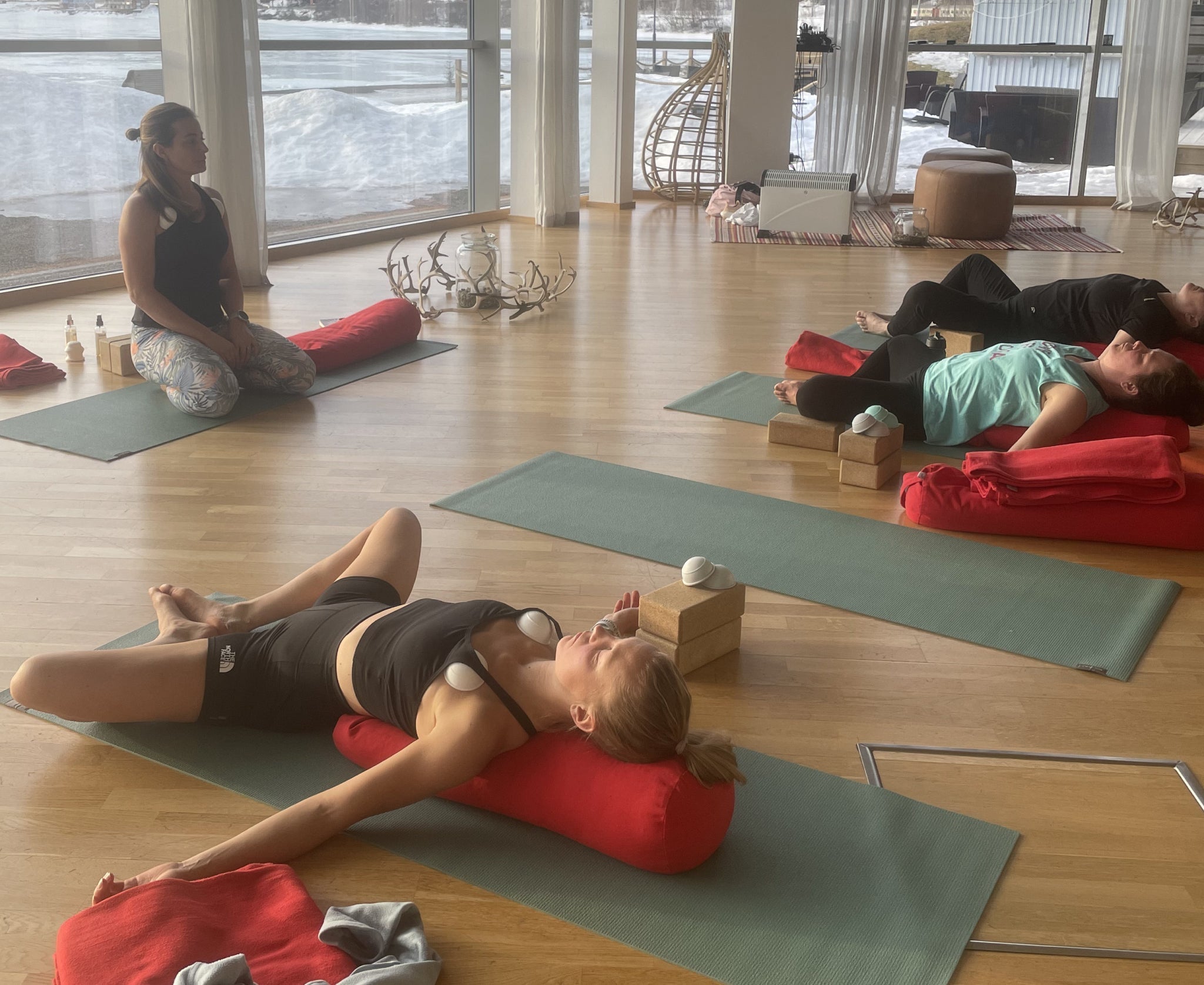
När du tränar regelbundet eller belastar kroppen i vardagen byggs spänningar upp över tid. Hur kroppen återhämtar sig påverkar både hur den känns och hur den svarar vid nästa pass.
Återhämtning handlar inte bara om vila. Det handlar om att ge kroppen rätt förutsättningar att släppa på spänning, få igång cirkulationen och återfå rörlighet.
I en workshop ledd av fysioterapeuten Jenny Larsson fick deltagarna lära sig hur koppning kan användas som ett verktyg för just detta.
Genom att arbeta med vävnaden och stimulera cirkulationen kan du stödja kroppens återhämtning och skapa bättre förutsättningar för både rörelse och prestation över tid.
Jenny gick igenom tre av Curams koppar, den dynamiska koppen, den dynamiska mini koppen och de statiska kopparna, samt hur de kan användas.
Varför återhämtning och cirkulation är avgörande
När en muskel arbetar mycket kan den bli spänd och mindre rörlig. Det påverkar både känslan i kroppen och hur effektivt den kan utveckla kraft.
Om ett område tappar rörlighet behöver andra delar kompensera. Det kan skapa en kedja av spänningar som påverkar både rörelse och belastning över tid.
Till exempel kan en stel bröstrygg göra att ländryggen får arbeta mer. En spänd ryggmuskel kan påverka axlarnas position. Underbenen kan bli trötta när de hela tiden behöver stabilisera kroppen.
När cirkulationen ökar och vävnaden får röra sig mer, skapas bättre förutsättningar för kroppen att återhämta sig och fungera som den ska.
Vanliga områden som påverkas vid träning och belastning
Vid upprepad träning eller ensidig belastning är det ofta vissa områden som blir mer belastade:
• Ländryggen
• Bröstryggen
• Breda ryggmuskeln
• Underben och fötter
Kyla, stillasittande och hög träningsvolym kan också påverka hur kroppen känns. Vävnaden kan upplevas stelare och mindre rörlig.
Genom att arbeta med koppning kan du stimulera cirkulationen i dessa områden och hjälpa kroppen att släppa på spänning.
Övningar för ökad rörlighet och bättre återhämtning
Ländrygg
Placera fyra statiska koppar på ländryggen och gör en sittande framåtfällning i höften med lugn och kontrollerad rörelse.
Du kan också sitta med ena foten mot insidan av låret och fälla fram över benet.
Ett annat alternativ är att stå på alla fyra och växla mellan att runda och svanka ryggen.
Bröstrygg och bröstkorg
Placera en statisk kopp på framsidan av bröstkorgen, ut mot axeln. För armarna bakom ryggen och öppna upp bröstet.
Du kan även ligga på rygg och låta knäna falla åt sidan i en lugn rotation.
Breda ryggmuskeln
Placera en kopp längs sidan av ryggen, nära armhålan. Sätt dig bak i en position liknande barnets position.
Här kan du stanna stilla eller arbeta med små, lugna rörelser fram och tillbaka.
Underben och fötter
Placera statiska koppar på utsidan av underbenen och arbeta med den dynamiska koppen över vaden.
Du kan också stå i en nedåtgående hund och växla mellan att trycka ner hälarna.
Den dynamiska koppen fungerar även bra längs framsidan och utsidan av låren.
Använd olja vid dynamisk koppning för ett mjukare glid.
Vad koppning gör i kroppen
Koppning stimulerar cirkulationen i vävnaden. Det bidrar till att syre och näring når området samtidigt som restprodukter lättare transporteras bort.
När spänning släpper och vävnaden blir mer rörlig kan musklerna arbeta mer effektivt.
Det påverkar hur kroppen känns efter belastning och hur redo den är inför nästa gång.
Det handlar inte om att pressa fram resultat, utan om att ge kroppen rätt förutsättningar över tid.
Så kommer du igång
Att börja med koppning behöver inte vara avancerat. Det viktiga är att börja enkelt och känna hur kroppen svarar.
Alla koppar från Curam kommer med Curam Start, en introduktion som guidar dig i hur du kan använda kopparna på ett sätt som passar din vardag.
Vid statisk koppning kan du börja med 3 till 5 minuter per område. Vid dynamisk koppning räcker det ofta med några lugna drag.
För dig som vill arbeta mer strukturerat med återhämtning finns även vårt Recovery Kit. Där ingår en onlinekurs ledd av fysioterapeuten och idrottsmedicinska experten Ulrika Thoors, med fokus på hur du kan använda koppning som en del av din träning över tid.
Gör återhämtning till en del av din rutin
Återhämtning behöver inte vara något stort eller avancerat. Det kan vara något du gör regelbundet, där det passar in i din vardag.
Ibland arbetar du igenom flera områden. Ibland fokuserar du på det som känns mer belastat.
Det viktiga är kontinuiteten.
När kroppen får rätt förutsättningar över tid blir den också mer redo att fortsätta göra det du vill att den ska göra.
Inte bara idag, utan även imorgon.


